Want to be in the loop?
subscribe to
our notification
Business News
BANKS LAUNCH CROSS-BORDER QR PAYMENTS TO TAP GROWING DIGITAL ECONOMY
Recently, the Joint Stock Commercial Bank for Foreign Trade of Vietnam (Vietcombank) has partnered with Alipay+ to introduce cross-border QR payments which allows customers to use its VCB Digibank app abroad.
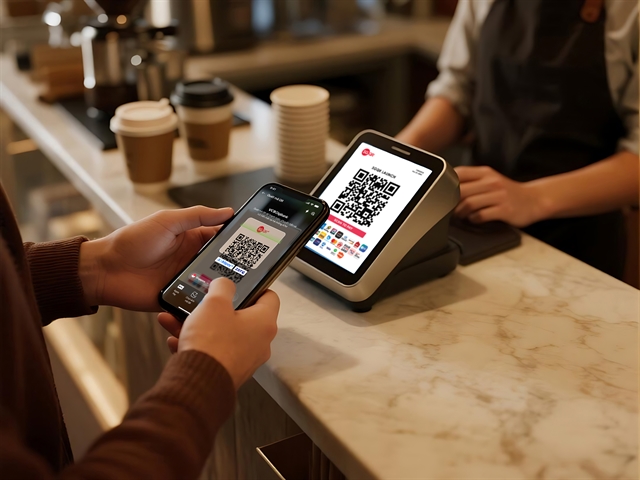
The Joint Stock Commercial Bank for Foreign Trade of Vietnam (Vietcombank) has partnered with Alipay+ to introduce cross-border QR payments which allows customers to use its VCB Digibank app abroad. — Photo Vietcombank
HÀ NỘI — Banks are rolling out cross-border QR payment services enabling consumers to make international transactions directly through domestic banking apps to tap into the country’s fast-growing digital economy.
The expansion of QR-based payments is gradually reshaping spending habits, reducing reliance on cash and international cards while offering faster and more transparent transactions at points of sale.
Recently, the Joint Stock Commercial Bank for Foreign Trade of Vietnam (Vietcombank) has partnered with Alipay+ to introduce cross-border QR payments, which allow customers to use its VCB Digibank app abroad.
The service enables payments in more than 50 countries, including China, South Korea, Singapore and Malaysia, as well as markets in Europe and the Americas, making a significant step in connecting payment infrastructure.
Other lenders are also accelerating similar initiatives.
The Bank for Investment and Development of Vietnam (BIDV) has developed VietQR Pay, which allows foreign visitors from markets such as the Republic of Korea and China to make payments in Việt Nam via their local banking apps or e-wallets.
The National Citizen Commercial Joint Stock Bank, in cooperation with the National Payment Corporation of Vietnam, has launched VIETQRGlobal, which enables merchants to accept payments from multiple international wallets through a single QR code with real-time currency conversion.
While QR payment connections are expanding rapidly with the expectation to support trade, tourism and financial connectivity, experts said adoption remains below expectations, with a key bottleneck being the limited number of merchants accepting QR payments.
Many small businesses still rely on person-to-person transfer QR codes, which are not designed for commercial transactions and can create difficulties for foreign users.
According to Phạm Anh Tuấn, Director of the Payment Department under the State Bank of Việt Nam, it is critical to expand the merchant acceptance network, warning that without broader coverage, bilateral payment links could not deliver their full potential.
He stressed the need to shift from QR transfer codes to formal QR Payment to ensure reconciliation, consumer protection and regulatory compliance.
Due to the coexistence of multiple QR formats, foreigners often struggle to distinguish between transfer and payment QR codes, resulting in failed transactions.
Another barrier is cost. While QR transfers are typically free, QR Payment involve fees for merchants, which discourages adoption among smaller retailers.
Improving fee policies and accelerating the transition to QR payment standards, especially in tourism and retail, will be key to unlocking further growth, experts said. — VNS
Source: VNS
Related News

INFRASTRUCTURE / CONSTRUCTION / LOGISTIC / PORT
VIỆT NAM-CAMBODIA TRADE GATHERS PACE TOWARDS $20 BILLION TARGET
Trade between Việt Nam and Cambodia continues to grow, remaining a bright spot and a key pillar of bilateral cooperation as the two countries aim to raise two-way trade to US$20 billion in the coming years. After setting a record of more than $11.3 billion last year, bilateral trade reached about $8.7 billion in the first eight months of this year, up 8.3 per cent year on year.
TECHNOLOGY
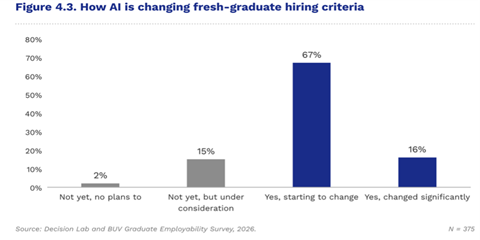
AI BEGINNING TO RESHAPE RECRUITMENT CRITERIA
Digital literacy is the only capability area in which fresh graduates meet employers’ expectations, according to a new report. Yet, it is also the standard rising fastest, as businesses increasingly expect new hires to use AI effectively in the workplace. Some 83 per cent of employers say AI has changed, or is beginning to change, their hiring criteria, while 94 per cent report higher expectations for digital and AI capabilities than they had two to three years ago.

INFRASTRUCTURE / CONSTRUCTION / LOGISTIC / PORT
ĐÀ NẴNG GREEN-LIGHTS US$105 MILLION THAI DEVELOPMENT DEAL
The central city has approved an investment proposal by Thailand’s WHA Group to develop infrastructure for the 400ha WHA Đà Nẵng Industrial Park project on two communes of Thăng Bình and Đồng Dương, with an investment of more than VNĐ2.7 trillion (US$105 million). The city said it approved WHA Industrial Development International's status as an investor in the project, which is expected to take place between 2027 and 2034.

VIETNAM ECONOMY INVESTMENT
MOBILE PHONE EXPORTS RISE 20% TO $51.8 BILLION IN FIRST NINE MONTHS
Exports of mobile phones and components rose 20 per cent year-on-year to nearly US$51.8 billion in the first nine months of 2026, with China, the US and Republic of Korea accounting for more than half of the total. Shipments to the three markets reached a combined $26.18 billion, or 50.6 per cent of total exports of the product group during the period, according to data from the Vietnam Department of Customs under the Ministry of Finance.

VIETNAM ECONOMY INVESTMENT
FRUIT AND VEGETABLE EXPORTS POISED TO HIT $10 BILLION IN 2026
Fruit and vegetable exports are on track to reach nearly US$10 billion in 2026, after rising 19.9 per cent year on year to nearly US$7.4 billion in the first nine months, driven by strong seasonal demand and abundant tropical fruit supplies. The Ministry of Agriculture and Environment said the growth reflected stronger international demand for fresh produce and processed agricultural products.
GARMENT / TEXTILE
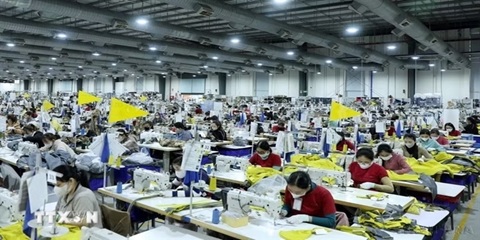
TEXTILE EXPORTS FACE DUAL CHALLENGES OF SUSTAINING ORDERS AND BOOSTING EFFICIENCY AMID GROWING COMPETITION
Data shows that the textile and garment sector maintained its growth momentum in the first nine months of this year. The industry's total export turnover reached an estimated US$35.721 billion in the first nine months of this year, up 3.3 per cent year-on-year. Despite posting encouraging export figures, Vietnamese textile and garment enterprises continue to navigate unpredictable market variables.
Events Sponsors






















