Want to be in the loop?
subscribe to
our notification
Business News
BANKS STEP UP TO LURE DEMAND DEPOSITS
Competition among banks to lure demand deposits is becoming fiercer as the cheap capital source helps banks increase their net interest income (NIM) ratio.
Demand deposits have very low interest rates of only 0.1 per cent per year. Therefore, banks will have low input capital costs and ease to increase their NIM ratio if they have high current account savings account (CASA) ratio – or the proportion of demand deposits out of total deposits.
Besides, CASA also reflects customers' belief and assessment of banks’ service quality, especially payment services. Therefore, increasing CASA has become extremely important in retail banking strategy and many banks consider it one of the top targets in recent years.
Before 2018, Vietcombank and MBBank were the two banks with the largest proportion of CASA in the banking system. While Vietcombank had an advantage in luring demand deposits through transactions of State-owned agencies and enterprises, MBBank benefited from defence agencies and enterprises.
However, in the past two years, Techcombank has risen to the top and is increasingly outstripping the two banks. According to Techcombank's financial statements, its demand deposits in 2020 increased by 60.6 per cent to VNĐ128 trillion (US$5.56 billion). The bank’s CASA ratio by the end of 2020 reached 46.1 per cent, a sharp increase from 34.5 per cent at the end of 2019 and also higher than Vietcombank (about 33 per cent) and MB (about 37 per cent).
Techcombank has so far had an ambitious target to increase its CASA ratio to 55 per cent by 2025.
Besides Techcombank, many other private banks, such as TPBank and VPBank, also posted impressive CASA growth last year.
At VPBank, demand deposits increased by 28 per cent to more than VNĐ35.4 trillion, helping the bank increase its CASA rate from 13.2 per cent to 15.6 per cent. TPBank's demand deposits increased by 48 per cent last year to more than VNĐ21.2 trillion, pushing the bank’s CASA rate up from 16.5 per cent to 19.4 per cent.
To increase CASA, banks have taken many policies, including offering free money transfers and investing in digital technology to attract customers.
Techcombank can be considered the first private bank to initiate this wave when it focused on building advantages in payment. Since 2016, this bank has implemented many promotion programmes for customers such as free of charge e-banking transactions and account management.
Following suit, many other private banks have also entered the race of providing free service. VIB has introduced a policy of free of charge money transfers and withdrawals for new customers or payment accounts with an average balance of at least VNĐ5 million. Customers transferring money online via TPBank also received the free service policy.
The increasingly fierce competition in the race to lure demand deposits has forced Vietcombank and MBBank to take action.
Vietcombank has recently announced integrated transaction account packages that cover account services, digital banking and debit cards, helping customers transfer money free of charge on VCB Digibank.
Meanwhile, besides implementing a series of digital products, MBBank has implemented a programme to open accounts with lucky numbers at the request of customers in the past year. In 2020, the bank also offered free money transfer service on MBBank app. As a result, the bank's CASA also increased significantly from 34 per cent in 2019 to 37 per cent in 2020.
Source: VNS
Related News

CHARITY / EXHIBITION / OTHER EVENTS
INVESTMENT OPPORTUNITIES IN CA MAU PROVINCE: 96 PROJECTS AND 20 STRATEGIC PROJECTS
We are pleased to share with you information on investment projects currently seeking investors in Ca Mau Province. Should your esteemed company or association be interested, we kindly invite you to review the project information and complete the registration form via the links provided. The Ho Chi Minh City Investment and Trade Promotion Centre (ITPC) will consolidate the expressions of interest and facilitate connections with the leadership of Ca Mau Province at a meeting tentatively scheduled for 13 November 2026 in Ho Chi Minh City.

MEMBER CORNER / PROMOTIONS
BẰNG KIỀU LIVESHOW - A SYMPHONY OF LOVE UNDER THE GOLDEN GLOW
A masterclass in live music that takes the audience on a soulful journey through immortal love songs, guided by the peerless artistry and emotive storytelling of renowned singer Bằng Kiều. The highlight of the night is his seamless musical chemistry with special guest Triệu Hồng Ngọc, promising passionate and deeply resonant duets inside the magnificent Grand Ballroom.
INFRASTRUCTURE / CONSTRUCTION / LOGISTIC / PORT
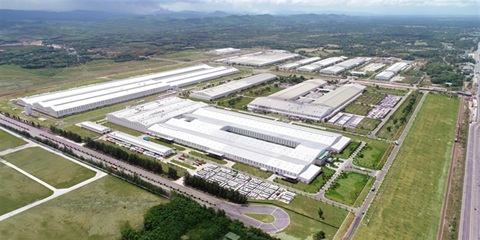
ĐÀ NẴNG GREEN-LIGHTS US$105 MILLION THAI DEVELOPMENT DEAL
The central city has approved an investment proposal by Thailand’s WHA Group to develop infrastructure for the 400ha WHA Đà Nẵng Industrial Park project on two communes of Thăng Bình and Đồng Dương, with an investment of more than VNĐ2.7 trillion (US$105 million). The city said it approved WHA Industrial Development International's status as an investor in the project, which is expected to take place between 2027 and 2034.
VIETNAM ECONOMY INVESTMENT
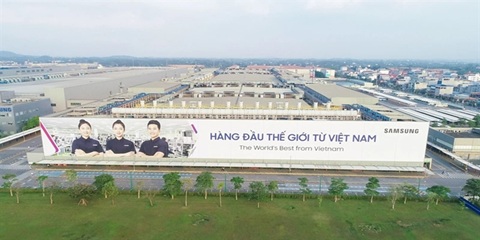
MOBILE PHONE EXPORTS RISE 20% TO $51.8 BILLION IN FIRST NINE MONTHS
Exports of mobile phones and components rose 20 per cent year-on-year to nearly US$51.8 billion in the first nine months of 2026, with China, the US and Republic of Korea accounting for more than half of the total. Shipments to the three markets reached a combined $26.18 billion, or 50.6 per cent of total exports of the product group during the period, according to data from the Vietnam Department of Customs under the Ministry of Finance.

INFRASTRUCTURE / CONSTRUCTION / LOGISTIC / PORT
VIỆT NAM-CAMBODIA TRADE GATHERS PACE TOWARDS $20 BILLION TARGET
Trade between Việt Nam and Cambodia continues to grow, remaining a bright spot and a key pillar of bilateral cooperation as the two countries aim to raise two-way trade to US$20 billion in the coming years. After setting a record of more than $11.3 billion last year, bilateral trade reached about $8.7 billion in the first eight months of this year, up 8.3 per cent year on year.
VIETNAM ECONOMY INVESTMENT
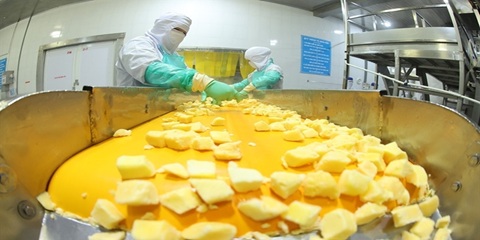
FRUIT AND VEGETABLE EXPORTS POISED TO HIT $10 BILLION IN 2026
Fruit and vegetable exports are on track to reach nearly US$10 billion in 2026, after rising 19.9 per cent year on year to nearly US$7.4 billion in the first nine months, driven by strong seasonal demand and abundant tropical fruit supplies. The Ministry of Agriculture and Environment said the growth reflected stronger international demand for fresh produce and processed agricultural products.
Events Sponsors






















