Want to be in the loop?
subscribe to
our notification
Business News
BANKS UNDER PRESSURE DESPITE POSITIVE CREDIT RECOVERY
Though credit demand is recovering quickly, banks still have to face big challenges related to rising bad debts, provisions and deposit interest rates.
According to Lê Xuân Nghĩa, former deputy chairman of the National Financial Supervisory Commission, the US Federal Reserve (Fed) will continually increase interest rates this year, which will force Vietnamese banks to raise deposit rates.
Despite the high increase in saving rates, domestic banks will not be able to raise lending rates accordingly to support the economy as directed by the Government. The small gap between deposit and lending rates will cause the banks’ net interest margin (NIM) and net profit to reduce, Nghĩa explained.
Besides, for a long time, many banks have gained good profits from real estate credit, and investment in and issuance of corporate bonds. However, the tightening of cash flows into the two channels in the near future may affect the banks’ income.
In fact, many banks recorded high credit growth in Q1/2022 thanks to the strong increase in corporate bond investment.
By the end of Q1/2022, the largest corporate bond balance numbers were recorded in Vietnam Technological and Commercial Joint Stock Bank (Techcombank), Military Commercial Joint Stock Bank (MB), Vietnam Prosperity Commercial Joint Stock Bank (VPBank), Tien Phong Commercial Joint Stock Bank (TPBank) and Saigon Hanoi Commercial Joint Stock Bank (SHB), baodautu.vn reported.
According to Nghĩa, banks are also under great pressure in terms of bad debts in the last months of this year as the Government’s regulations on debt rescheduling will expire from June this year.
Due to the adverse impacts of the pandemic, the Government has allowed COVID-19-affected customers to delay the loan repayment while allowing banks to maintain the debt classifications. Therefore, a significant amount of debts can become bad debts when the regulation is no longer effective.
Financial statements of banks in Q1 2022 also showed the bad debts at most banks worsened in the quarter.
In the past two years, though banks have sharply raised their provisions for risky loans, the provisions at many banks are under pressure to rise significantly when a large amount of debts are not allowed to be rescheduled.
Analysts of Saigon Securities Incorporation (SSI)’s Research said though the asset quality in Q1/2022 of banks is not a concern, the pressure of provisioning remained high, up by 18 per cent over the same period last year.
According to experts, the biggest prospect for banks in the last months of the year is the acceleration of digitalisation and the rise of current account savings account (CASA) ratio, which will help lower the negative effects of the increasing input costs.
Moreover, the recovery in credit demand is also expected to partly offset the NIM decrease.
In addition, the revenue from insurance and divestment activities are predicted to bring huge profits for banks.
In the recent season of annual general meetings (AGM) of shareholders, most banks set positive pre-tax profit growth targets at 31 per cent on average. Business performance results of banks in Q1/2022, except Orient Commercial Joint Stock Bank (OCB), surpassed the set targets.
However, according to SSI Research, the Q1/2022 business results of banks have not fully reflected the impacts of the recent moves to tighten real estate lending and corporate bond issuance.
The short-term risks for banks remain until the impacts of the corporate bond market become clearer, SSI Research said.
Source: VNS
Related News

CHARITY / EXHIBITION / OTHER EVENTS
INVESTMENT OPPORTUNITIES IN CA MAU PROVINCE: 96 PROJECTS AND 20 STRATEGIC PROJECTS
We are pleased to share with you information on investment projects currently seeking investors in Ca Mau Province. Should your esteemed company or association be interested, we kindly invite you to review the project information and complete the registration form via the links provided. The Ho Chi Minh City Investment and Trade Promotion Centre (ITPC) will consolidate the expressions of interest and facilitate connections with the leadership of Ca Mau Province at a meeting tentatively scheduled for 13 November 2026 in Ho Chi Minh City.

MEMBER CORNER / PROMOTIONS
BẰNG KIỀU LIVESHOW - A SYMPHONY OF LOVE UNDER THE GOLDEN GLOW
A masterclass in live music that takes the audience on a soulful journey through immortal love songs, guided by the peerless artistry and emotive storytelling of renowned singer Bằng Kiều. The highlight of the night is his seamless musical chemistry with special guest Triệu Hồng Ngọc, promising passionate and deeply resonant duets inside the magnificent Grand Ballroom.
INFRASTRUCTURE / CONSTRUCTION / LOGISTIC / PORT
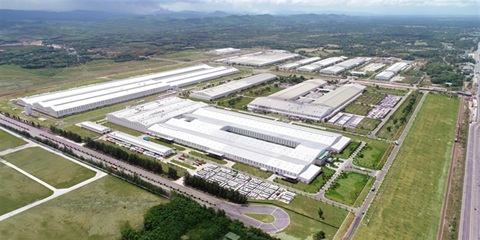
ĐÀ NẴNG GREEN-LIGHTS US$105 MILLION THAI DEVELOPMENT DEAL
The central city has approved an investment proposal by Thailand’s WHA Group to develop infrastructure for the 400ha WHA Đà Nẵng Industrial Park project on two communes of Thăng Bình and Đồng Dương, with an investment of more than VNĐ2.7 trillion (US$105 million). The city said it approved WHA Industrial Development International's status as an investor in the project, which is expected to take place between 2027 and 2034.
VIETNAM ECONOMY INVESTMENT
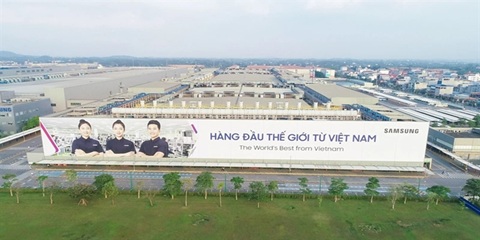
MOBILE PHONE EXPORTS RISE 20% TO $51.8 BILLION IN FIRST NINE MONTHS
Exports of mobile phones and components rose 20 per cent year-on-year to nearly US$51.8 billion in the first nine months of 2026, with China, the US and Republic of Korea accounting for more than half of the total. Shipments to the three markets reached a combined $26.18 billion, or 50.6 per cent of total exports of the product group during the period, according to data from the Vietnam Department of Customs under the Ministry of Finance.

INFRASTRUCTURE / CONSTRUCTION / LOGISTIC / PORT
VIỆT NAM-CAMBODIA TRADE GATHERS PACE TOWARDS $20 BILLION TARGET
Trade between Việt Nam and Cambodia continues to grow, remaining a bright spot and a key pillar of bilateral cooperation as the two countries aim to raise two-way trade to US$20 billion in the coming years. After setting a record of more than $11.3 billion last year, bilateral trade reached about $8.7 billion in the first eight months of this year, up 8.3 per cent year on year.
VIETNAM ECONOMY INVESTMENT
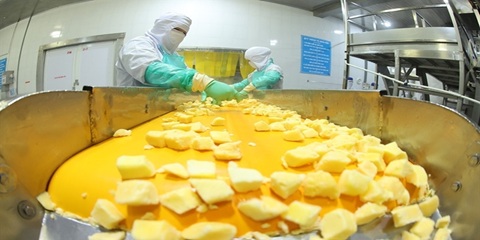
FRUIT AND VEGETABLE EXPORTS POISED TO HIT $10 BILLION IN 2026
Fruit and vegetable exports are on track to reach nearly US$10 billion in 2026, after rising 19.9 per cent year on year to nearly US$7.4 billion in the first nine months, driven by strong seasonal demand and abundant tropical fruit supplies. The Ministry of Agriculture and Environment said the growth reflected stronger international demand for fresh produce and processed agricultural products.
Events Sponsors






















