Want to be in the loop?
subscribe to
our notification
Business News
BIG PLAYERS KEEN ON PORT DEVELOPMENT
Vietnam’s port sector is gaining traction as both local and foreign companies seek to invest in new ports to capitalise on increasing cargo throughput.
Swiss-headquartered Mediterranean Shipping Company (MSC) is eyeing investments in Vietnamese ports. MSC Group president Diego Aponte expressed this intention during a meeting in Switzerland with Vietnam’s Commission for the Management of State Capital at Enterprises in early October.
Aponte said MSC is working closely with Vietnam Maritime Corporation (VIMC) to develop the Can Gio international container transshipment port in Ho Chi Minh City. This large-scale project promises significant benefits for Vietnam.
In 2023, Terminal Investment Limited, part of MSC, and Saigon Port JSC, under VIMC, submitted a proposal to the Ministry of Planning and Investment to implement the transshipment port with an estimated capital of $5.5 billion. Construction is slated to begin in 2026.
In addition, MSC and VIMC have established a joint venture to operate two container terminals at Haiphong International Gateway Port in Lach Huyen.
“The group is considering expanding investments in Vietnam, including a proposal to invest in Danang’s Lien Chieu port. MSC is also exploring opportunities to invest in other southern ports and develop modern logistics centres. Alongside expanding the port network, we hope to partner with Vietnamese firms to build integrated logistics services to optimise supply chains and reduce transportation costs,” Aponte said.
Similarly, Danish conglomerate AP Moller Holding is exploring opportunities to invest in deepwater ports and logistics infrastructure across Vietnam, with a view to solidifying the country as a key hub in Southeast Asia’s supply chain network.
During a meeting with Prime Minister Pham Minh Chinh in September, Robert Maersk Uggla, chairman of AP Moller Holding and Maersk, said, “We see vast potential in Vietnam, and we are eager to contribute further to its development.”
Uggla expressed particular interest in deepwater container ports and logistics projects.
In March, APM Terminals, part of AP Moller, signed an MoU with Hateco Haiphong International Container Terminal, a subsidiary of Hateco Group, for further terminal development in Haiphong. The two sides are investing in two berths with a combined capacity of 1.8 million TEU per year, expected to be completed in 2025.
Following this partnership, the joint venture submitted an expression of interest for Lien Chieu Port construction and investment in Danang, at a cost of up to $1.9 billion.
A recent report from FiinRatings highlighted the potential of Vietnam’s port sector. The compound annual growth rate of seaport throughput reached 10.3 per cent from 1998 to 2023, driven by import-export demand from foreign direct investment companies, along with the diversification of manufacturing chains away from China.
Annual growth in seaport throughput has been consistently positive over the past 25 years, with only two periods of slowdown due to the global recession in 2010-2012 and then the 2020 pandemic.
However, barriers to entry in the seaport industry remain high due to geographic constraints, reliance on national planning, the need for significant upfront capital investment, and the requirement to establish strategic relationships with shipping lines for a successful port project launch.
Nguyen Nhat Hoang, head of the Corporate Credit Rating Division at FiinRatings, noted that Vietnam’s seaport industry was highly concentrated, with the three largest enterprises accounting for nearly 75 per cent of the market share.
Container throughput market share is dominated by four major companies: Saigon New Port (47 per cent), VIMC (20 per cent), Gemadept (15 per cent), and Viconship (7 per cent).
“We have seen a gradual decline since 2017 in the financial leverage of seaport companies, as major port ventures were completed and operating cash flows improved due to steady growth in import-export activities. Owning ports in multiple regions allows companies to expand their services within the value chain and optimise costs, depending on the nature of the cargo or target markets to align with customer needs,” Hoang said.
Source: VIR
Related News
MEMBER CORNER / PROMOTIONS
HCMC | CERTIFIED SUSTAINABILITY PROFESSIONAL (CSP) TRAINING | REGISTRATION OPEN
As sustainability becomes deeply embedded in corporate strategy and supply-chain operations across Vietnam, Hong Kong Business Association Vietnam is pleased to endorse the upcoming Certified Sustainability Professional (CSP) training program by the Asia Institute for Sustainability (AIS) - a premier internationally recognized ESG credential in Vietnam.
VIETNAM ECONOMY INVESTMENT
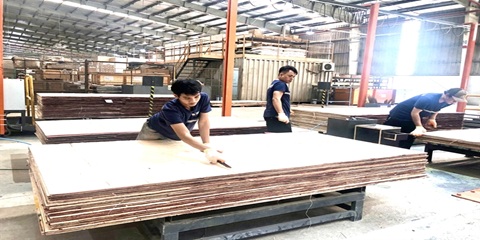
HCM CITY SAYS HOW IT PLANS TO ACHIEVE 10-11% ANNUAL EXPORT GROWTH FOR REST OF DECADE
The southern economic hub aims to strengthen its role as the country’s largest import-export centre while developing into a regional transhipment centre in Southeast Asia, supported by green and digital transformation and a circular economy. HCM City has outlined measures to expand production capacity, cut logistics costs, diversify export markets, and help businesses meet increasingly stringent international standards as it targets average annual export growth of 10-11 per cent through 2030.
VIETNAM ECONOMY INVESTMENT
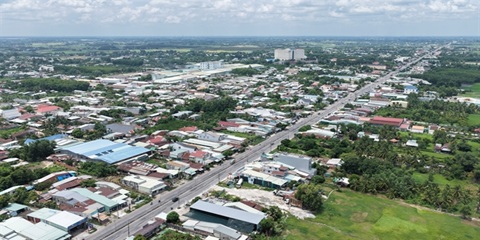
HCM CITY LEADS ECONOMIC RESTRUCTURING IN SOUTHEAST REGION
According to Associate Professor, Dr Vũ Tuấn Hưng, director of the Institute of Social Sciences of the Southern Region, the Southeast is a strategically important socio-economic space in Việt Nam’s development given its advantages in location, industry, trade, services, logistics, science and technology, urbanisation and human resources.
TECHNOLOGY
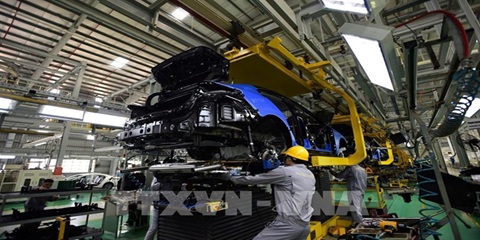
DIGITAL TRANSFORMATION TURNED INTO PRACTICAL TOOLS FOR PEOPLE, BUSINESSES
Việt Nam is moving its digital transformation agenda beyond policy frameworks and individual technology platforms towards practical applications that address everyday needs, as authorities seek measurable outcomes from science, technology and innovation. Under Politburo Resolution No. 57-NQ/TW issued on December 22, 2024, the implementation is increasingly shifting from simply completing assigned tasks towards developing concrete products and services for citizens and businesses.
TECHNOLOGY
APPLYING TECHNOLOGY FOR ECONOMIC TRANSFORMATION
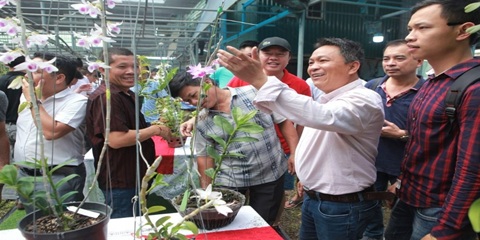
Having completed its new rural development program, Hanoi is shifting its focus toward improving development quality and building smart, sustainable rural areas. The transformation of Dong La orchid-growing village in An Khanh, a western commune of Hanoi, shows how digital technology is becoming a driver of production, market expansion, and higher incomes for local residents.

MEMBER CORNER / PROMOTIONS
VIGLACERA HONORED AS THE "LEADING GREEN INDUSTRIAL REAL ESTATE DEVELOPER 2026"
Organized by the Vietnam Investment Review, this prestigious awards program recognizes industry pioneers advancing eco-industrial parks, clean energy transition, and rigorous ESG standards. Outperforming competitors through a rigorous evaluation, Viglacera Corporation – JSC proudly ranked among the Top 5 highest-positioned enterprises in the Leading Green Industrial Real Estate Developers 2026 category, reinforcing its premier position in Vietnam’s industrial real estate sector.
Events Sponsors






















