Want to be in the loop?
subscribe to
our notification
Business News
CAR INDUSTRY REMAINS FLAT
After strong rebound in 2022 driven by pent-up demand, the local car market has been gloomy for the year to date, which is expected to linger until the year-end. Do Tien Dung, chairman of the Board of Directors at Hang Xanh Motors Service JSC (Haxaco), said that the company counted $3.04 million in profit in Q1 last year.
However, they are just trying to break even in Q1 due to a sharp fall in the demand, and the situation may spread until the end of Q2.
Consumers have been cautious due to very high borrowing costs.
In addition, the quiet stock market and real estate market have badly affected people’s purchasing power.
A source from Huyndai Thanh Cong reported that for the year to date, auto dealers have launched diverse incentives to attract buyers, yet demand for autos has dwindled amid surging borrowing cost and lowered incomes.
Saigon General Service Corporation (Savico) commented that the threat of global economic recession, high inflation and shortage of chipsets and semiconductors would result in auto supply volatilities.
Meanwhile, stiff competition persists between dealers, alongside high interest rates and sliding demand.
It might take up to six months for the auto market to reach a sounder footing.
Savico expects a drop of 25 per cent in its post-tax profit in 2023, falling to $19 million compared to 2022.
The Vietnam Automobile Manufacturers Association's (VAMA) figures show that local motor vehicle sales revenue was down 25 per cent on-year in the first two months this year, in whichtourism coaches shed 28 per cent, commercial vehicles were down 10 per cent, and specialised vehicles took a 47 per cent plunge.
The sale revenue of domestic assembled cars went down 38 per cent, and that of imported vehicles slid 3 per cent.
In fact, auto sales began to show signs of going down from late 2022.
Last December, VAMA members sold a total 35,301 units, down 3 per cent compared to the previous month and more than 24 per cent lower on-year.
The Vehicle Importers Vietnam Association assumes that auto makers are struggling to cope with escalating inventory due to an unexpected fall in demand.
Stagnant auto registration in the past two months has also exacerbated the situation, exerting pressure on businesses. All 12 VAMA members face a conundrum with their inventories.
By the end of 2022, the inventory value at Haxaco was at $46.2 million, up 1.8-fold compared to one year ago.
Similarly, Savico saw inventory value reaching $7.83 million, up 1.8-fold, and that of City Auto JSC approximated $20.7 million, up 1.4-fold.
Haxaco chairman Dung has attributed the company’s soaring inventory to two factors. First, Haxaco, the major Mercedes-Benz dealer in Vietnam, imported a big volume of cars to receive a bonus given by the Mercedes-Benz plant. This bonus contributed a large part to the company’s profit picture last year.
Second, many Mercedes-Benz car lines have increased in price from January so that the company has imported a large car volume to drive down the price.
Haxaco aims to lower its inventory value to about $26 million in late Q1.
The Ministry of Finance and the Ministry of Industry and Trade are considering the possibility of a 50 per cent registration fee reduction for domestically assembled and manufactured cars.
Source: VIR
Related News

MEMBER CORNER / PROMOTIONS
KNIC ENGAGES WITH GOVERNMENT AND HIGH-TECH BUSINESS COMMUNITIES IN CHINA
From Beijing to Shandong, KN Holdings and KN Industrial City are continuing to expand their engagement with government authorities, trade promotion organizations, and high-tech business communities in China. In Beijing, the delegation met with the Center for International Economic and Technological Cooperation under the Ministry of Industry and Information Technology (MIIT), exchanging perspectives on industrial and technology cooperation between the two markets.

VIETNAM ECONOMY INVESTMENT
VIETNAM’S TRADE TOPS $825 BILLION BY MID-SEPTEMBER
Figures released on September 21 showed goods trade reached nearly $55 billion in the first 15 days of September alone, bringing cumulative turnover since the beginning of the year to more than $825 billion. The strong growth reflects robust trade flows, with demand for consumer goods and production inputs remaining high.

TECHNOLOGY
VIỆT NAM'S BUSINESSES MOVE TOWARDS AI AGENTS
Việt Nam’s AI landscape is entering a new phase as businesses move beyond generative AI (GenAI) tools designed to assist human users towards autonomous AI, agentic AI and AI agents that can take action with limited supervision, experts have said. The shift comes as Việt Nam seeks to accelerate science and technology, innovation and digital transformation under Politburo Resolution 57-NQ/TW, issued on December 22, 2024.

GARMENT / TEXTILE
VIỆT NAM TARGETS $48 BILLION IN TEXTILE-GARMENT EXPORTS
Việt Nam’s textile and garment industry is facing both opportunities and challenges amid complex and unpredictable developments in the global market, prompting businesses to improve growth quality, optimise production costs and enhance adaptability in pursuit of an export turnover of about $48 billion this year. The target is considered an important milestone that requires concerted efforts from management agencies and the business community.
INFRASTRUCTURE / CONSTRUCTION / LOGISTIC / PORT
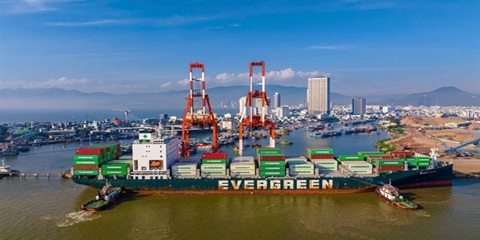
CUTTING LOGISTICS COSTS KEY TO BOOSTING EXPORTS
Reducing costs has become an increasingly urgent priority for import-export activities, particularly logistics costs, a conference in Hà Nội was told on Tuesday. According to Deputy General Director of the Ministry of Industry and Trade's Agency for Foreign Trade, Trần Thanh Hải, import-export activities has remained a bright spot for the economy in recent years, playing an important role and helping drive macroeconomic growth.
LEGAL UPDATE / POLICY
FLEXIBLE FISCAL POLICY HELPS DRIVE ECONOMIC GROWTH
Việt Nam’s fiscal policy has been implemented in a targeted expansionary manner since early 2026, helping maintain macroeconomic stability and supporting the country’s goal of achieving double-digit economic growth. According to the Ministry of Finance, State budget revenue in the first eight months of 2026 was estimated at VNĐ2.02 quadrillion (US$77.7 billion), equivalent to 80 per cent of the annual estimate and up 16 per cent year-on-year.
Events Sponsors






















