Want to be in the loop?
subscribe to
our notification
Business News
COMPANIES CAUTIOUSLY BACK ON TRACK
After Resolution 128/NQ-CP took effect on October 11, 2021, pandemic prevention and control across the country entered a new phase and businesses focused on post-lockdown recovery with caution.
According to economic experts, the easing of social distancing measures in the wake of good control of the COVID-19 pandemic in the country has helped revive economic activity. In the world, the decline in COVID-19 infections and the increase in market demands toward the end of the year will create good conditions for export recovery, especially for Vietnamese products with competitive advantages. Economic locomotives of the country like Hanoi and Ho Chi Minh City are also adopting economic recovery scenarios as guided by the Government. As a result, business performance there has been continuously improved as compared to the lockdown time.
Mr. Tran Thanh Hai, Deputy Director of the Import-Export Department under the Ministry of Industry and Trade, said, if the pandemic continues to be controlled well, businesses are expected to regain growth momentum in the last months of 2021. In 2021, Vietnam can continue to take a trade surplus if the situation is favorable.
According to the Ministry of Planning and Investment, after Resolution 128/NQ-CP was applied, in just 10 days, 3,753 enterprises were established, accounting for 45.6% of total new corporate foundations in October. Notably, 45 out of 63 provinces and cities across the country witnessed an increase in businesses that resumed operation in October, as compared to September. In particular, the worst COVID-19-affected localities had impressive recovery such as Da Nang (up 167.3%), Can Tho (58.3%), Ho Chi Minh City (31.6%), Hanoi (17.8%) and Dong Nai (3.8%).
The Binh Duong Industrial Zones Authority said that, by the end of October, more than 2,000 tenants in Binh Duong province's industrial zones had restored business operations, or over 96% of the total. More than 76% of workers returned to companies.
However, for businesses to return to effective operations, experts recommend that they need to actively innovate their business models and restructure operations on digital platforms; improve productivity and competitiveness; pay attention to retaining employees, and arranging and restructuring labor appropriately.
Mr. Choi Joo Ho, General Director of Samsung Vietnam, said that newly approved support policies on businesses, cooperatives and business households amid the COVID-19 pandemic are good news for foreign investors. These policies show that Vietnam will simultaneously implement effective epidemic prevention and control measures and enhance favorable conditions for distribution and supply networks to work stably.
Doing so not only helps businesses maintain production, but also attracts investment flows in the coming time.
He affirmed that Samsung will not change its investment strategy in the Vietnamese market although the COVID-19 pandemic has caused a lot of difficulties for its manufacturing plants. Samsung Vietnam is building a US$220 million R&D center in Hanoi, which will research and develop 5G, bigdata and artificial intelligence technologies, among others, in Vietnam.
Supported by central and local authorities, Samsung will continue to expand manufacturing and invest in equipment for six factories in Vietnam in the coming time. While Samsung only invested in manufacturing and assembling in the past, it will now upgrade and invest more in research and development to turn Vietnam into a major global production base in the coming time, Mr. Choi Joo Ho stressed.
Mr. Binu Jacob, General Director of Nestlé Vietnam, said the group recently decided to invest US$132 million to build a new factory in Dong Nai province, Vietnam in the next two years, thus making Vietnam a production center of Nestlé in Asia and Oceania.
Mr. Ho Quoc Luc, former Chairman of the Vietnam Association of Seafood Exporters and Producers (VASEP), Chairman of the Board of Directors of FIMEX Vietnam, said that after the Resolution 128/NQ-CP was applied, his company resumed normal operations. However, as exposure to pandemic outbreaks is still high while vaccinations have yet to reach herd immunity, enterprises, including shrimp producers, need to be very urgent and serious to maintain production safety. This takes a lot of effort and money, but it is extremely necessary and cannot be disregarded.
“At the same time, they must monitor demand changes and competitor capacity in order to have suitable strategies and steps for their circumstances, to accelerate safe production recovery and progress towards long-term stable development," he said.
Business support policies in the wake of social distancing have started to come to life. However, in order for many businesses to access preferential policies, support from ministries and sectors is needed. For example, the Ministry of Industry and Trade is carrying out many solutions to remove difficulties in business, especially for large manufacturing enterprises in industrial zones to maintain supply chains and production chains. For textile and garment, footwear, furniture, seafood processing, electronics industries, it focuses on providing maximum support for factories to maintain and restore production to maintain the market foothold and supply chains and complete signed orders to take advantage of year-end shopping demand in European and American markets to scale up production.
The Ministry of Industry and Trade has also fostered close cooperation with foreign-led multinational corporations (such as Samsung and Toyota) to facilitate the search for and connection with domestic parts vendors in lieu of imported sources in the short term and in the long term. In addition, the ministry regularly updates and upgrades the processing, manufacturing and supporting database system in order to network domestic and foreign businesses and investors to form domestic supply chains.
Source: VCCI
Related News

CHARITY / EXHIBITION / OTHER EVENTS
INVESTMENT OPPORTUNITIES IN CA MAU PROVINCE: 96 PROJECTS AND 20 STRATEGIC PROJECTS
We are pleased to share with you information on investment projects currently seeking investors in Ca Mau Province. Should your esteemed company or association be interested, we kindly invite you to review the project information and complete the registration form via the links provided. The Ho Chi Minh City Investment and Trade Promotion Centre (ITPC) will consolidate the expressions of interest and facilitate connections with the leadership of Ca Mau Province at a meeting tentatively scheduled for 13 November 2026 in Ho Chi Minh City.

MEMBER CORNER / PROMOTIONS
BẰNG KIỀU LIVESHOW - A SYMPHONY OF LOVE UNDER THE GOLDEN GLOW
A masterclass in live music that takes the audience on a soulful journey through immortal love songs, guided by the peerless artistry and emotive storytelling of renowned singer Bằng Kiều. The highlight of the night is his seamless musical chemistry with special guest Triệu Hồng Ngọc, promising passionate and deeply resonant duets inside the magnificent Grand Ballroom.
INFRASTRUCTURE / CONSTRUCTION / LOGISTIC / PORT
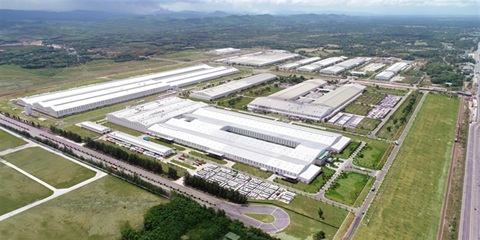
ĐÀ NẴNG GREEN-LIGHTS US$105 MILLION THAI DEVELOPMENT DEAL
The central city has approved an investment proposal by Thailand’s WHA Group to develop infrastructure for the 400ha WHA Đà Nẵng Industrial Park project on two communes of Thăng Bình and Đồng Dương, with an investment of more than VNĐ2.7 trillion (US$105 million). The city said it approved WHA Industrial Development International's status as an investor in the project, which is expected to take place between 2027 and 2034.
VIETNAM ECONOMY INVESTMENT
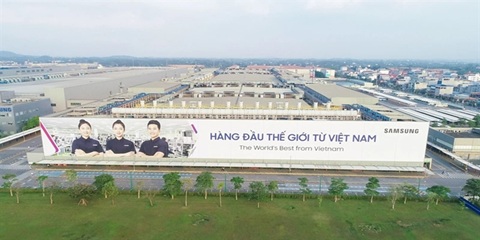
MOBILE PHONE EXPORTS RISE 20% TO $51.8 BILLION IN FIRST NINE MONTHS
Exports of mobile phones and components rose 20 per cent year-on-year to nearly US$51.8 billion in the first nine months of 2026, with China, the US and Republic of Korea accounting for more than half of the total. Shipments to the three markets reached a combined $26.18 billion, or 50.6 per cent of total exports of the product group during the period, according to data from the Vietnam Department of Customs under the Ministry of Finance.
INFRASTRUCTURE / CONSTRUCTION / LOGISTIC / PORT
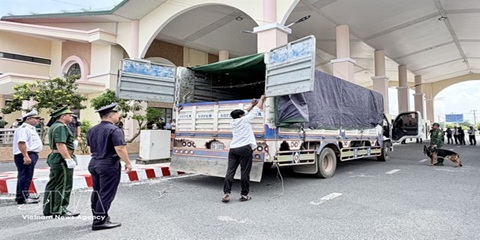
VIỆT NAM-CAMBODIA TRADE GATHERS PACE TOWARDS $20 BILLION TARGET
Trade between Việt Nam and Cambodia continues to grow, remaining a bright spot and a key pillar of bilateral cooperation as the two countries aim to raise two-way trade to US$20 billion in the coming years. After setting a record of more than $11.3 billion last year, bilateral trade reached about $8.7 billion in the first eight months of this year, up 8.3 per cent year on year.
VIETNAM ECONOMY INVESTMENT
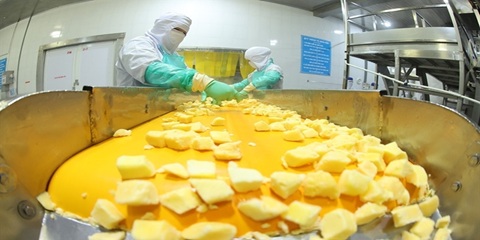
FRUIT AND VEGETABLE EXPORTS POISED TO HIT $10 BILLION IN 2026
Fruit and vegetable exports are on track to reach nearly US$10 billion in 2026, after rising 19.9 per cent year on year to nearly US$7.4 billion in the first nine months, driven by strong seasonal demand and abundant tropical fruit supplies. The Ministry of Agriculture and Environment said the growth reflected stronger international demand for fresh produce and processed agricultural products.
Events Sponsors






















