Want to be in the loop?
subscribe to
our notification
Business News
COOPERATION IN BUILDING SUPPLY CHAINS IN GARMENT AND TEXTILE INDUSTRY
Considerable pressure
The Ministry of Industry and Trade forecast that after the Trans-Pacific Partnership (TPP) comes into effect, Vietnam’s exports to the United States are projected to be strongly affected and believed to reach US$51.4 billion. Garments and textiles alone may make up US$15.2 billion in 2020 and US$20 billion in 2025.
Mr Le Tien Truong, General Director of the Vietnam National Textile and Garment Group (Vinatex), said that the garment and textile industry is now employing 2.5 million workers and generating a fifth of jobs in the country every year. Vietnam is the fourth largest garment exporter in the world behind China, India and Bangladesh. The country has supplied over 4 per cent of total apparels on the planet. Labour productivity in the Vietnamese garment and textile industry is among the highest on the globe.
However, the industry is still relying on imported inputs. In 2015, exports brought in US$27.3 billion but input imports took US$13.5 billion. Domestic inputs valued US$13.8 billion, of which US$6 billion was spent on labour costs and US$7.8 billion was used for input materials, equal to 58 per cent of imported materials. High-value stages such as design, distribution, branding and package production, including original design manufacturer (ODM) are still very weak. Connectivity, market sharing, common customer service and cost optimisation in production are limited. Meanwhile, 90 per cent of 6,000 garment and textile companies in the country are small-scaled, with fewer than 500 workers. This scale is not effective and competitive in export. Therefore, they need to join hands to enhance effectiveness and strengthen competitiveness, said Le Tien Truong.
Mr Vo Tri Thanh, an economist, said that the localisation ratio in this industry is still very low. For example, apparel export earnings are among the top in the world but the sector is still heavily reliant on imported inputs.
The sector is weak in raw material production while the TPP provides that, to be levied zero tax, products exported must be sourced in TPP countries, originated from fibre (TPP) and from cloth (EU - Vietnam FTA). Imported materials must be from TPP member countries (TPP) or from EU and South Korea (EVFTA). Nevertheless, garment and textile materials being used in Vietnam are imported from China, Taiwan and Hong Kong, which are not TPP members.
Forming supply chains
Currently, domestic supplies garment and textile companies are accelerating the formation of supply chains based on the market principle of from yarn or fabric to sewing. Domestic suppliers can now meet approximately 40 per cent of fabric demand. If ongoing projects are put into operation before 2018, they will serve over 55 per cent of the demand. Other materials meet over 70 per cent. By 2020, the localisation rate may exceed 60 per cent.
Mr Hoang Ve Dung, Deputy General Director of Vinatex, said, to develop supply chains, Vinatex has strongly stepped from outsourcing to FOB and ODM. In 2015, Vinatex carried out 38 projects, including nine yarn projects, 10 textile projects, 14 garment projects and five other projects such as infrastructure and education with a total investment of more than VND6 trillion. Some projects have been completed, including Phu Hung spinning mill; garment factories in Kien Giang, Can Tho, Quang Binh, Bac Lieu and Tuyen Quang; Phu Cuong textile factory in Nam Dinh province and specially Que Son garment textile complex in Quang Nam province.
Recently, Vinatex launched its Vinatex Northern Corporation (VNC Corp) constituted by Hanoi Garment Textile Corporation, Garment Textile Company 8/3, Vinatex Knitting Company and Dong Xuan Knitting Company, and established Vinatex Southern Garment Textile Corporation with core companies being Dong Phuong, Phu Cuong, Kien Giang, Bac Lieu and Can Tho garment and textile companies. These supply chains will meet the rule of origin - yarn forward - in TPP and - fabric forward in EVFTA, said Mr Dung.
Vinatex members also created their own supply chains. For example, Viet Tien, Nha Be, Vietnam Thang, Duc Giang and Garment 10 garment corporations have ODM rate of 10 per cent, and FOB rate of 70 - 90 per cent. They are big enough to develop their own supply chains and cooperate with each other as well as with Vinatex Northern Garment Corporation and Vinatex Southern Garment Corporation to bring the ODM rate to 20 per cent in 2020.
In 2015, garment and textile universities and colleges enrolled more than 6,000 students and planned to enrol 2,900 more students in 2016, including 200 managers.
Source: VCCI
Related News
INFRASTRUCTURE / CONSTRUCTION / LOGISTIC / PORT
VIỆT NAM-CAMBODIA TRADE GATHERS PACE TOWARDS $20 BILLION TARGET
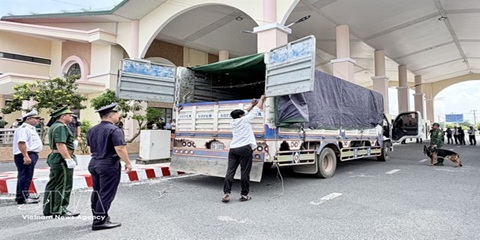
Trade between Việt Nam and Cambodia continues to grow, remaining a bright spot and a key pillar of bilateral cooperation as the two countries aim to raise two-way trade to US$20 billion in the coming years. After setting a record of more than $11.3 billion last year, bilateral trade reached about $8.7 billion in the first eight months of this year, up 8.3 per cent year on year.
TECHNOLOGY
AI BEGINNING TO RESHAPE RECRUITMENT CRITERIA
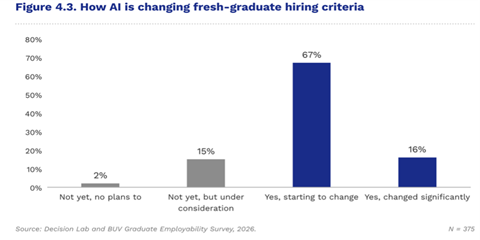
Digital literacy is the only capability area in which fresh graduates meet employers’ expectations, according to a new report. Yet, it is also the standard rising fastest, as businesses increasingly expect new hires to use AI effectively in the workplace. Some 83 per cent of employers say AI has changed, or is beginning to change, their hiring criteria, while 94 per cent report higher expectations for digital and AI capabilities than they had two to three years ago.
INFRASTRUCTURE / CONSTRUCTION / LOGISTIC / PORT
ĐÀ NẴNG GREEN-LIGHTS US$105 MILLION THAI DEVELOPMENT DEAL
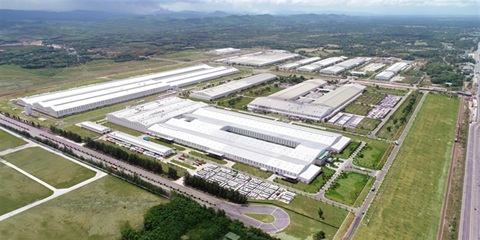
The central city has approved an investment proposal by Thailand’s WHA Group to develop infrastructure for the 400ha WHA Đà Nẵng Industrial Park project on two communes of Thăng Bình and Đồng Dương, with an investment of more than VNĐ2.7 trillion (US$105 million). The city said it approved WHA Industrial Development International's status as an investor in the project, which is expected to take place between 2027 and 2034.
VIETNAM ECONOMY INVESTMENT
MOBILE PHONE EXPORTS RISE 20% TO $51.8 BILLION IN FIRST NINE MONTHS
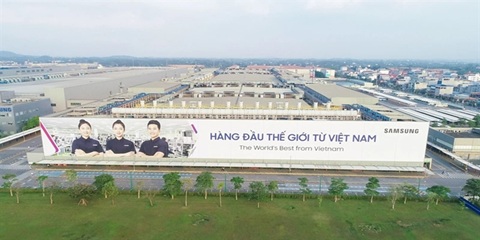
Exports of mobile phones and components rose 20 per cent year-on-year to nearly US$51.8 billion in the first nine months of 2026, with China, the US and Republic of Korea accounting for more than half of the total. Shipments to the three markets reached a combined $26.18 billion, or 50.6 per cent of total exports of the product group during the period, according to data from the Vietnam Department of Customs under the Ministry of Finance.
VIETNAM ECONOMY INVESTMENT
FRUIT AND VEGETABLE EXPORTS POISED TO HIT $10 BILLION IN 2026
Fruit and vegetable exports are on track to reach nearly US$10 billion in 2026, after rising 19.9 per cent year on year to nearly US$7.4 billion in the first nine months, driven by strong seasonal demand and abundant tropical fruit supplies. The Ministry of Agriculture and Environment said the growth reflected stronger international demand for fresh produce and processed agricultural products.
GARMENT / TEXTILE
TEXTILE EXPORTS FACE DUAL CHALLENGES OF SUSTAINING ORDERS AND BOOSTING EFFICIENCY AMID GROWING COMPETITION
Data shows that the textile and garment sector maintained its growth momentum in the first nine months of this year. The industry's total export turnover reached an estimated US$35.721 billion in the first nine months of this year, up 3.3 per cent year-on-year. Despite posting encouraging export figures, Vietnamese textile and garment enterprises continue to navigate unpredictable market variables.
Events Sponsors






















