Want to be in the loop?
subscribe to
our notification
Business News
DEPOSIT INTEREST RATES UNDER PRESSURE TO INCREASE
Instead of introducing promotional programmes, as in the past, banks have used their high deposit rates to lure customers. Currently, the central bank sets a cap of 5.5 per cent on short-term deposits of less than 6 months. Meanwhile, higher rates are floated.
Viet Capital Commercial Joint Stock Bank (Viet Capital Bank), for example, has launched a programme in which online deposit interest rates have been increased by 0.3 per cent per year since April.
Also, Viet A Commercial Joint Stock Bank (VietA Bank) offers an additional 0.2 per cent interest rate per year for depositors aged 45 years and older.
Other banks also add 0.2 to 0.3 per cent interest rate per year to customers depositing large amounts of money.
The Export Import Commercial Joint Stock Bank (Eximbank), Sacombank and Orient Commercial Joint Stock Bank (OCB) are offering the highest deposit rates of 7.5 per cent, 7.55 per cent and 7.7 per cent per year, respectively, for 13 month deposits of at least VNÐ500 billion (US$22.2 million).
A report from the National Financial Supervisory Committee also showed that liquidity at banks last month was under pressure, pushing inter-bank rates up 1 per cent for all terms.
Experts attributed the interest hike in deposits to rising credit demands and the draft revised Circular 36/2014/TT-NHNN, which lowers the ratio of using short-term funds for medium and long-term rates from 60 to 40 per cent. Currently, the ratio at State-owned banks is 33.91 per cent, while the rate is higher at 35.58 per cent at commercial joint stock banks. Therefore, these banks have the need to attract long-term mobilisation to ensure they reach their prescribed limits.
Additionally, banking expert Nguyen Tri Hieu said that banks are being forced to hike deposit interest rates to ensure liquidity, besides meeting rising credit demands.
Further, according to experts, banks also need capital to purchase Government bonds. This year, the finance ministry plans to issue G-bonds worth VND220 trillion, of which nearly VND111.79 trillion in G-bonds were issued by May 6. In Viet Nam, banks are allocated more than 80 per cent of total G-bond purchases.
Banks also need capital to boost consumer lending, as these loans have higher interest rates than corporate loans.
As for VP Bank, for example, after reporting a profit of nearly VNÐ1 trillion from consumer loans last year, the bank targeted its consumer loans to rise by more than 30 per cent this year.
Pham Hong Hai, general director of HSBC Vietnam, told baodautu.vn that deposit interest rates are likely to inch up in the near future due to increasing credit demands, as well as the Ministry of Finance needing to issue a large volume of G-bonds, and to comply with the draft of Circular 36/2014/TT-NHNN.
Unlike deposit rates, lending rates in dong at banks have largely remained steady in recent years. According to Hai, lending rates are likely to rise slightly in the near future because banks need to maintain a reasonable profit margin when input costs have increased. However, medium- and long-term lending rates will be reduced for businesses with good credit.
According to financial expert Huynh Trung Minh, lending rates will only increase slightly, compared to current levels, unless there are strong impacts from external factors, especially exchange rates if the US Federal Reserve increases US dollar interest rates. The reason is that if lending rates increase, it will be difficult to increase the demand for credit.
According to banking expert Huynh Buu Son, lending rates available to applicable enterprises are currently ranging from 8 to 9 per cent per year on short term loans, and higher on medium and long term loans, while the demands for credit among enterprises manufacturing export products are mainly short term. However, if lending rates are raised, enterprises will reconsider their business and investment plans.
Source: VNS
Related News
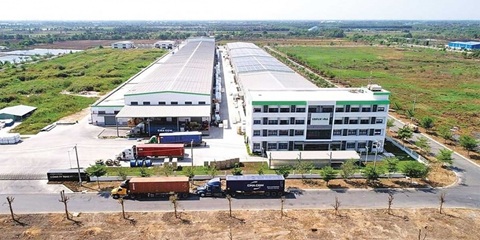
VIETNAM ECONOMY INVESTMENT
FOREIGN INVESTORS SEEKING A SYNCHRONISED MANUFACTURING ECOSYSTEM
Instead of focusing only on land costs and incentives as usual, foreign investors are seeking a synchronised manufacturing ecosystem, from stable power supply and logistics to shared infrastructure and the convenience of completing residence procedures for experts to serve their long-term investment in the country.
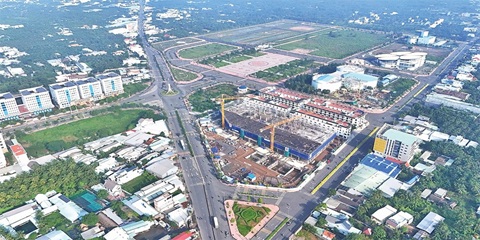
INFRASTRUCTURE / CONSTRUCTION / LOGISTIC / PORT
DONG THAP PROVINCE STEPS UP INDUSTRIAL EXPANSION AND INFRASTRUCTURE CONNECTIVITY
Accelerating public investment, strengthening inter-regional connectivity, and expanding industrial land are helping Dong Thap efficiently bolster competitiveness and drive economic growth. Following the 2025 merger of the former Dong Thap and Tien Giang provinces, the expanded Dong Thap province in the Mekong Delta faces mounting pressure to accelerate infrastructure development and strengthen connectivity among local economic zones, urban areas, industrial parks (IPs), and production centres.
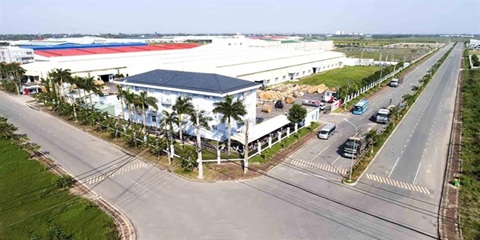
PROPERTY / INDUSTRIAL ZONE
HCM CITY ATTRACTS US$5.7 BILLION INTO EXPORT PROCESSING AND INDUSTRIAL ZONES
HCM City attracted US$5.7 billion in domestic and foreign investment into its export processing and industrial zones during the first nine months of 2026. The figure exceeded the city's full-year target by 31 per cent, highlighting strong momentum in high-quality industrial investment under Resolution No.10-NQ/TW. Total investment reached 131 per cent of the 2026 target of $4.25 billion and represented a 29 per cent increase compared with the same period in 2025, according to the city's Export Processing and Industrial Zones Authority (HEPZA).

BANKING / FINANCE / INSURANCE / TAX
REMITTANCES TO HCM CITY RISE NEARLY 40% IN Q3
Remittances to HCM City reached more than US$2.83 billion in the third quarter of this year, up 39.5 per cent from the previous quarter and 3.6 per cent year-on-year. This was the first quarter showing positive annual growth this year, helping narrow the decline in remittance inflows over the first nine months. According to the State Bank of Vietnam (SBV)’s Regional Branch 2, remittances transferred to HCM City through credit institutions and economic organisations totalled $2.835 billion in Q3, an increase of more than $802 million from the previous quarter.

VIETNAM ECONOMY INVESTMENT
LOCALITIES REPORT BREAKTHROUGH RESULTS IN FDI IN FIRST NINE MONTHS
In Ho Chi Minh City, total registered capital reached $17.2 billion in the first nine months, up 4.2 times from the same period last year. The figure included more than $9.35 billion in newly registered capital and over $4.9 billion in additional capital for existing projects. Foreign investors also registered more than $2.9 billion through capital contributions and share purchases.
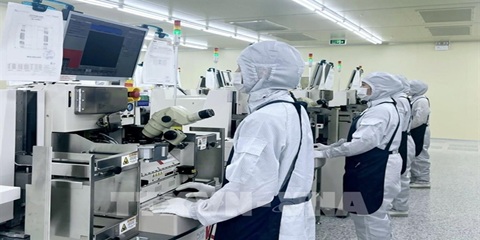
TECHNOLOGY
TECH SECTOR GROWTH OPENS UP OPPORTUNITIES FOR VIỆT NAM TO GO GLOBAL
The growth of the electronics, semiconductor and high-tech sectors worldwide is opening up a variety of opportunities for Vietnamese enterprises to integrate more deeply into the global supply chain. However, to become suppliers for these corporations, domestic enterprises must meet rigorous standards regarding quality, technology, productivity and order fulfilment capabilities.
Events Sponsors






















