Want to be in the loop?
subscribe to
our notification
Business News
DIGITAL ERA UNLOCKS VIETNAMESE LOGISTICS
The adoption of digital transformation presents an opportunity for Vietnam’s logistics sector to make significant gains in productivity and efficiency, but also highlights the urgent need for cybersecurity throughout the process.
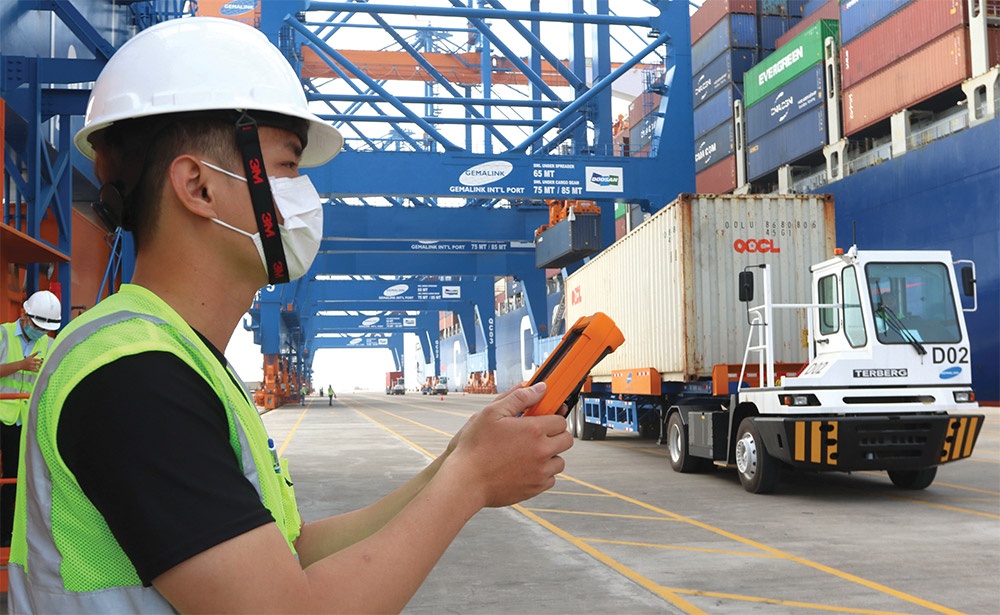
Logistics companies are becoming cyberattack targets and must be careful when using new platforms, photo Le Toan
Vietnam’s logistics industry is estimated to be valued at $40-52 billion and is experiencing strong growth. However, the sector faces a series of challenges, including fragmented data, lack of transparency, and disjointed management systems, all leading to low operational efficiency and difficulties in ensuring service quality.
According to Nguyen Tuan Huy, head of Digital Transformation at MobiFone Telecommunications Corporation, the company struggles to track down the exact location of goods during domestic transport, while international logistics firms have long offered real-time tracking capabilities, Huy shared at a seminar on digital transformation and cybersecurity in logistics in Ho Chi Minh City on June 13.
According to Huy, the solution lies in a comprehensive push towards digital transformation. By applying technologies such as AI, robotics, and especially 5G networks, businesses can monitor the entire supply chain 24/7, optimise warehousing, manage inventory, and significantly reduce the loss of goods.
“Attaching 5G-enabled sensors to goods enables real-time tracking, helping reduce lost items by up to 90 per cent and save over 15 per cent in transportation costs,” Huy said.
Cao Cam Linh, executive committee member of the Vietnam Logistics Business Association, said that beyond operational gains, digital transformation is also key for businesses to adapt to the rising trend of green logistics, a pressing requirement from major markets such as Europe, the US, and Japan.
“We haven’t even had an opportunity to grow up before being asked to go greener, from packaging, warehouse operations, and transportation to carbon standards and traceability. All of this requires digitalisation,” she said.
Nonetheless, Linh believes that pressure from policies, investors, and global consumers is pushing Vietnamese logistics businesses to rapidly evolve.
“Digital transformation helps reduce CO2 emissions in logistics and also lays the groundwork for a circular, eco-friendly operating ecosystem that earns the trust of international partners,” Linh cited.
Ho Trong Dat, deputy director of the Information Security Centre at the Vietnam Posts and Telecommunications Group (VNPT), warned that alongside the benefits of digital transformation, the logistics industry is facing increasing risks in cybersecurity.
“As connectivity infrastructure grows rapidly, logistics businesses are becoming frequent targets of cyberattacks, particularly as many now rely on virtual servers, outsourcing, and cloud-based platforms,” Dat said.
Citing real-world examples, Dat took examples of some cyberattacks take only two hours, from the moment hackers exploit passwords leaked years ago to the successful deployment of malware.
“With such attack speed, he argued that system protection cannot rely solely on human vigilance but requires automated monitoring, early warning, and incident response systems,” he added.
Dat emphasised that data security is not merely a technical issue, but also deeply tied to human factors. Raising awareness about information safety among all personnel across the logistics chain is essential to maintaining system stability.
Citing a simulation programme that VNPT implemented at a company over four years, Dat reported that the rate of employees falling for phishing emails dropped from 15 to 2 per cent, demonstrating the effectiveness of cybersecurity awareness training.
“Digital transformation must be accompanied by IT systems, and for IT systems to remain stable, they must be secured. Without information security, a system can be paralysed in just one minute,” he added.
According to the Vietnam Internet Association, logistics has long been a key sector and a critical soft infrastructure for trade and economic development. By the end of this year, Vietnam’s logistics sector expects to reach a market size of over $50 billion, with an annual growth rate of 6.7 per cent, contributing approximately 5.17 per cent to national GDP.
Source: VIR
Related News

MEMBER CORNER / PROMOTIONS
HCMC | CERTIFIED SUSTAINABILITY PROFESSIONAL (CSP) TRAINING | REGISTRATION OPEN
As sustainability becomes deeply embedded in corporate strategy and supply-chain operations across Vietnam, Hong Kong Business Association Vietnam is pleased to endorse the upcoming Certified Sustainability Professional (CSP) training program by the Asia Institute for Sustainability (AIS) - a premier internationally recognized ESG credential in Vietnam.
VIETNAM ECONOMY INVESTMENT
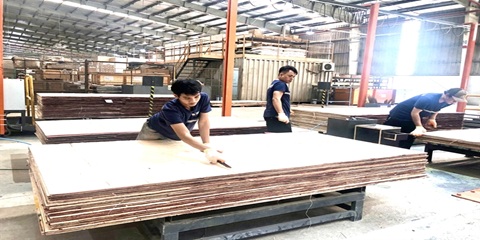
HCM CITY SAYS HOW IT PLANS TO ACHIEVE 10-11% ANNUAL EXPORT GROWTH FOR REST OF DECADE
The southern economic hub aims to strengthen its role as the country’s largest import-export centre while developing into a regional transhipment centre in Southeast Asia, supported by green and digital transformation and a circular economy. HCM City has outlined measures to expand production capacity, cut logistics costs, diversify export markets, and help businesses meet increasingly stringent international standards as it targets average annual export growth of 10-11 per cent through 2030.
VIETNAM ECONOMY INVESTMENT
HCM CITY LEADS ECONOMIC RESTRUCTURING IN SOUTHEAST REGION
According to Associate Professor, Dr Vũ Tuấn Hưng, director of the Institute of Social Sciences of the Southern Region, the Southeast is a strategically important socio-economic space in Việt Nam’s development given its advantages in location, industry, trade, services, logistics, science and technology, urbanisation and human resources.
TECHNOLOGY
DIGITAL TRANSFORMATION TURNED INTO PRACTICAL TOOLS FOR PEOPLE, BUSINESSES
Việt Nam is moving its digital transformation agenda beyond policy frameworks and individual technology platforms towards practical applications that address everyday needs, as authorities seek measurable outcomes from science, technology and innovation. Under Politburo Resolution No. 57-NQ/TW issued on December 22, 2024, the implementation is increasingly shifting from simply completing assigned tasks towards developing concrete products and services for citizens and businesses.

TECHNOLOGY
APPLYING TECHNOLOGY FOR ECONOMIC TRANSFORMATION
Having completed its new rural development program, Hanoi is shifting its focus toward improving development quality and building smart, sustainable rural areas. The transformation of Dong La orchid-growing village in An Khanh, a western commune of Hanoi, shows how digital technology is becoming a driver of production, market expansion, and higher incomes for local residents.

MEMBER CORNER / PROMOTIONS
VIGLACERA HONORED AS THE "LEADING GREEN INDUSTRIAL REAL ESTATE DEVELOPER 2026"
Organized by the Vietnam Investment Review, this prestigious awards program recognizes industry pioneers advancing eco-industrial parks, clean energy transition, and rigorous ESG standards. Outperforming competitors through a rigorous evaluation, Viglacera Corporation – JSC proudly ranked among the Top 5 highest-positioned enterprises in the Leading Green Industrial Real Estate Developers 2026 category, reinforcing its premier position in Vietnam’s industrial real estate sector.
Events Sponsors






















