Want to be in the loop?
subscribe to
our notification
Business News
E-COMMERCE INDUSTRY SEEKS TO LEVERAGE LOGISTICS GROWTH
Flexible warehousing models that can help businesses optimise their storage are required amid the development of e-commerce, experts have suggested.
"AirBnB for logistics" is an ideal solution, real-estate service firm, Jones Lang LaSalle (JLL), said, explaining that it is a shared economic model that allows businesses to optimise storage space that is not in use during the low season.
It cited the examples of a company selling Christmas trees that only needs space in winter and a pool accessories maker that needs it in summer.
“The growth of e-commerce has driven demand for industrial real estate in the last 10 years, and the sudden spike in online activity since the crisis has accelerated that demand,” Trang Bùi, senior director of markets, JLL Vietnam, said.
In 2020, the COVID-19 pandemic has caused the sudden increase of e-commerce adoption, particularly for food, fast-moving consumer goods, health and pharmaceutical products.
The trend is happening globally, especially in the Asia Pacific, America and Europe.
Việt Nam has a young and tech-savvy population to support the rise of e-commerce, which is expected to carry the industrial property industry through the current uncertain time.
During the social-distancing period, almost every industry was affected, and the mobility restriction gave e-commerce more customers, meaning the pandemic’s effect on it was less severe than some other industries like tourism and traditional commerce.
A JLL report said the sudden increase in demand is forcing producers of staple goods to scramble for additional warehouse capacity and companies to rethink supply chains.
“This shift in customer behaviour has increased both short- and long-term demand for industrial real estate properties that allow companies to deliver orders faster by being closer to their customer base,” Bùi said.
According to JLL, the surges in online demand for goods during the pandemic highlight the need to rethink aspects of supply chain management. The skyrocketing order volume has forced e-commerce companies to keep more stocks in locations near customers, fuelling demand for flexible warehouses.
It said it has been receiving requests from major e-commerce customers to rent warehouses of 10-15ha near the city centre, as demand increases strongly during the year-end shopping season.
To mitigate the risk of disruption, many occupiers will seek to invest in distribution centres closer to parcel hubs to ensure there is minimal disruption the next time a major global catastrophe happens.
Increasing transportation options, including inter-modal rail, so that that there is less reliance on trucks, and more automated facilities, can also reduce the impact during major events.
Giant e-commerce platform Shopee told Việt Nam News the company has set up a third fulfilment warehouse at Tân Phú Trung Industrial Park in HCM City’s Củ Chi District, its largest. The others are in the city’s District 7 and Long Biên District, Hà Nội.
Shopee picked a strategic location for the new warehouse that enables Shopee Express service and the company’s other shipping partners to operate more efficiently. The location is also convenient for delivery to central provinces and the Mekong Delta.
Shopee said it could now completely meet the growing demand in the vicinity of HCMC and in the central provinces.
Tuấn Anh, managing director of Shopee Vietnam, said e-commerce has a lot of potential in Việt Nam, making industrial real estate the “darling” of the commercial real estate industry.
Source: VNS
Related News
MEMBER CORNER / PROMOTIONS
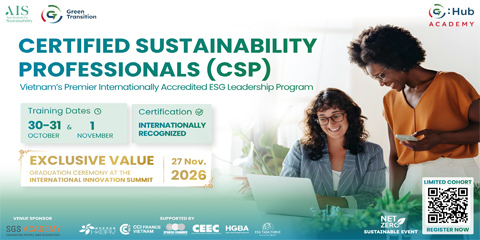
HCMC | CERTIFIED SUSTAINABILITY PROFESSIONAL (CSP) TRAINING | REGISTRATION OPEN
As sustainability becomes deeply embedded in corporate strategy and supply-chain operations across Vietnam, Hong Kong Business Association Vietnam is pleased to endorse the upcoming Certified Sustainability Professional (CSP) training program by the Asia Institute for Sustainability (AIS) - a premier internationally recognized ESG credential in Vietnam.
VIETNAM ECONOMY INVESTMENT
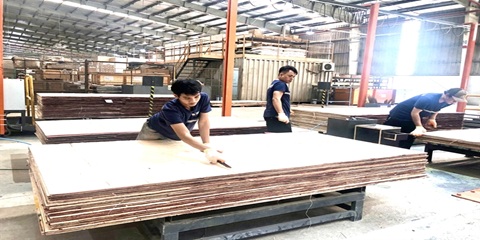
HCM CITY SAYS HOW IT PLANS TO ACHIEVE 10-11% ANNUAL EXPORT GROWTH FOR REST OF DECADE
The southern economic hub aims to strengthen its role as the country’s largest import-export centre while developing into a regional transhipment centre in Southeast Asia, supported by green and digital transformation and a circular economy. HCM City has outlined measures to expand production capacity, cut logistics costs, diversify export markets, and help businesses meet increasingly stringent international standards as it targets average annual export growth of 10-11 per cent through 2030.
VIETNAM ECONOMY INVESTMENT
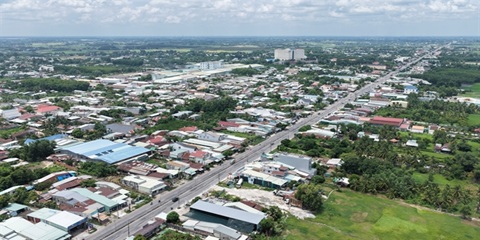
HCM CITY LEADS ECONOMIC RESTRUCTURING IN SOUTHEAST REGION
According to Associate Professor, Dr Vũ Tuấn Hưng, director of the Institute of Social Sciences of the Southern Region, the Southeast is a strategically important socio-economic space in Việt Nam’s development given its advantages in location, industry, trade, services, logistics, science and technology, urbanisation and human resources.
TECHNOLOGY
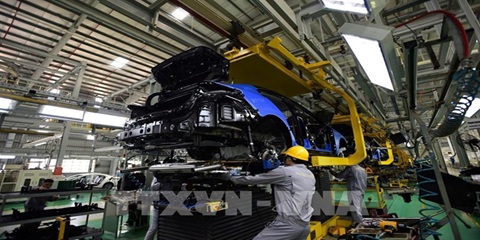
DIGITAL TRANSFORMATION TURNED INTO PRACTICAL TOOLS FOR PEOPLE, BUSINESSES
Việt Nam is moving its digital transformation agenda beyond policy frameworks and individual technology platforms towards practical applications that address everyday needs, as authorities seek measurable outcomes from science, technology and innovation. Under Politburo Resolution No. 57-NQ/TW issued on December 22, 2024, the implementation is increasingly shifting from simply completing assigned tasks towards developing concrete products and services for citizens and businesses.
TECHNOLOGY
APPLYING TECHNOLOGY FOR ECONOMIC TRANSFORMATION
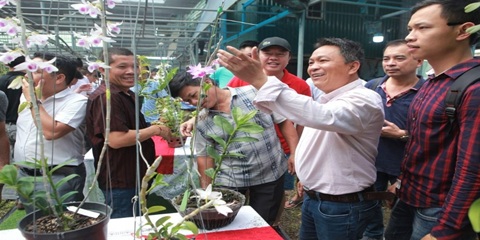
Having completed its new rural development program, Hanoi is shifting its focus toward improving development quality and building smart, sustainable rural areas. The transformation of Dong La orchid-growing village in An Khanh, a western commune of Hanoi, shows how digital technology is becoming a driver of production, market expansion, and higher incomes for local residents.

MEMBER CORNER / PROMOTIONS
VIGLACERA HONORED AS THE "LEADING GREEN INDUSTRIAL REAL ESTATE DEVELOPER 2026"
Organized by the Vietnam Investment Review, this prestigious awards program recognizes industry pioneers advancing eco-industrial parks, clean energy transition, and rigorous ESG standards. Outperforming competitors through a rigorous evaluation, Viglacera Corporation – JSC proudly ranked among the Top 5 highest-positioned enterprises in the Leading Green Industrial Real Estate Developers 2026 category, reinforcing its premier position in Vietnam’s industrial real estate sector.
Events Sponsors






















