Want to be in the loop?
subscribe to
our notification
Business News
ECONOMIC GROWTH HINGES ON GEOPOLITICAL OUTCOMES
Economists and experts are gauging possible impacts of the Russia-Ukraine conflict on Vietnam’s economy, focusing on effects on the country’s rebound efforts, as well as possible gains from the event.
“The escalating conflict between Russia and Ukraine is entailing a spike in the price of many commodities and input materials, putting Vietnam’s inflation under big pressure,” said Phan Duc Hieu, member of the National Assembly’s Economic Committee.
Many other experts are like-minded. Due to soaring fuel prices in the global market, the ministries of finance and industry and trade have adjusted the price of petrol to $1.3 per litre, a record level since 2005. With the current situation, the petrol price is expected to further swell in the upcoming time.
Meanwhile, the gold price in the domestic market has surpassed $3,000 per tael, in parallel to constantly increasing steel and fertiliser prices. “This would significantly drive up the living and production costs of people and businesses,” Hieu noted.
Can Van Luc, senior financial expert, and his research team at state-owned lender BIDV outline that the Russia-Ukraine conflict could dampen the country’s economic growth and inflation control efforts, thereby placing pressure on economic management, particularly monetary policies.
The team estimated that the Russia-Ukraine conflict might push up fuel prices by 30-40 per cent on average compared to early 2022, causing a trade deficit associated with petroleum products of up to $9 billion this year, compared to a mere $6.3 billion in 2021.
Likewise, the average consumer price index would pick up 0.8-1 percentage points to 3.8-4.2 per cent this year, which is in line with the forecast earlier presented by the National Centre for Socio-Economic Information and Forecasting (NCSIF).
Experts assumed that the Russia-Ukraine conflict would have widespread impacts across the board. Accordingly, the fertiliser price could reach another peak, along with swelling animal feed costs – both of which can dampen agricultural production.
A sharp jump in steel prices – a pivotal constituent in building material costs – might also slow down the disbursement of public investments, countering the government’s commitment to accelerate the pace and ensure a smooth economic rebound by 2023.
Nevertheless, experts assumed that the conflict might also entail several positive factors. In the past week, a number of global firms have left Russia, providing an opportunity for Vietnam to receive those capital inflows.
From another angle, Vu Tien Loc, chairman of the Vietnam International Arbitration Centre, said that now is the right time for Vietnam to deepen its roots in the Russian market, capitalising on export facilitation. The value of the mutual trade just amounted to $7.3 billion last year, with investment flows from Russia to Vietnam $953.7 billion.
More costly oil prices could also be beneficial to Vietnam’s oil and gas sector. According to the Ministry of Finance, thanks to rising oil prices, the state’s income from crude oil hiked 28 per cent in the first two months of 2022.
Higher oil prices have also brought a wanted boost in performance for state-owned oil and gas group PetroVietnam, which harvested a 34-per-cent jump in the total revenues in the first two months of this year and a 52-per-cent jump in its budget contribution during the period.
With a more prudent mindset, Deputy Minister of Planning and Investment Tran Quoc Phuong noted that despite these benefits, there are repercussions for Vietnam’s economy, with escalating oil prices posing a real threat to inflation control and to maintaining macroeconomic stability.
Hieu also raised concerns the conflict could overshadow Vietnam’s economic rebound endeavours. The government, therefore, would need to hasten the enactment of policies and facilitate enforcement of policies aiding economic rebound, Hieu stated.
Luc estimated that, in the case of high inflation leading to the adjustment of economic management policies, Vietnam’s GDP growth could lose 1-1.3 per cent. The economy, therefore, would only expand 5.7-5.9 per cent this year, possibly even less.
“Vietnam’s economy faces a big challenge in achieving 6-6.5 per cent growth and controlling inflation at around 4 per cent this year,” Luc said.
Earlier, Luong Van Khoi, deputy director of the NCSIF, calculated that if the oil price is at $100 per barrel, it will reduce Vietnam’s economic growth by 0.2 per cent. If oil prices are at $140 per barrel, the drop could be as much as 0.4 per cent.
“This is just regarding the oil price scenario. But there are many other factors instrumental to global economic growth, commodity supply chains, and global financial markets which all have impacts on Vietnam’s economic growth,” Khoi said.
Source: VIR
Related News

CHARITY / EXHIBITION / OTHER EVENTS
INVESTMENT OPPORTUNITIES IN CA MAU PROVINCE: 96 PROJECTS AND 20 STRATEGIC PROJECTS
We are pleased to share with you information on investment projects currently seeking investors in Ca Mau Province. Should your esteemed company or association be interested, we kindly invite you to review the project information and complete the registration form via the links provided. The Ho Chi Minh City Investment and Trade Promotion Centre (ITPC) will consolidate the expressions of interest and facilitate connections with the leadership of Ca Mau Province at a meeting tentatively scheduled for 13 November 2026 in Ho Chi Minh City.

MEMBER CORNER / PROMOTIONS
BẰNG KIỀU LIVESHOW - A SYMPHONY OF LOVE UNDER THE GOLDEN GLOW
A masterclass in live music that takes the audience on a soulful journey through immortal love songs, guided by the peerless artistry and emotive storytelling of renowned singer Bằng Kiều. The highlight of the night is his seamless musical chemistry with special guest Triệu Hồng Ngọc, promising passionate and deeply resonant duets inside the magnificent Grand Ballroom.
INFRASTRUCTURE / CONSTRUCTION / LOGISTIC / PORT
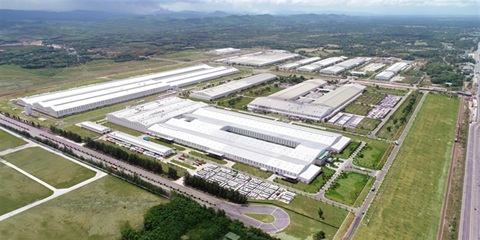
ĐÀ NẴNG GREEN-LIGHTS US$105 MILLION THAI DEVELOPMENT DEAL
The central city has approved an investment proposal by Thailand’s WHA Group to develop infrastructure for the 400ha WHA Đà Nẵng Industrial Park project on two communes of Thăng Bình and Đồng Dương, with an investment of more than VNĐ2.7 trillion (US$105 million). The city said it approved WHA Industrial Development International's status as an investor in the project, which is expected to take place between 2027 and 2034.
VIETNAM ECONOMY INVESTMENT
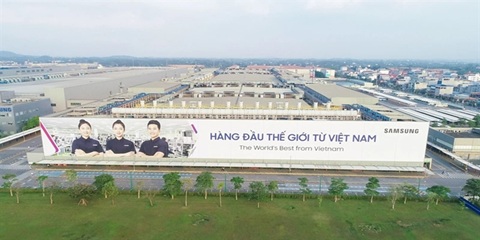
MOBILE PHONE EXPORTS RISE 20% TO $51.8 BILLION IN FIRST NINE MONTHS
Exports of mobile phones and components rose 20 per cent year-on-year to nearly US$51.8 billion in the first nine months of 2026, with China, the US and Republic of Korea accounting for more than half of the total. Shipments to the three markets reached a combined $26.18 billion, or 50.6 per cent of total exports of the product group during the period, according to data from the Vietnam Department of Customs under the Ministry of Finance.

INFRASTRUCTURE / CONSTRUCTION / LOGISTIC / PORT
VIỆT NAM-CAMBODIA TRADE GATHERS PACE TOWARDS $20 BILLION TARGET
Trade between Việt Nam and Cambodia continues to grow, remaining a bright spot and a key pillar of bilateral cooperation as the two countries aim to raise two-way trade to US$20 billion in the coming years. After setting a record of more than $11.3 billion last year, bilateral trade reached about $8.7 billion in the first eight months of this year, up 8.3 per cent year on year.
VIETNAM ECONOMY INVESTMENT
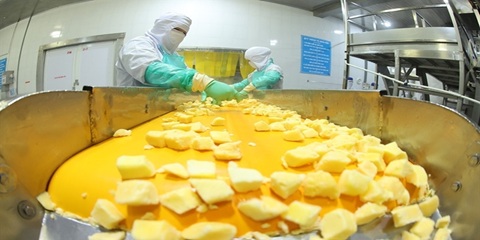
FRUIT AND VEGETABLE EXPORTS POISED TO HIT $10 BILLION IN 2026
Fruit and vegetable exports are on track to reach nearly US$10 billion in 2026, after rising 19.9 per cent year on year to nearly US$7.4 billion in the first nine months, driven by strong seasonal demand and abundant tropical fruit supplies. The Ministry of Agriculture and Environment said the growth reflected stronger international demand for fresh produce and processed agricultural products.
Events Sponsors






















