Want to be in the loop?
subscribe to
our notification
Business News
EFFECTIVE IMPLEMENTATION OF PRIORITY PUBLIC INVESTMENTS: KEY TO SUPPORT GROWTH
The global landscape for 2022 was volatile and uncertain, weighed down by slowing growth and falling demand, persistent inflationary pressures and more aggressive monetary tightening, as well as heightened geopolitical tensions. This continues to be a double risk to global macroeconomic performance in 2023, as well as to Vietnam as a highly open economy.
This statement was delivered by Madam Carolyn Turk, World Bank Country Director for Vietnam, at an event to release the WB's latest Taking Stock report in Hanoi.
Growth expected at 6.3% in 2023
Vietnam’s economic growth is projected to ease to 6.3% in 2023 from a robust 8.2% last year, as services growth moderates and higher prices and interest rates weigh on households and investors, according to the World Bank's report. Growth is expected to pick up to 6.5% in 2024 as the economies of Vietnam’s main export markets gain strength.
The outlook for Vietnam reflects heightened uncertainty in the global economy. Downside risks include weaker-than-expected growth in Vietnam’s major export markets, which include the United States, China and the Eurozone, tightening financial conditions, higher domestic inflation, weaknesses in the balance sheets of corporate, banking and household sectors, and financial sector vulnerabilities.
Domestic and external headwinds warrant increased vigilance and data-driven policy responses. These include managing the trade-off between growth and inflation and strengthening the supervisory framework for the financial sector. On the upside, stronger than expected recovery of global growth could lift exports and hence growth above the baseline projection is grounded.
Vietnam has the fiscal space to implement measures to boost growth
Ms. Carolyn Turk said, Vietnam's economy can achieve an even better outcome if the fiscal implementation, especially public investment, is made more effective. The role of supportive fiscal policy and effective enforcement will continue to be crucial to Vietnam's economic recovery and growth, especially amid global headwinds. Vietnam's monetary and financial markets were volatile in 2022 while authorities took swift action to restore market confidence, many systemic weaknesses in the financial and banking market were revealed - and they may likely affect Vietnam's macroeconomic stability. Addressing these weaknesses through drastic and consistent reforms will ensure not only stability but also long-term economic performance and growth.
“Vietnam has the fiscal space to implement measures to boost growth, unlike many other countries. Effective implementation of priority public investments is key to support growth, both in the short-term and in the longer-term. Also, fiscal and monetary policies must be synchronized to ensure that support to the economy and macroeconomic stability are achieved effectively,” said Ms. Carolyn Turk
For Vietnam to achieve its objective of becoming a high-income economy by 2045, the country should more effectively leverage its diversified services sector to secure more sustained productivity growth. This would entail undertaking reforms to enhance services sector productivity and its cross-sectoral contributions to the productivity growth of manufacturing and agricultural sectors. Vietnam’s services sector has grown as a share of the economy, employed a greater share of workers, and seen its labor productivity increasing in the decade since 2019. However, Vietnam's performance in this area lags behind peer countries such as Malaysia, the Philippines, and Indonesia. Exports of knowledge-rich services known as “global innovator services” constitute only 9% of total services exports, and only 6.4% of total employment in the services sector is in this sub-sector, which includes information and communications technology, finance, and professional services, which are among the most productive services areas in the economy. The small scale of firms, restrictions to services trade, low technology adoption, and scarcity of inter-sectoral linkages affect productivity, suggesting that there is room for improvement through appropriate policy actions.
To accelerate growth of this sector, Vietnam could consider reducing restrictions to services trade and foreign investment in this area and implementing reforms to enhance competition and access to finance for domestic firms; encouraging firm-level product and process innovation and technology adoption; strengthening skills and capabilities of workers and managers; focusing on services that can promote further growth of other sectors, particularly processing and manufacturing.
Source: VCCI
Related News

MEMBER CORNER / PROMOTIONS
KNIC ENGAGES WITH GOVERNMENT AND HIGH-TECH BUSINESS COMMUNITIES IN CHINA
From Beijing to Shandong, KN Holdings and KN Industrial City are continuing to expand their engagement with government authorities, trade promotion organizations, and high-tech business communities in China. In Beijing, the delegation met with the Center for International Economic and Technological Cooperation under the Ministry of Industry and Information Technology (MIIT), exchanging perspectives on industrial and technology cooperation between the two markets.

VIETNAM ECONOMY INVESTMENT
VIETNAM’S TRADE TOPS $825 BILLION BY MID-SEPTEMBER
Figures released on September 21 showed goods trade reached nearly $55 billion in the first 15 days of September alone, bringing cumulative turnover since the beginning of the year to more than $825 billion. The strong growth reflects robust trade flows, with demand for consumer goods and production inputs remaining high.

TECHNOLOGY
VIỆT NAM'S BUSINESSES MOVE TOWARDS AI AGENTS
Việt Nam’s AI landscape is entering a new phase as businesses move beyond generative AI (GenAI) tools designed to assist human users towards autonomous AI, agentic AI and AI agents that can take action with limited supervision, experts have said. The shift comes as Việt Nam seeks to accelerate science and technology, innovation and digital transformation under Politburo Resolution 57-NQ/TW, issued on December 22, 2024.
GARMENT / TEXTILE
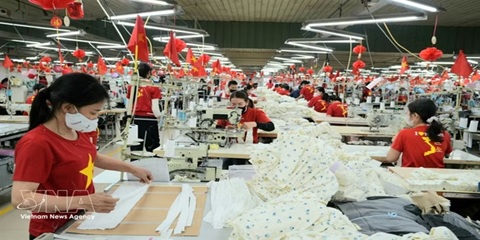
VIỆT NAM TARGETS $48 BILLION IN TEXTILE-GARMENT EXPORTS
Việt Nam’s textile and garment industry is facing both opportunities and challenges amid complex and unpredictable developments in the global market, prompting businesses to improve growth quality, optimise production costs and enhance adaptability in pursuit of an export turnover of about $48 billion this year. The target is considered an important milestone that requires concerted efforts from management agencies and the business community.
INFRASTRUCTURE / CONSTRUCTION / LOGISTIC / PORT
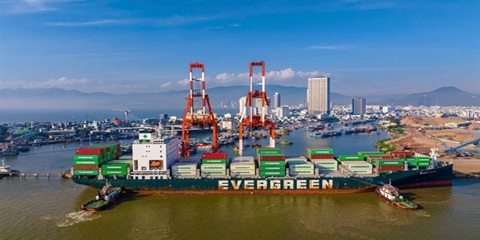
CUTTING LOGISTICS COSTS KEY TO BOOSTING EXPORTS
Reducing costs has become an increasingly urgent priority for import-export activities, particularly logistics costs, a conference in Hà Nội was told on Tuesday. According to Deputy General Director of the Ministry of Industry and Trade's Agency for Foreign Trade, Trần Thanh Hải, import-export activities has remained a bright spot for the economy in recent years, playing an important role and helping drive macroeconomic growth.
LEGAL UPDATE / POLICY
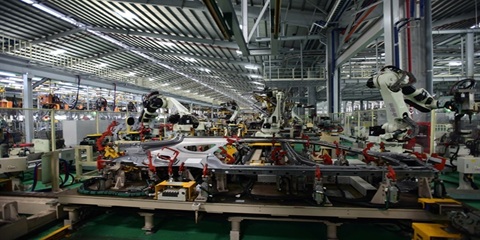
FLEXIBLE FISCAL POLICY HELPS DRIVE ECONOMIC GROWTH
Việt Nam’s fiscal policy has been implemented in a targeted expansionary manner since early 2026, helping maintain macroeconomic stability and supporting the country’s goal of achieving double-digit economic growth. According to the Ministry of Finance, State budget revenue in the first eight months of 2026 was estimated at VNĐ2.02 quadrillion (US$77.7 billion), equivalent to 80 per cent of the annual estimate and up 16 per cent year-on-year.
Events Sponsors






















