Want to be in the loop?
subscribe to
our notification
Business News
EFFECTIVE POLICIES RELATING TO FOREIGN ELEMENTS IN 2016 (PART 1)
Civil status registration
The Law No. 60/2014/QH13, dated November 20, 2014, on civil status came into force since January 1, 2016.
Under the Law, the district-level People’s Committees will be responsible for registering civil status events involving foreign elements. This decentralization aims to bring into full play the capacity of local authorities and strengthen the state management role of the provincial-level People’s Committees toward achieving the long-term objective of absolute delegation of the power to register civil status to local authorities.
Under the law, civil status events involving foreign elements include birth registration for children, marriage registration, guardianship registration, registration of parent and child recognition, and death registration.
* Birth registration for children born in Viet Nam and having a parent being a Vietnamese citizen and the other being a foreigner or a stateless person, a parent being a Vietnamese citizen residing in the country and the other being a Vietnamese citizen residing abroad, both parents being Vietnamese citizens residing abroad, or both parents being foreigners or stateless persons; birth registration for children born abroad with their birth not yet registered abroad and taken to reside in Viet Nam and having both parents being Vietnamese citizens or a parent being a Vietnamese citizen.
* Marriage registration between Vietnamese citizens and foreigners; between Vietnamese citizens residing in the country and Vietnamese citizens residing abroad; between Vietnamese citizens residing abroad; between Vietnamese citizens who also have foreign citizenship and Vietnamese citizens or foreigners; and between foreigners residing in Viet Nam.
* Guardianship registration between Vietnamese citizens and foreigners together residing in Viet Nam.
* Registration of parent and child recognition between Vietnamese citizens and foreigners; between Vietnamese citizens residing in the country and Vietnamese citizens residing abroad; between Vietnamese citizens residing abroad; between Vietnamese citizens also having a foreign citizenship and Vietnamese citizens or foreigners; and between foreigners either or both of whom permanently residing in Viet Nam.
New regulations on overseas workers
Decree 11/2016/ND-CP (Decree 11), dated February 3, 2016 on providing detailed guidance on the Labor Code 2012 focusing on management of expatriates working in Viet Nam came into force on April 1, 2016.
Decree 11 altered conditions for foreign experts to work in Viet Nam with working experience of at least three years in their fields (instead five years as earlier requirement).
The decree supplemented regulations on work permit exemption for foreign employees who stay in Viet Nam for working as a manager, an executive director, an expert or a technician for a period of less than 30 days; are studying at foreign schools/ institutions entering Viet Nam pursuant to an internship contract signed with agencies, organizations or enterprises in Viet Nam; family members of staff of foreign diplomatic missions; foreigners holding diplomatic passports entering Viet Nam to work for State agencies, political organizations, or socio-political organizations.
Two foreign subjects exempted from personal income tax
Since May 1, 2016, foreign experts in non-governmental aid programs and projects and Vietnamese working at representative offices of the United Nations system in Viet Nam have enjoyed personal income tax (PIT) exemption.
Under Decision No. 06/2016/QD-TTg (Decision 06), foreign experts shall be exempted from PIT on the direct income from the implementation of the activities of the foreign non-governmental aid programs and projects. The conditions for PIT exemption includes (i) a foreign nationality; (ii) entering into the contract with any agency, organization as the project owner or the foreign non-governmental aid owner that directly implements the aid project activities by the competent authority and the assignment terms for foreign experts accompanying the contract.
Decision 07/2016/QD-TTg (Decision 07) stipulates any Vietnamese working or employed under any labor contract to work at the representative office of the international organization of the UN in Viet Nam shall be exempted from PIT on any salary, wages paid in such office. The conditions for PIT exemption includes (i) the nationality of Viet Nam; (ii) an employee as confirmed by the authorized attorney of the representative office of the UN organizations in Viet Nam.
Fresh regulations on temporary custody and escorted
Decree No.17/2016/ND-CP, dated March 17, 2016, amends a number of articles of the Government’s Decree No. 112/2013/ND-CP issued on October 2, 2013, providing the sanction of expulsion and the measures of temporary custody and escorted transfer of violators according to administrative procedures, and management of foreigners violating Viet Nam’s law pending the completion of expulsion procedures.
The decree took effect since May 2, 2016, supplement to Clause 1 Article 3, Article 11 and Article 12 of Decree No. 112/2013/ND-CP in order to add more entities that are applied the form of temporary custody of persons according to administrative procedures.
Accordingly, if foreigners that have the act of smuggling, illegal transport of goods through border gates, abscond, destroy violated material evidences, means, they shall be remanded in custody.
Source: VGP
Related News

BANKING / FINANCE / INSURANCE / TAX
REMITTANCES TO HCM CITY RISE NEARLY 40% IN Q3
Remittances to HCM City reached more than US$2.83 billion in the third quarter of this year, up 39.5 per cent from the previous quarter and 3.6 per cent year-on-year. This was the first quarter showing positive annual growth this year, helping narrow the decline in remittance inflows over the first nine months. According to the State Bank of Vietnam (SBV)’s Regional Branch 2, remittances transferred to HCM City through credit institutions and economic organisations totalled $2.835 billion in Q3, an increase of more than $802 million from the previous quarter.

TECHNOLOGY
TECH SECTOR GROWTH OPENS UP OPPORTUNITIES FOR VIỆT NAM TO GO GLOBAL
The growth of the electronics, semiconductor and high-tech sectors worldwide is opening up a variety of opportunities for Vietnamese enterprises to integrate more deeply into the global supply chain. However, to become suppliers for these corporations, domestic enterprises must meet rigorous standards regarding quality, technology, productivity and order fulfilment capabilities.
VIETNAM ECONOMY INVESTMENT
FOREIGN INVESTORS SEEKING A SYNCHRONISED MANUFACTURING ECOSYSTEM
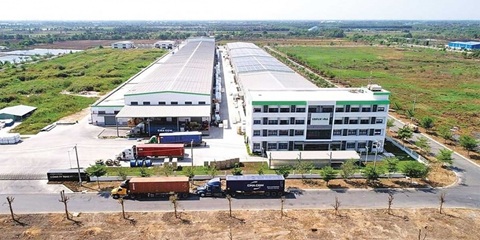
Instead of focusing only on land costs and incentives as usual, foreign investors are seeking a synchronised manufacturing ecosystem, from stable power supply and logistics to shared infrastructure and the convenience of completing residence procedures for experts to serve their long-term investment in the country.

MEMBER CORNER / PROMOTIONS
SENTRYSAFE FHW40200 – PROTECT YOUR VALUABLES, ENJOY PEACE OF MIND!
Looking for a reliable solution to protect your important documents, cash, and valuables from fire and water damage? Genuine SENTRYSAFE - Reliable protection for your valuables and peace of mind! Contact Sen Wai Vietnam for more information and personalized product recommendations.
PROPERTY / INDUSTRIAL ZONE
HCM CITY ATTRACTS US$5.7 BILLION INTO EXPORT PROCESSING AND INDUSTRIAL ZONES
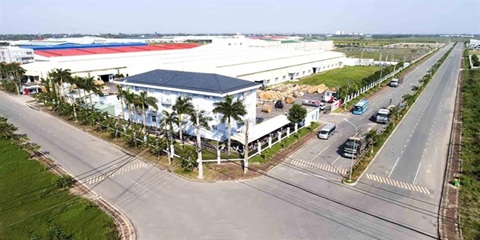
HCM City attracted US$5.7 billion in domestic and foreign investment into its export processing and industrial zones during the first nine months of 2026. The figure exceeded the city's full-year target by 31 per cent, highlighting strong momentum in high-quality industrial investment under Resolution No.10-NQ/TW. Total investment reached 131 per cent of the 2026 target of $4.25 billion and represented a 29 per cent increase compared with the same period in 2025, according to the city's Export Processing and Industrial Zones Authority (HEPZA).
INFRASTRUCTURE / CONSTRUCTION / LOGISTIC / PORT
DONG THAP PROVINCE STEPS UP INDUSTRIAL EXPANSION AND INFRASTRUCTURE CONNECTIVITY
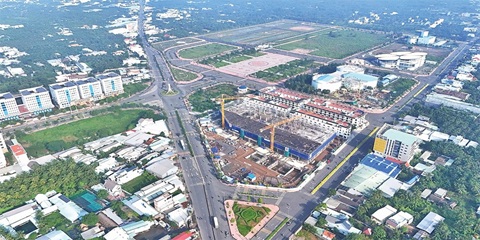
Accelerating public investment, strengthening inter-regional connectivity, and expanding industrial land are helping Dong Thap efficiently bolster competitiveness and drive economic growth. Following the 2025 merger of the former Dong Thap and Tien Giang provinces, the expanded Dong Thap province in the Mekong Delta faces mounting pressure to accelerate infrastructure development and strengthen connectivity among local economic zones, urban areas, industrial parks (IPs), and production centres.
Events Sponsors






















