Want to be in the loop?
subscribe to
our notification
Business News
FDI FOR INFRASTRUCTURE CONSTRUCTION: CONSISTENT SOLUTION NEEDED
Infrastructure is the foundation to draw FDI flows to any country. In fact, countries with poor infrastructure will find it difficult to catch the interest of foreign investor. To break this vicious cycle, the Government of Vietnam has focused on resolving infrastructure investment issues. In the context of the tight state budget, mobilising FDI flows for infrastructure development is prioritised.
According to a report by the Ministry of Planning and Investment, Vietnam will need about US$68 billion of foreign investment capital for infrastructure development over the next five years. This is a significant challenge to the Government of Vietnam.
Vietnam is currently working to improve legal provisions covering infrastructure development to attract foreign resources. It, however, still faces some obstacles needed to be addressed, for example, regulations on socialisation of aviation, electricity and energy, and public-private partnerships (PPP).
According to economists, experiences from developed countries in the region such as Indonesia, Thailand, and the United States show that specific indicators such as the quality of communication systems, roads, railways and air traffics are taken into account to maintain FDI.
Accelerating SOE privatisation to draw foreign investors
To raise competitiveness and market transparency, the Government of Vietnam set a roadmap to divest State capital from many infrastructure companies. Accordingly, in the 2016 - 2020 period, Vietnam has planned to reduce State ownership ratio in State-owned enterprises (SOEs). Accordingly, the Government will hold over 65 per cent of stake in aviation, mining and oil and gas exploration and production companies, 50 - 65 per cent of stake in chemical and aviation, petroleum and telecom (with network infrastructure) and electricity retail companies with over 30 per cent of market share.
The government may hold less than 50 per cent, even zero of stake in water supply and drainage, manufacturing, real estate, agriculture, forestry, power generation, telecommunication and construction.
For foreign businesses, the quickest way to have a foothold in the Vietnamese market is acquiring the stake in domestic companies, especially equitised SOEs. But, share value is inhibiting them from taking over local firms. Although selling price is not a legal content, the offering party must adhere to legal regulations on share offering because it is the government.
In the viewpoint of the Government, the selling price must be the market price. But, whether the selling price, the listed price or traded price on UPCoM is really the market price for long-term investors who buy a big share, not just a few units?
According to economists, transactions on the stock market are usually performed by financial institutions and speculators who cannot actually create value or provide long-term benefits to listed companies as strategic shareholders can. If such regulations are rigidly applied, they will adversely affect the privatisation process, which will lead to lengthy negotiations and dissatisfactory outcomes.
Thus, it is believed that the SOE privatisation can only be effective when the share selling price is negotiated on the market value of such SOE. Therefore, the share selling price to shareholders should not be based on trading prices on the stock market. Instead, it must be determined by business valuation and taken into account all rights, assets, future development and other market factors.
Adding appeal to PPP model
As for the public-private partnership (PPP) investment form, after two years of enforcing Decree 15/2015/ND-CP on PPP, no major PPP projects have been auctioned successfully. Economists attribute failures to many reasons, including the lack of investment incentives and weaker appeal than investments in other economic sectors.
Non-state commercial banks (both local and foreign) usually show their concerns over the practicality of PPP projects when they receive borrowing documents. In addition, restrictions on government guarantees and principles of financial compensation for PPP projects are among major issues needed to be resolved first to start PPP programmes in a comprehensive manner. These issues can be addressed on a project-by-project basis but the cost of preparing project proposals without guidance on possible support will make preparations more difficult.
To attract FDI funds for infrastructure construction projects, Vietnam should concentrate its resources to carry out some backbone projects funded by banks to demonstrate the feasibility and scale of this investment model, according to experts. When these projects are successful and profitable, foreign and domestic investors are motivated to pursue PPPs. The successful implementation of such projects will also help authorities and investors gain practical experience and lessons learned from law enforcement.
Source: VCCI
Related News
MEMBER CORNER / PROMOTIONS
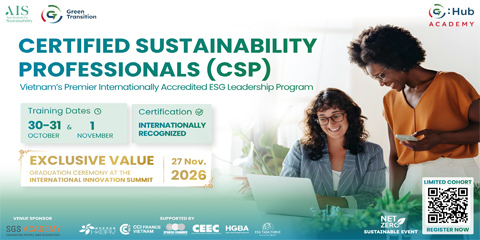
HCMC | CERTIFIED SUSTAINABILITY PROFESSIONAL (CSP) TRAINING | REGISTRATION OPEN
As sustainability becomes deeply embedded in corporate strategy and supply-chain operations across Vietnam, Hong Kong Business Association Vietnam is pleased to endorse the upcoming Certified Sustainability Professional (CSP) training program by the Asia Institute for Sustainability (AIS) - a premier internationally recognized ESG credential in Vietnam.
VIETNAM ECONOMY INVESTMENT
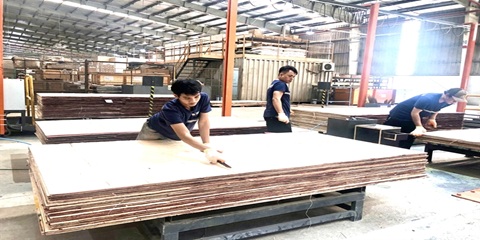
HCM CITY SAYS HOW IT PLANS TO ACHIEVE 10-11% ANNUAL EXPORT GROWTH FOR REST OF DECADE
The southern economic hub aims to strengthen its role as the country’s largest import-export centre while developing into a regional transhipment centre in Southeast Asia, supported by green and digital transformation and a circular economy. HCM City has outlined measures to expand production capacity, cut logistics costs, diversify export markets, and help businesses meet increasingly stringent international standards as it targets average annual export growth of 10-11 per cent through 2030.
VIETNAM ECONOMY INVESTMENT
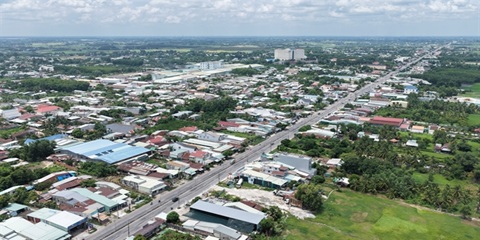
HCM CITY LEADS ECONOMIC RESTRUCTURING IN SOUTHEAST REGION
According to Associate Professor, Dr Vũ Tuấn Hưng, director of the Institute of Social Sciences of the Southern Region, the Southeast is a strategically important socio-economic space in Việt Nam’s development given its advantages in location, industry, trade, services, logistics, science and technology, urbanisation and human resources.
TECHNOLOGY
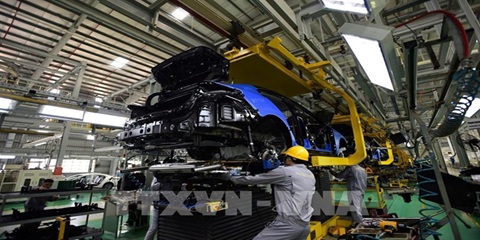
DIGITAL TRANSFORMATION TURNED INTO PRACTICAL TOOLS FOR PEOPLE, BUSINESSES
Việt Nam is moving its digital transformation agenda beyond policy frameworks and individual technology platforms towards practical applications that address everyday needs, as authorities seek measurable outcomes from science, technology and innovation. Under Politburo Resolution No. 57-NQ/TW issued on December 22, 2024, the implementation is increasingly shifting from simply completing assigned tasks towards developing concrete products and services for citizens and businesses.
TECHNOLOGY
APPLYING TECHNOLOGY FOR ECONOMIC TRANSFORMATION
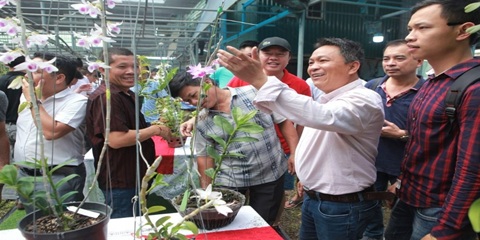
Having completed its new rural development program, Hanoi is shifting its focus toward improving development quality and building smart, sustainable rural areas. The transformation of Dong La orchid-growing village in An Khanh, a western commune of Hanoi, shows how digital technology is becoming a driver of production, market expansion, and higher incomes for local residents.

MEMBER CORNER / PROMOTIONS
VIGLACERA HONORED AS THE "LEADING GREEN INDUSTRIAL REAL ESTATE DEVELOPER 2026"
Organized by the Vietnam Investment Review, this prestigious awards program recognizes industry pioneers advancing eco-industrial parks, clean energy transition, and rigorous ESG standards. Outperforming competitors through a rigorous evaluation, Viglacera Corporation – JSC proudly ranked among the Top 5 highest-positioned enterprises in the Leading Green Industrial Real Estate Developers 2026 category, reinforcing its premier position in Vietnam’s industrial real estate sector.
Events Sponsors






















