Want to be in the loop?
subscribe to
our notification
Business News
FOREIGN FUNDS PUMPED INTO VIETNAM LOGISTICS MARKET
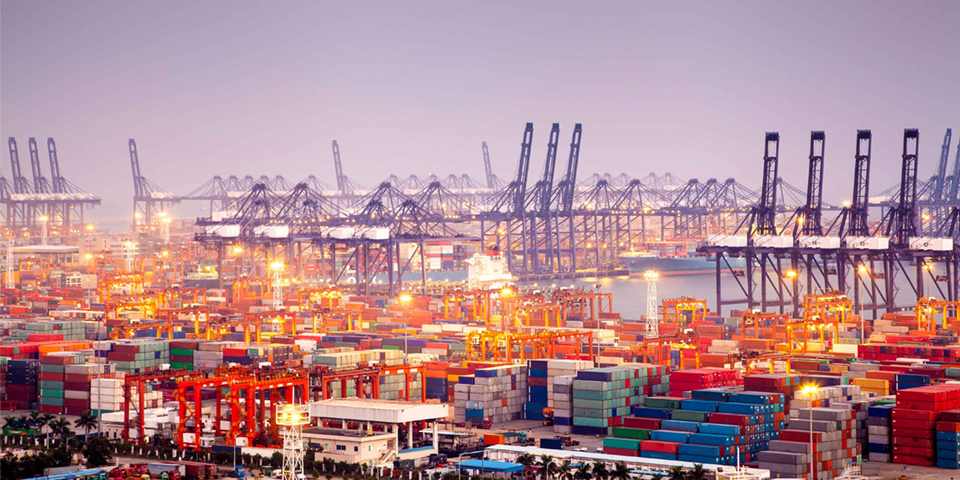
Vietnam's logistics industry is likely to grow strongly at 12-14% a year, according to many foreign investors.
Many million-dollar deals
Investment and merger and acquisition (M&A) in the logistics service industry in Vietnam have tended to increase dramatically. Top investors come from Japan, Singapore and South Korea.
In July, Vietnam Maritime Corporation (VIMC) signed a joint venture contract with its Japanese partner, Suzue, on shipping and logistics business. Sumitomo Corporation recently cooperated with Suzuyo and a Japanese public-private investment fund to spend nearly US$40 million buying a 10% stake of Gemadept Corporation of Vietnam. Sumitomo Corporation’s ambition is to build a logistics system connecting factories with ports to serve the export of manufactured products in Vietnam. By acquiring a stake at Gemadept, Sumitomo’s leaders will develop a mobile application that allows container drivers to pre-register the time of loading and unloading at ports and handle other paperwork.
Mitsui O.S.K Lines (MOL), another Japanese investor, also visited Vinh Tan International Port (VTIP) to consider bringing its vessels that transport coal imported from Indonesia to the port.
South Korean investors are equally fast as they have poured millions of US dollars into Vietnam's logistics sector. The featured shark deal was struck by Samsung SDS, a subsidiary of Samsung Group of South Korea, to cooperate with Aviation Logistics Joint Stock Company (ALS) to establish ALSDS Joint Venture and run logistics business at Noi Bai International Airport (Hanoi). In addition, Samsung SDS signed with Minh Phuong Logistics on domestic overland freight transportation.
Besides, Mr. Shamir Rahim, Managing Director of Singapore Waterway Transport and Logistics Company, expressed his desire to collaborate with Vietnam’s logistics business community to turn this potential into reality and ensure logistics supply chains and digitalized goods flows to benefit both sides.
The Vietnam Logistics Business Association (VLA) and the Singapore Logistics Association (SLA) signed a cooperation agreement in 2018. This platform has supported increasing logistics investment projects of Singapore.
Fully tapping Vietnamese logistics market
Mr. Nguyen Tuong, Deputy Secretary General of the Vietnam Logistics Business Association, said the logistics service industry has made impressive growth in recent years. According to the 2018 World Bank Logistics Performance Index (LPI), Vietnam ranked 39th out of 160 surveyed countries, 25 places higher than in 2016 when it stood at No. 64 out of 130 countries, and ranked third in ASEAN (after Singapore that secured the 7th position and Thailand that stood at No. 32). Vietnam’s logistics also topped emerging markets.
However, he also admitted that Vietnam's logistics industry is still exposed to many weaknesses that need to be addressed. For example, shipping costs in Vietnam are three times as high as other countries,, and are uneven across its regions because taxes, road tolls and surcharges are quite high, which in turn reduces the competitiveness of the Vietnamese logistics market with other countries. Another hardship is the weak infrastructure of the logistics industry. Although this industry has grown very strongly over the years, many freight shipping stages by road, by riverway or by rail are still tough.
Nevertheless, many domestic logistics companies have still made bold investment as they anticipate the development prospects of the Vietnamese logistics industry. Mr. Nguyen Thanh Phuong, Chief Executive Officer of Sao Do Group, said, his company owns 1,329-ha Nam Dinh Vu Industrial Park, including the seaport region with seven container and general cargo berths designed for ships of 40,000 DWT, a 105-ha warehouse area, and a 210-ha nontariff area. Statistics showed that, by the end of 2018, after 10 months of operation, the port has welcomed about 200 ships headed for international routes such as to Japan, South Korea, Singapore, Hong Kong and Shanghai, with a cargo throughput of around 200,000 TEUs.
The above figures show that the Vietnamese logistics market is strongly resilient, not only an appetizing pie for foreign investors to bite but also for domestic investors to get rich if they have capital and technology, because of significant capacity for expansion.
Source: VCCI
Related News
MEMBER CORNER / PROMOTIONS
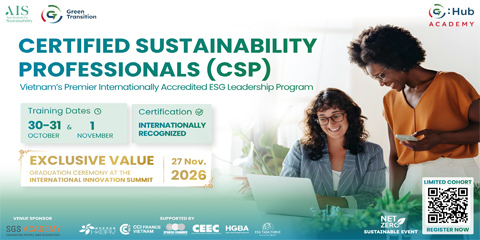
HCMC | CERTIFIED SUSTAINABILITY PROFESSIONAL (CSP) TRAINING | REGISTRATION OPEN
As sustainability becomes deeply embedded in corporate strategy and supply-chain operations across Vietnam, Hong Kong Business Association Vietnam is pleased to endorse the upcoming Certified Sustainability Professional (CSP) training program by the Asia Institute for Sustainability (AIS) - a premier internationally recognized ESG credential in Vietnam.
VIETNAM ECONOMY INVESTMENT
HCM CITY SAYS HOW IT PLANS TO ACHIEVE 10-11% ANNUAL EXPORT GROWTH FOR REST OF DECADE
The southern economic hub aims to strengthen its role as the country’s largest import-export centre while developing into a regional transhipment centre in Southeast Asia, supported by green and digital transformation and a circular economy. HCM City has outlined measures to expand production capacity, cut logistics costs, diversify export markets, and help businesses meet increasingly stringent international standards as it targets average annual export growth of 10-11 per cent through 2030.
VIETNAM ECONOMY INVESTMENT
HCM CITY LEADS ECONOMIC RESTRUCTURING IN SOUTHEAST REGION
According to Associate Professor, Dr Vũ Tuấn Hưng, director of the Institute of Social Sciences of the Southern Region, the Southeast is a strategically important socio-economic space in Việt Nam’s development given its advantages in location, industry, trade, services, logistics, science and technology, urbanisation and human resources.
TECHNOLOGY
DIGITAL TRANSFORMATION TURNED INTO PRACTICAL TOOLS FOR PEOPLE, BUSINESSES
Việt Nam is moving its digital transformation agenda beyond policy frameworks and individual technology platforms towards practical applications that address everyday needs, as authorities seek measurable outcomes from science, technology and innovation. Under Politburo Resolution No. 57-NQ/TW issued on December 22, 2024, the implementation is increasingly shifting from simply completing assigned tasks towards developing concrete products and services for citizens and businesses.
TECHNOLOGY
APPLYING TECHNOLOGY FOR ECONOMIC TRANSFORMATION
Having completed its new rural development program, Hanoi is shifting its focus toward improving development quality and building smart, sustainable rural areas. The transformation of Dong La orchid-growing village in An Khanh, a western commune of Hanoi, shows how digital technology is becoming a driver of production, market expansion, and higher incomes for local residents.

MEMBER CORNER / PROMOTIONS
VIGLACERA HONORED AS THE "LEADING GREEN INDUSTRIAL REAL ESTATE DEVELOPER 2026"
Organized by the Vietnam Investment Review, this prestigious awards program recognizes industry pioneers advancing eco-industrial parks, clean energy transition, and rigorous ESG standards. Outperforming competitors through a rigorous evaluation, Viglacera Corporation – JSC proudly ranked among the Top 5 highest-positioned enterprises in the Leading Green Industrial Real Estate Developers 2026 category, reinforcing its premier position in Vietnam’s industrial real estate sector.
Events Sponsors






















