Want to be in the loop?
subscribe to
our notification
Business News
OVER VND219 TRILLION IN PUBLIC INVESTMENT DISBURSED
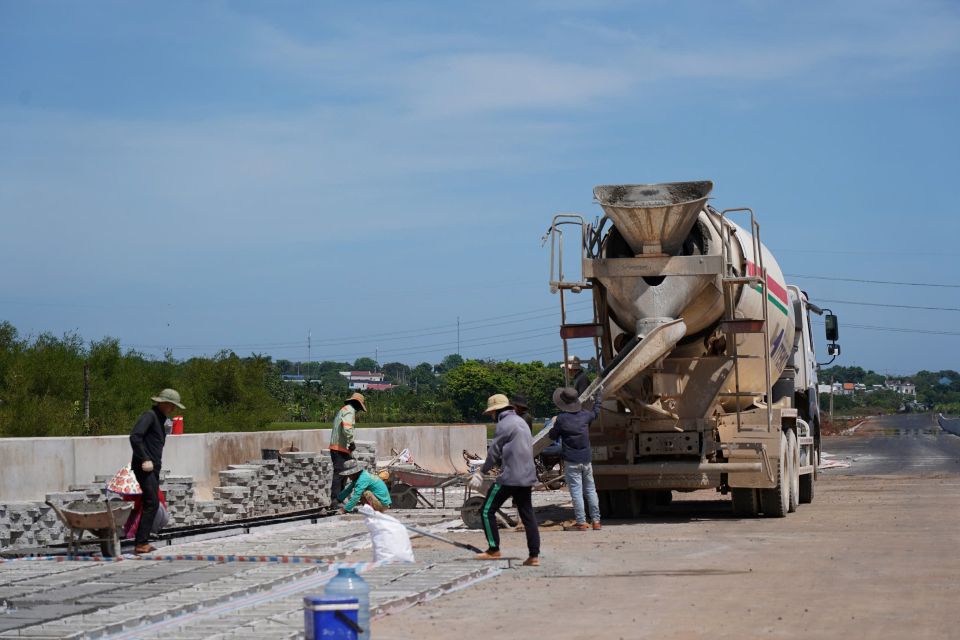
An expressway is under construction in southern Vietnam - PHOTO: LE VU
HCMC – As of May 31, Vietnam had disbursed VND219.358 trillion in public investment funds, equivalent to 21.6% of the annual plan.
While the disbursement rate was unchanged from the same period last year, the result came against a record public investment target of VND1.08 quadrillion for 2026. In absolute terms, the amount disbursed was nearly VND34.82 trillion higher than a year earlier.
The increase reflects substantial efforts by ministries, agencies and local governments, given that this year’s capital allocation was around VND175 trillion higher than in 2025.
The figures were released by the Ministry of Finance on June 3 in its latest report on the implementation and disbursement of public investment funds in 2026. Of the total amount disbursed, more than VND70.64 trillion came from the central budget, representing 19.4% of the annual plan, while local-budget disbursements reached VND148.715 trillion, or 22.9% of the target.
Regarding capital allocation, ministries, agencies and localities had assigned more than VND1 quadrillion to specific projects, equivalent to 97.8% of the plan approved by the prime minister. However, VND22.73 trillion allocated to 12 ministries and central agencies, as well as 12 localities, has yet to be assigned to individual projects.
The delays are mainly attributed to investment procedure bottlenecks and ongoing efforts to transfer funds to agencies and localities with stronger demand and faster project implementation.
To accelerate disbursement in the remaining months of the year, the Ministry of Finance has urged ministries, agencies and local governments to strictly implement government directives and strengthen the accountability of project leaders in resolving obstacles on the ground. According to the ministry, public investment disbursement this year continues to face a range of internal and external challenges.
The biggest hurdle remains site clearance, including land-origin verification and compensation planning. In addition, shortages of construction materials and price increases beyond initial estimates have widened cost gaps, forcing some projects to pause and revise contracts.
Meanwhile, limited implementation capacity among some project management units and contractors has also slowed progress. During the first months of the year, many investors focused on completing project designs and tender procedures, resulting in a relatively low volume of completed work eligible for payment.
To address these issues, the Ministry of Finance said it would strengthen discipline in public investment management and impose stricter penalties on organizations and individuals responsible for project delays.
The Ministry of Construction will work with local authorities to closely monitor market developments and take action against material-price manipulation. The ministry also requires agencies and localities to regularly update disbursement data on the Ministry of Finance’s information system, supporting the operation of a KPI-based monitoring tool designed to provide timely and accurate assessments of public investment flows nationwide.
Source: The Saigon Times
Related News

INFRASTRUCTURE / CONSTRUCTION / LOGISTIC / PORT
VIỆT NAM-CAMBODIA TRADE GATHERS PACE TOWARDS $20 BILLION TARGET
Trade between Việt Nam and Cambodia continues to grow, remaining a bright spot and a key pillar of bilateral cooperation as the two countries aim to raise two-way trade to US$20 billion in the coming years. After setting a record of more than $11.3 billion last year, bilateral trade reached about $8.7 billion in the first eight months of this year, up 8.3 per cent year on year.
TECHNOLOGY
AI BEGINNING TO RESHAPE RECRUITMENT CRITERIA
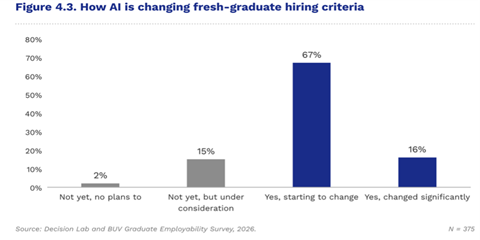
Digital literacy is the only capability area in which fresh graduates meet employers’ expectations, according to a new report. Yet, it is also the standard rising fastest, as businesses increasingly expect new hires to use AI effectively in the workplace. Some 83 per cent of employers say AI has changed, or is beginning to change, their hiring criteria, while 94 per cent report higher expectations for digital and AI capabilities than they had two to three years ago.

INFRASTRUCTURE / CONSTRUCTION / LOGISTIC / PORT
ĐÀ NẴNG GREEN-LIGHTS US$105 MILLION THAI DEVELOPMENT DEAL
The central city has approved an investment proposal by Thailand’s WHA Group to develop infrastructure for the 400ha WHA Đà Nẵng Industrial Park project on two communes of Thăng Bình and Đồng Dương, with an investment of more than VNĐ2.7 trillion (US$105 million). The city said it approved WHA Industrial Development International's status as an investor in the project, which is expected to take place between 2027 and 2034.

VIETNAM ECONOMY INVESTMENT
MOBILE PHONE EXPORTS RISE 20% TO $51.8 BILLION IN FIRST NINE MONTHS
Exports of mobile phones and components rose 20 per cent year-on-year to nearly US$51.8 billion in the first nine months of 2026, with China, the US and Republic of Korea accounting for more than half of the total. Shipments to the three markets reached a combined $26.18 billion, or 50.6 per cent of total exports of the product group during the period, according to data from the Vietnam Department of Customs under the Ministry of Finance.

VIETNAM ECONOMY INVESTMENT
FRUIT AND VEGETABLE EXPORTS POISED TO HIT $10 BILLION IN 2026
Fruit and vegetable exports are on track to reach nearly US$10 billion in 2026, after rising 19.9 per cent year on year to nearly US$7.4 billion in the first nine months, driven by strong seasonal demand and abundant tropical fruit supplies. The Ministry of Agriculture and Environment said the growth reflected stronger international demand for fresh produce and processed agricultural products.
GARMENT / TEXTILE
TEXTILE EXPORTS FACE DUAL CHALLENGES OF SUSTAINING ORDERS AND BOOSTING EFFICIENCY AMID GROWING COMPETITION
Data shows that the textile and garment sector maintained its growth momentum in the first nine months of this year. The industry's total export turnover reached an estimated US$35.721 billion in the first nine months of this year, up 3.3 per cent year-on-year. Despite posting encouraging export figures, Vietnamese textile and garment enterprises continue to navigate unpredictable market variables.
Events Sponsors






















