Want to be in the loop?
subscribe to
our notification
Business News
FOREIGNERS ACQUIRE TASTE FOR PROPERTY
Foreigners have been growing more interested in buying houses in Vietnam despite obstacles in ownership.
Feelings among first buyers
Kevin Hawkins, co-executive partner of ZICO Law Vietnam, bought an apartment in Saigon Pearl from a deposit contract from a Vietnamese owner who already paid 95 per cent of the price in 2009.
“I have been living here since 2003 and was tired of wasting money on renting a house. Thanks to the pilot programme permitting foreigners to buy houses, now I can make my dream of owning a home come true and register it under my name,” Hawkins told VIR.
Meanwhile, Leung Kai Sun Sunny, a buyer from Hong Kong, believes foreigners are mostly waiting to come across the ideal property that ensures long-term benefits.
Leung had bought four units in high-end projects in Ho Chi Minh City and said that he received a good yield and much better benefits than what is available in neighbouring countries.
“The expense of buying land plots and construction in other countries like China and Japan is very high, which drives up prices for buyers or homeowners, mostly to three to four times higher than here,” he told VIR. “I would say investors face higher risks in other markets like China or Japan, where the investment cost for every project is very high.”
More openness to foreigners
The Vietnamese government has permitted foreigners to own residential housing for the past 10 years. The nation first opened the residential housing market to certain foreigners by way of a 5-year pilot programme enacted under Resolution No.19/2008/QH12.
Under Resolution 19, foreign investors, managers, designated contributors to the country, and a few others (which later included lawyers, once Decree No.51/2009/NDCP was implemented the following year), were allowed to purchase one apartment. They had to reside in the apartment, and could not lease it out. In exchange, the foreigner could obtain the rights (the so-called pink book) for the apartment for 50 years and would be entitled to ownership rights, including the right to mortgage the property, Hawkins explained.
“While this was a small foray into the foreign housing market, the conditions were so onerous that after five years of the pilot programme, a report submitted to the National Assembly in June 2013 (Report 400) indicated that only 126 foreign individuals and companies had taken advantage of the pilot and purchased a residential apartment; I was one of them,” he cited.
This then led to revisions in the Law on Housing (LoH) in 2014. This paved the way for the more expansive foreign ownership rights as seen today. Foreigners are not restricted to a specific category, are able to own more than one apartment, and they only need a valid entry visa to make a purchase. They are allowed to lease out the apartment and can even own the land use rights for villas in certain developments, subject to capacity restrictions (that is, not more than 10 per cent of villas in a project with 2,500 villas or less, and not more than 30 per cent of apartments in an apartment project).
“Still, in five short years, this was heralded as a major opening in the market and ushered in substantial real estate development projects over the last three years. As of October 2017, public reports indicated that over 750 foreign individuals and companies had purchased residential housing and this number likely increased substantially throughout 2018,” Hawkins explained.
The Ho Chi Minh City Real Estate Association’s chairman Le Hoang Chau cited that since 2015, when the government first permitted foreigners to buy houses in Vietnam, the legal framework has been revised to create more favourable conditions.
“This permission matches the international trend of improving the investment environment and also creating a new channel for developers to release products,” said Chau.
The Vietnamese market has recently become a popular destination among Chinese buyers as they can own two units compared to being restricted to one in cities like Shenzhen or Guangzhou.
New homes in Ho Chi Minh City’s central business districts go for about $5,500-6,500 per square metre, which is only a quarter of the price in places like Taiwan.
Also, property owners in Taiwan are liable to face additional taxes and fees, while buyers in Vietnam only need to pay 10 per cent VAT tax and a one-time 2 per cent payment as maintenance fee.
Moreover, the recent US-China trade war is pushing many Chinese to move their investment to other countries, and Vietnam seems an interesting destination.
Limitations remain
Recent changes over the past three years under the LoH have certainly brought a boom in real estate development. However, the percentage restrictions have also created practical obstacles to sales in the secondary market.
Hawkins said that without a clear mechanism to administer compliance with the percentage cap limitations, secondary sales have stalled and getting the ownership transfer documentation has become a frustrating experience.
“There is a sufficient amount of new residential developments, the government should be less concerned about foreign investors flooding the market and buying up available housing for investment purposes. There will be some of that, but it should not be as great a concern and there are other ways to manage that issue than imposing an unworkable percentage cap. For example, foreign investors could be allowed to purchase one residence for their own use (to live or to rent out), but subsequent apartments or villas could be taxed as investment properties with revenue to the government and a market control on unencumbered investment purchases,” he said.
Meanwhile, Nguyen Van Dinh, deputy general secretary of the Vietnam National Real Estate Association (VNREA), added that some government regulations aim to limit risk, especially in national security and defense.
The government had assigned the ministries of Defense and Public Security to compile a list of projects in which foreigners are not permitted to buy. However, this list has yet to be released.
“I think this list should include projects in high security areas such as islands, border gates or strategic areas of defense only,” Dinh said.
Frederick R. Burke, managing partner from Baker McKenzie, also said in a recent seminar on property market held in Ho Chi Minh City that relevant authorities have been too slow to issue policies.
“Many land plots are now listed by the Ministry of Defence as being ‘sensitive land plots.’ However, the list of these projects has not yet been issued, making foreigners confused and unsure where they can buy properties,” Burke said.
He confirmed that there are many foreigners wanting to buy properties, mostly coming from Hong Kong and Singapore. “Foreigners are now able to sign deals to trade properties in Vietnam but there are still limits,” he said. “In order to break through, more transparent policies must be issued as soon as possible.”
Dinh from the VNREA said the regulation on foreigners only being able to own a maximum of 30 per cent of total units of every project should be expanded. The expansion could include premium qualified buildings or projects near industrial and processing zones where foreign-invested companies and foreign experts live.
Moreover, Hawkins from ZICO Law Vietnam added that clearer rules and regulations on owning residential housing, including specific guidelines on condotel units, would greatly improve confidence in foreign property investment.
Still growing potential
According to Sunny Hoang, associate director, International Residential Sales of Savills Ho Chi Minh City, based on Savills’ internal research data, investors from Hong Kong and Taiwan (China) make up a large portion of the buyers as “Vietnam has become the most attractive emerging economy in the ASEAN for many Taiwanese investors.”
With the robust economic growth over the past few years, foreigners, especially from Hong Kong, Taiwan, South Korea, and mainland China are diving into the real estate market. This is evident by the lack of available foreign quota for well-located projects and a pent-up demand from foreigners looking to buy.
Based on the number of condominium units sold through CBRE Property Transaction Centre in the high-end and luxury segments, the condominium market attracted great attention.
Specifically, in the first nine months of 2018, Chinese buyers accounted for 31 per cent of CBRE’s total transactions (only 4 per cent in 2017).
One of the main reasons why Chinese investors are more interested in investing in property in Ho Chi Minh City is that they see similarities with Shanghai and are keen to capitalise on the city’s expected stellar rise.
The latest figures released by the Ministry of Construction at the end of 2017 show more than 800 foreigners owned property in Vietnam, while more than 400,000 foreigners live and work here.
Source: VIR
Related News

INFRASTRUCTURE / CONSTRUCTION / LOGISTIC / PORT
VIỆT NAM-CAMBODIA TRADE GATHERS PACE TOWARDS $20 BILLION TARGET
Trade between Việt Nam and Cambodia continues to grow, remaining a bright spot and a key pillar of bilateral cooperation as the two countries aim to raise two-way trade to US$20 billion in the coming years. After setting a record of more than $11.3 billion last year, bilateral trade reached about $8.7 billion in the first eight months of this year, up 8.3 per cent year on year.
TECHNOLOGY
AI BEGINNING TO RESHAPE RECRUITMENT CRITERIA
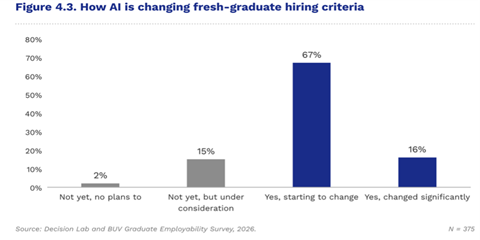
Digital literacy is the only capability area in which fresh graduates meet employers’ expectations, according to a new report. Yet, it is also the standard rising fastest, as businesses increasingly expect new hires to use AI effectively in the workplace. Some 83 per cent of employers say AI has changed, or is beginning to change, their hiring criteria, while 94 per cent report higher expectations for digital and AI capabilities than they had two to three years ago.

INFRASTRUCTURE / CONSTRUCTION / LOGISTIC / PORT
ĐÀ NẴNG GREEN-LIGHTS US$105 MILLION THAI DEVELOPMENT DEAL
The central city has approved an investment proposal by Thailand’s WHA Group to develop infrastructure for the 400ha WHA Đà Nẵng Industrial Park project on two communes of Thăng Bình and Đồng Dương, with an investment of more than VNĐ2.7 trillion (US$105 million). The city said it approved WHA Industrial Development International's status as an investor in the project, which is expected to take place between 2027 and 2034.

VIETNAM ECONOMY INVESTMENT
MOBILE PHONE EXPORTS RISE 20% TO $51.8 BILLION IN FIRST NINE MONTHS
Exports of mobile phones and components rose 20 per cent year-on-year to nearly US$51.8 billion in the first nine months of 2026, with China, the US and Republic of Korea accounting for more than half of the total. Shipments to the three markets reached a combined $26.18 billion, or 50.6 per cent of total exports of the product group during the period, according to data from the Vietnam Department of Customs under the Ministry of Finance.

VIETNAM ECONOMY INVESTMENT
FRUIT AND VEGETABLE EXPORTS POISED TO HIT $10 BILLION IN 2026
Fruit and vegetable exports are on track to reach nearly US$10 billion in 2026, after rising 19.9 per cent year on year to nearly US$7.4 billion in the first nine months, driven by strong seasonal demand and abundant tropical fruit supplies. The Ministry of Agriculture and Environment said the growth reflected stronger international demand for fresh produce and processed agricultural products.
GARMENT / TEXTILE
TEXTILE EXPORTS FACE DUAL CHALLENGES OF SUSTAINING ORDERS AND BOOSTING EFFICIENCY AMID GROWING COMPETITION
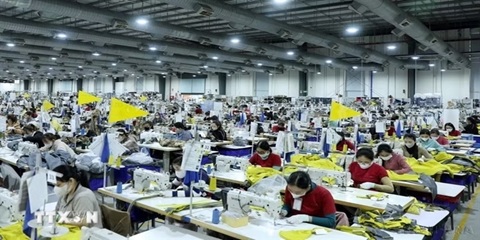
Data shows that the textile and garment sector maintained its growth momentum in the first nine months of this year. The industry's total export turnover reached an estimated US$35.721 billion in the first nine months of this year, up 3.3 per cent year-on-year. Despite posting encouraging export figures, Vietnamese textile and garment enterprises continue to navigate unpredictable market variables.
Events Sponsors






















