Want to be in the loop?
subscribe to
our notification
Business News
FUNDAMENTALS ALL IN PLACE FOR VIETNAMESE STOCKS TO TAKE OFF
I recently had a discussion with our team of analysts on what the key factors are when analysts issue recommendations on individual stocks. Analysts need to have an understanding of the current developments of the global economy and the economy of the target country. Only then can they arrive at the right risk/return assumptions for long-term stock selections.
Having this broader understanding helps set the right risk/return parameters for sectors, companies, services, investments, and individual stocks. The key views behind our stock picks are as follows:
- The global economy will have a brisk year of growth in 2021;
- The recovery of demand will lead to strong earnings growth among listed companies;
- US stocks will continue to see upward momentum even though the price to equity (P/E) level of 25 is historically high.
- The stock markets are backed by the liquidity maintained by central banks and the relative appeal of the 4 per cent returns of stocks compared to the 2 per cent yields on 10-year bonds (currently 1.7 per cent);
l Asia is looking particularly good in terms of economic growth, with China already operating at full speed and the pandemic being a thing of the past;
- The Vietnamese economy is also doing well, with GDP growth of approximately 8 per cent expected in 2021;
- The P/E of the Vietnamese stocks is 14 based on the 2021 forward earnings forecasts. Vietnamese stocks have potential to perform well. The prospects for profit growth are excellent this year and in the next few years; and
- Vietnamese bank stocks are set to achieve a tremendous improvement in profits and a highly favourable year of growth.
Stocks tend to rise in parallel with the bonds yields, as they indicate accelerating economic activity which, in turn, leads to earnings growth for listed companies. Rapid increases in long-term interest rates are a sign of accelerating economic growth. Usually, moderate fluctuations in bond yields have not kept stocks from rising to new heights – quite to the contrary.
The risk of a global market crash is always there when stock valuations have risen above historical averages. However, in our view, even accelerating inflation would not lead to central banks hiking the reference interest rates very quickly. The rapid recovery of demand, the prevailing liquidity in the financial markets, and the higher prices of raw materials create inflationary pressure through the demand for products and higher production costs.
Reference rates have nevertheless been kept very low. The Fed, for example, has indicated that it does not intend to hike interest rates during the next couple of years. While these indications are not carved in stone, it is clear that inflation is a more welcome option for central banks than deflation. Especially with regard to Europe, the hope is that the recovery of demand would ultimately solve the problem of negative interest rates.
Increases in key interest rates and anticipating them are important in the current market climate. Fortunately, accelerating economic growth will first bolster share prices, and only later will the higher short-term interest rates put downward pressure on the stock markets if central banks have a reason to hike their key interest rates to a significant degree.
In our prediction, 2021 is set to be a year of strong economic growth. Order growth in Asian export industries and the recovery of industrial production have led to a sharp increase in raw material prices, while the ample liquidity in the financial markets has accelerated the increase in prices.
The performance of copper price also gives indications of the potential trend of the EUR/USD currency pair. The US dollar tends to react inversely to accelerating economic growth because the demand for it increases in uncertain economic circumstances and declines when economic trends are positive.
The rapid increase in long-term US interest rates is unlikely to reverse the direction of the currency pair due to short-term interest rates remaining low. The spread in money market interest rates between the Euro and the US dollar has remained small and this currency pair correlates with the direction of this difference in interest rates in the long term.
The performance of the Vietnamese stock market is uneven, which is typical of all stock markets. The key question concerns the ratio between expected returns and risk. The VN-Index is now at 1,200, which corresponds to the level achieved in April 2018. Three years have passed and we are still at the same level despite earnings having already improved and continuing to improve substantially in 2021.
The Vietnamese stock market is still likely to be hit hard in moments when global sentiment turns extremely sour, but the key question is whether the right target level for the VN-Index for the next few years is 1,800 or 600. We have kept our long-term target for the Vietnamese stock market unchanged at 1,800.
The fundamentals in Vietnam are very exciting. The country has a highly competitive export industry, there is a continuing flow of foreign direct investment by Asian corporates into Vietnam, the population is fairly young, the level of basic education is good and, in college education, one of the key focuses is on engineering studies in the IT industry. Moreover, the country’s macroeconomic accounts are well-balanced.
The credit rating agency Moody’s recently upgraded its sovereign rating for Vietnam by two notches to “positive outlook”. At the same time, Moody’s upgraded its ratings of Vietnamese banks. Profit growth among listed companies in the next few years will be driven by genuine demand growth without helicopter money and increased government borrowings.
The VN-Index forward earnings yield chart for 2021 alone indicates substantial growth potential in the stock market, with the forward earnings yield being 6.6 per cent relative to the 2.5 per cent yield on 10-year Vietnamese government bonds. It seems justified to expect that the VN-Index could rise from its current level of 1,200 to 1,500 by the end of 2021.
Trading volumes on the Vietnamese stock exchange have multiplied, and this increase has been driven by Vietnamese investors. The eagerness of foreign investors to sell has been surprising, but we still expect them to return to the Vietnamese stock market within this year.
While the increase in market liquidity has provided PYN Elite with plenty of opportunities to change the allocations of its portfolio, it has also led to an unusual problem. The current trading platform of the Ho Chi Minh City Stock Exchange (HSX) has the capacity to process 900,000 orders per day. After December the capacity utilisation rate of the stock exchange has increased over 100 per cent, leading to ongoing disruptions in trading.
The HSX had previously signed an agreement on the procurement of a South Korean trading platform, but the pandemic delayed the implementation of these plans and the feared volume-related problems in trading have now hit the Vietnamese authorities. The problem is currently being addressed through various short-term changes, but it will likely take 2-3 months before the stock exchange can respond to the growing demand.
Source: VIR
Related News

CHARITY / EXHIBITION / OTHER EVENTS
INVESTMENT OPPORTUNITIES IN CA MAU PROVINCE: 96 PROJECTS AND 20 STRATEGIC PROJECTS
We are pleased to share with you information on investment projects currently seeking investors in Ca Mau Province. Should your esteemed company or association be interested, we kindly invite you to review the project information and complete the registration form via the links provided. The Ho Chi Minh City Investment and Trade Promotion Centre (ITPC) will consolidate the expressions of interest and facilitate connections with the leadership of Ca Mau Province at a meeting tentatively scheduled for 13 November 2026 in Ho Chi Minh City.

MEMBER CORNER / PROMOTIONS
BẰNG KIỀU LIVESHOW - A SYMPHONY OF LOVE UNDER THE GOLDEN GLOW
A masterclass in live music that takes the audience on a soulful journey through immortal love songs, guided by the peerless artistry and emotive storytelling of renowned singer Bằng Kiều. The highlight of the night is his seamless musical chemistry with special guest Triệu Hồng Ngọc, promising passionate and deeply resonant duets inside the magnificent Grand Ballroom.
INFRASTRUCTURE / CONSTRUCTION / LOGISTIC / PORT
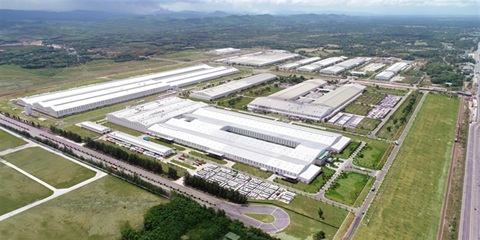
ĐÀ NẴNG GREEN-LIGHTS US$105 MILLION THAI DEVELOPMENT DEAL
The central city has approved an investment proposal by Thailand’s WHA Group to develop infrastructure for the 400ha WHA Đà Nẵng Industrial Park project on two communes of Thăng Bình and Đồng Dương, with an investment of more than VNĐ2.7 trillion (US$105 million). The city said it approved WHA Industrial Development International's status as an investor in the project, which is expected to take place between 2027 and 2034.
VIETNAM ECONOMY INVESTMENT
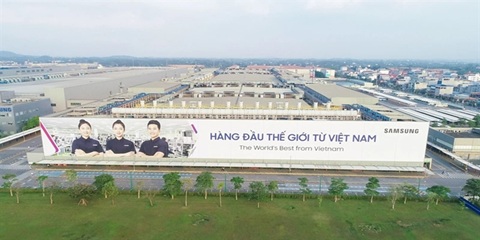
MOBILE PHONE EXPORTS RISE 20% TO $51.8 BILLION IN FIRST NINE MONTHS
Exports of mobile phones and components rose 20 per cent year-on-year to nearly US$51.8 billion in the first nine months of 2026, with China, the US and Republic of Korea accounting for more than half of the total. Shipments to the three markets reached a combined $26.18 billion, or 50.6 per cent of total exports of the product group during the period, according to data from the Vietnam Department of Customs under the Ministry of Finance.

INFRASTRUCTURE / CONSTRUCTION / LOGISTIC / PORT
VIỆT NAM-CAMBODIA TRADE GATHERS PACE TOWARDS $20 BILLION TARGET
Trade between Việt Nam and Cambodia continues to grow, remaining a bright spot and a key pillar of bilateral cooperation as the two countries aim to raise two-way trade to US$20 billion in the coming years. After setting a record of more than $11.3 billion last year, bilateral trade reached about $8.7 billion in the first eight months of this year, up 8.3 per cent year on year.
VIETNAM ECONOMY INVESTMENT
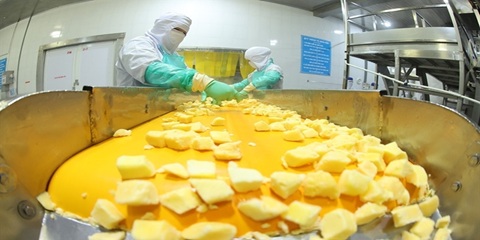
FRUIT AND VEGETABLE EXPORTS POISED TO HIT $10 BILLION IN 2026
Fruit and vegetable exports are on track to reach nearly US$10 billion in 2026, after rising 19.9 per cent year on year to nearly US$7.4 billion in the first nine months, driven by strong seasonal demand and abundant tropical fruit supplies. The Ministry of Agriculture and Environment said the growth reflected stronger international demand for fresh produce and processed agricultural products.
Events Sponsors






















