Want to be in the loop?
subscribe to
our notification
Business News
GARMENT AND TEXTILE ENTERPRISES’ QUALMS OVER NEW WAGE AND SOCIAL INSURANCE POLICIES
The minimum wage increase, coupled with the increase for social insurance and union fees, is putting financial burdens on enterprises operating in labour-intensive sectors, such as the garment and textile sector.
At the October 4 conference on estimating the impacts of labour, wage, and social insurance policies on garment and textile enterprises organised by the Vietnam Textile and Apparel Association (Vitas) in Hanoi, representatives of organisations and enterprises in the garment and textile sector expressed concerns over the minimum wage increase as well as social insurance policies due to their negative impact on their manufacturing operations.
According to a representative of Nguyen Hoang Garment Co., Ltd., the new wage and social insurance policies, which will come into effect from early 2018, are considered a burden preventing the development of garment and textile enterprises in general and Nguyen Hoang in particular.
Nguyen Hoang’s representative stated that almost all enterprises present at the processing stage with low profit, while salary expenses make up approximately 70 per cent of the total manufacturing expenditure, thus further wage increases will increase manufacturing expenditure, and product costs, in turn. Thereby, enterprises will find it difficult to find orders.
Besides, we have seen consecutive increases in the minimum wage without the appropriate evaluation of its impact on labour productivity.
According to statistics released at the conference by Truong Van Cam, vice president of Vitas, in 2008-2017, the government adjusted the minimum wage ten times with the average annual growth of 21.9 per cent for domestic enterprises and 15.2 per cent for foreign invested enterprises.
Meanwhile, in 2008-2016, we saw the annual average growth of 5.96 per cent in gross domestic product (GDP), 8.7 per cent in consumer price index (CPI), and 4 per cent in labour productivity. These statistics reinforce enterprises’ panic on the minimum wage increase schedule.
Along with the minimum wage increase, the new regulations on social insurance, especially the extension of subjects participating in compulsory social insurance, also causes enterprises worry for to its impact on manufacturing expenditures.
Accordingly, the new regulation add people working under labour contracts with a term between one month and less than three months to be covered by compulsory social insurance.
Hoang Minh Khang, deputy general director of Hanoi Textile and Garment JSC (Hanosimex), stated that the new regulation on social insurance will add to enterprises’ financial burdens. Thus, adding this group to those covered by compulsory social insurance will not only increase manufacturing expenditures but also cost enterprises time to completing administrative procedures.
Responding to the minimum wage regulation, Khang said that Vietnam should remove this regulation because in competitive markets, enterprises offering attractive wages and allowance policies will recruit high-quality employees, while those failing to meet workers’ demands will struggle to retain or recruit employees.
Previously, at the workshop themed “Labour Productivity and Wage Growth in Vietnam” organised in September, Truong Dinh Tuyen, former Minister of Trade, now Minister of Industry and Trade, said that local authorities need to remove the minimum wage policy and permit enterprises and employees to negotiate employees’ income among themselves, while skilled employees need to be encouraged to increase their labour productivity via wage increase.
If this policy comes into effect, it will increase competition between enterprises, forcing them to voluntarily increase wages.
Source: VIR
Related News

INFRASTRUCTURE / CONSTRUCTION / LOGISTIC / PORT
VIỆT NAM-CAMBODIA TRADE GATHERS PACE TOWARDS $20 BILLION TARGET
Trade between Việt Nam and Cambodia continues to grow, remaining a bright spot and a key pillar of bilateral cooperation as the two countries aim to raise two-way trade to US$20 billion in the coming years. After setting a record of more than $11.3 billion last year, bilateral trade reached about $8.7 billion in the first eight months of this year, up 8.3 per cent year on year.
TECHNOLOGY
AI BEGINNING TO RESHAPE RECRUITMENT CRITERIA
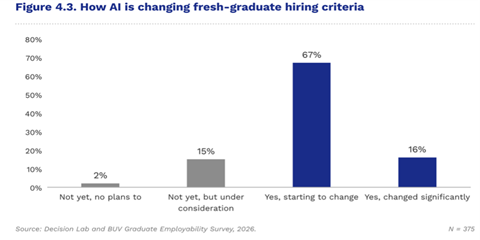
Digital literacy is the only capability area in which fresh graduates meet employers’ expectations, according to a new report. Yet, it is also the standard rising fastest, as businesses increasingly expect new hires to use AI effectively in the workplace. Some 83 per cent of employers say AI has changed, or is beginning to change, their hiring criteria, while 94 per cent report higher expectations for digital and AI capabilities than they had two to three years ago.

INFRASTRUCTURE / CONSTRUCTION / LOGISTIC / PORT
ĐÀ NẴNG GREEN-LIGHTS US$105 MILLION THAI DEVELOPMENT DEAL
The central city has approved an investment proposal by Thailand’s WHA Group to develop infrastructure for the 400ha WHA Đà Nẵng Industrial Park project on two communes of Thăng Bình and Đồng Dương, with an investment of more than VNĐ2.7 trillion (US$105 million). The city said it approved WHA Industrial Development International's status as an investor in the project, which is expected to take place between 2027 and 2034.

VIETNAM ECONOMY INVESTMENT
MOBILE PHONE EXPORTS RISE 20% TO $51.8 BILLION IN FIRST NINE MONTHS
Exports of mobile phones and components rose 20 per cent year-on-year to nearly US$51.8 billion in the first nine months of 2026, with China, the US and Republic of Korea accounting for more than half of the total. Shipments to the three markets reached a combined $26.18 billion, or 50.6 per cent of total exports of the product group during the period, according to data from the Vietnam Department of Customs under the Ministry of Finance.

VIETNAM ECONOMY INVESTMENT
FRUIT AND VEGETABLE EXPORTS POISED TO HIT $10 BILLION IN 2026
Fruit and vegetable exports are on track to reach nearly US$10 billion in 2026, after rising 19.9 per cent year on year to nearly US$7.4 billion in the first nine months, driven by strong seasonal demand and abundant tropical fruit supplies. The Ministry of Agriculture and Environment said the growth reflected stronger international demand for fresh produce and processed agricultural products.
GARMENT / TEXTILE
TEXTILE EXPORTS FACE DUAL CHALLENGES OF SUSTAINING ORDERS AND BOOSTING EFFICIENCY AMID GROWING COMPETITION
Data shows that the textile and garment sector maintained its growth momentum in the first nine months of this year. The industry's total export turnover reached an estimated US$35.721 billion in the first nine months of this year, up 3.3 per cent year-on-year. Despite posting encouraging export figures, Vietnamese textile and garment enterprises continue to navigate unpredictable market variables.
Events Sponsors






















