Want to be in the loop?
subscribe to
our notification
Business News
GARMENT SECTOR EXPORT GROWTH STILL UNSUSTAINABLE
Việt Nam’s garment and textile revenue increased for the first half of this year but experts said the growth has not yet become sustainable.
The national garment and textiles export value in the first half of the year grew 11.3 per cent year-on-year to US$14.58 billion, higher than the growth rate of 6.1 per cent year-on-year in the same period of 2016.
Lê Tiến Trường, deputy general director of the Việt Nam Garment and Textile Group (Vinatex), said the results by the garment sector were a praiseworthy effort in the context of the unstable global economy.
The demand for textile products from key importers like the United States (US), the European Union (EU) and Japan tapered off in the first six months of the year. However, exports to those markets experienced robust achievements, Trường said.
He said that the country earned $6 billion from the exports to the US, surging nearly 9 per cent; $2.3 billion to the EU, up 8 per cent; and $1.5 billion to Japan, up 12 per cent.
Việt Nam outstripped its competitors in garment exports during the period. According to the Trade Map, China experienced a decline of more than 5 per cent year-on-year, while Bangladesh saw a drop of 3.5 per cent, and Indonesia was down 5 per cent.
However, the trade protectionism policy of US President Donald Trump’s administration and interest rate adjustment from the US Federal Reserve will threaten sustainable export growth. There is a high possibility that Việt Nam’s competitors will further devalue domestic currencies to support exports as they did in 2016, Trường said.
As the biggest hurdle for Vietnamese garments is foreign competitors, especially China with large scale production and low costs, Vietnamese enterprises need to join the global supply chain with fastidious requirements of quality, prices and time of good delivery.
Local enterprises’ poor orientations have made them fail to meet the industry’s long-term development. In addition, unsound competition between domestic and foreign invested businesses has been on the cards.
Moreover, the auxiliary industry for the textile and garment sector has not yet developed. Low capacity in the stages of weaving and dyeing have led to the local demand for textile fabric being unsatisfied. The domestic garment industry must import 70 per cent of fabric, causing unbalanced development.
Meanwhile, Vietnamese garment enterprises are mostly small- and medium-sized ones with limited ability in accessing domestic and foreign markets. If they do not link with some large enterprises, these firms will find it difficult to survive and never have the ability to compete internationally.
Local garment enterprises have also faced many challenges, including the shortage of high-quality human resources, limitations in product development, capital access, marketing and foreign languages, and high input costs.
The garment sector recommended to the relevant authorities that they support training programmes in original design manufacturer (ODM) business and information and technology while creating favourable conditions for enterprises to have access to soft loans and preventing smuggled goods.
Source: VIR
Related News

INFRASTRUCTURE / CONSTRUCTION / LOGISTIC / PORT
VIỆT NAM-CAMBODIA TRADE GATHERS PACE TOWARDS $20 BILLION TARGET
Trade between Việt Nam and Cambodia continues to grow, remaining a bright spot and a key pillar of bilateral cooperation as the two countries aim to raise two-way trade to US$20 billion in the coming years. After setting a record of more than $11.3 billion last year, bilateral trade reached about $8.7 billion in the first eight months of this year, up 8.3 per cent year on year.
TECHNOLOGY
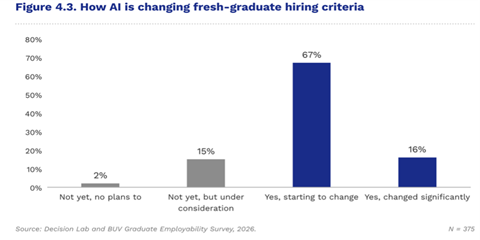
AI BEGINNING TO RESHAPE RECRUITMENT CRITERIA
Digital literacy is the only capability area in which fresh graduates meet employers’ expectations, according to a new report. Yet, it is also the standard rising fastest, as businesses increasingly expect new hires to use AI effectively in the workplace. Some 83 per cent of employers say AI has changed, or is beginning to change, their hiring criteria, while 94 per cent report higher expectations for digital and AI capabilities than they had two to three years ago.

INFRASTRUCTURE / CONSTRUCTION / LOGISTIC / PORT
ĐÀ NẴNG GREEN-LIGHTS US$105 MILLION THAI DEVELOPMENT DEAL
The central city has approved an investment proposal by Thailand’s WHA Group to develop infrastructure for the 400ha WHA Đà Nẵng Industrial Park project on two communes of Thăng Bình and Đồng Dương, with an investment of more than VNĐ2.7 trillion (US$105 million). The city said it approved WHA Industrial Development International's status as an investor in the project, which is expected to take place between 2027 and 2034.

VIETNAM ECONOMY INVESTMENT
MOBILE PHONE EXPORTS RISE 20% TO $51.8 BILLION IN FIRST NINE MONTHS
Exports of mobile phones and components rose 20 per cent year-on-year to nearly US$51.8 billion in the first nine months of 2026, with China, the US and Republic of Korea accounting for more than half of the total. Shipments to the three markets reached a combined $26.18 billion, or 50.6 per cent of total exports of the product group during the period, according to data from the Vietnam Department of Customs under the Ministry of Finance.

VIETNAM ECONOMY INVESTMENT
FRUIT AND VEGETABLE EXPORTS POISED TO HIT $10 BILLION IN 2026
Fruit and vegetable exports are on track to reach nearly US$10 billion in 2026, after rising 19.9 per cent year on year to nearly US$7.4 billion in the first nine months, driven by strong seasonal demand and abundant tropical fruit supplies. The Ministry of Agriculture and Environment said the growth reflected stronger international demand for fresh produce and processed agricultural products.
GARMENT / TEXTILE
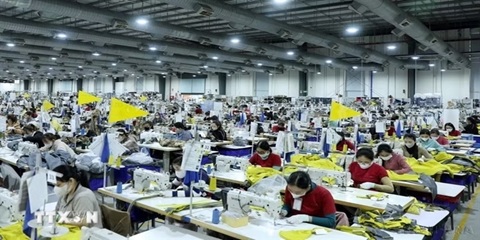
TEXTILE EXPORTS FACE DUAL CHALLENGES OF SUSTAINING ORDERS AND BOOSTING EFFICIENCY AMID GROWING COMPETITION
Data shows that the textile and garment sector maintained its growth momentum in the first nine months of this year. The industry's total export turnover reached an estimated US$35.721 billion in the first nine months of this year, up 3.3 per cent year-on-year. Despite posting encouraging export figures, Vietnamese textile and garment enterprises continue to navigate unpredictable market variables.
Events Sponsors






















