Want to be in the loop?
subscribe to
our notification
Business News
GOV'T ISSUES INSTRUCTIONS ON IMPLEMENTATION OF STAY-AT-HOME ORDER
The Government Office late Friday issued a document detailing the instructions on the implementation of Prime Minister’s Directive 16 regarding a 14-day nationwide stay-at-home order and social distancing measures starting April 1 to deal with the COVID-19 pandemic.

The directive, which the Government insisted does not constitute a stringent lockdown given that the number of cases in the country remains quite modest, has caused quite a lot of confusion among the public and even local authorities about the scope and intensity of the restrictions to be implemented.
Today’s instruction document noted that “a number of the directive’s contents have not been fully understood and uniformly implemented,” referring to surfacing reports of a number of provinces and cities across the country taking the order a step too far, setting up checkpoints at their gateway and imposing a ban on travel to and from their jurisdiction.
Factories and production units, traffic and construction sites, and organisations supplying essential goods and services – food, medicine, oil and gas, utility, energy, etc. – will still operate normally.
Banks, treasury offices, stock trading floors, and other services directly related to banking activities and businesses – notaries, lawyering, registration, or secured transactions – are also allowed to open. Post offices, logistics services, funeral services and healthcare services can also still operate.
The executives of these organisations are asked to ensure safety and anti-outbreak measures in line with health ministry’s guidelines – compulsory health declarations, limiting travel and face-to-face interactions, halting unnecessary activities and reducing the concentration of workers in limited space, and organising transport to carry workers to and from workplaces.
The document however noted that it’s up to each province and city administration’s discretion to make a list of what services and businesses would need to be temporarily shuttered.
According to the document, people are asked to practise social distancing, stay home and refrain from going outside, unless in case of necessities: buying food, medicine and seeking essential goods and services; health examination and treatment, medical emergencies or disasters; or working in State agencies, diplomatic missions, armed forces, and above-mentioned establishments that are still allowed to open.
Everyone must wear face masks in public and frequently wash their hands with soap or alcoholic sanitisers.
Gatherings of more than two people in public are disallowed and maintenance of a minimum distance of 2m is required.
Public transport is “basically” halted, except in cases of official missions, transporting workers, experts, people subject to quarantine, transporting materials and goods.
Personal vehicles are heavily restricted.
The document also asked for measures in place to ensure “interrupted” movement of goods and materials, and demanded that all localities immediately cease their prohibitions of vehicles and people coming through their jurisdiction.
The leadership of all organisations, units, and businesses are supposed to provide favourable conditions for their workers to work from home within their capacity, avoiding delayed progress especially in urgent matters or public services.
Concerned ministries, agencies and localities shall take “proactive initiative” in adjusting anti-epidemic measures, ensuring compliance with the directive and accompanying instructions; coordinate and address problems arising according to their authority; strictly deal with violations; and promptly report to the Prime Minister on any problems that might arise.
Source: VNS
Related News

CHARITY / EXHIBITION / OTHER EVENTS
INVESTMENT OPPORTUNITIES IN CA MAU PROVINCE: 96 PROJECTS AND 20 STRATEGIC PROJECTS
We are pleased to share with you information on investment projects currently seeking investors in Ca Mau Province. Should your esteemed company or association be interested, we kindly invite you to review the project information and complete the registration form via the links provided. The Ho Chi Minh City Investment and Trade Promotion Centre (ITPC) will consolidate the expressions of interest and facilitate connections with the leadership of Ca Mau Province at a meeting tentatively scheduled for 13 November 2026 in Ho Chi Minh City.

MEMBER CORNER / PROMOTIONS
BẰNG KIỀU LIVESHOW - A SYMPHONY OF LOVE UNDER THE GOLDEN GLOW
A masterclass in live music that takes the audience on a soulful journey through immortal love songs, guided by the peerless artistry and emotive storytelling of renowned singer Bằng Kiều. The highlight of the night is his seamless musical chemistry with special guest Triệu Hồng Ngọc, promising passionate and deeply resonant duets inside the magnificent Grand Ballroom.
INFRASTRUCTURE / CONSTRUCTION / LOGISTIC / PORT
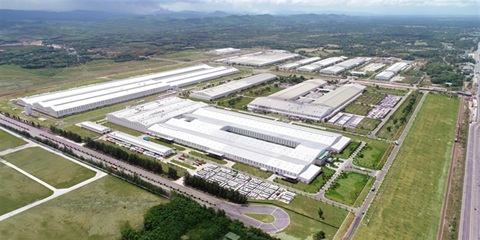
ĐÀ NẴNG GREEN-LIGHTS US$105 MILLION THAI DEVELOPMENT DEAL
The central city has approved an investment proposal by Thailand’s WHA Group to develop infrastructure for the 400ha WHA Đà Nẵng Industrial Park project on two communes of Thăng Bình and Đồng Dương, with an investment of more than VNĐ2.7 trillion (US$105 million). The city said it approved WHA Industrial Development International's status as an investor in the project, which is expected to take place between 2027 and 2034.
VIETNAM ECONOMY INVESTMENT
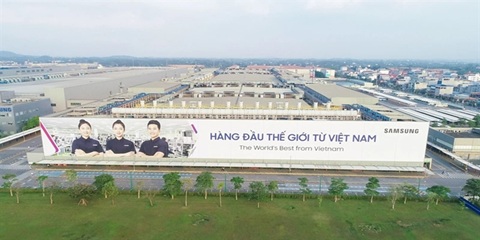
MOBILE PHONE EXPORTS RISE 20% TO $51.8 BILLION IN FIRST NINE MONTHS
Exports of mobile phones and components rose 20 per cent year-on-year to nearly US$51.8 billion in the first nine months of 2026, with China, the US and Republic of Korea accounting for more than half of the total. Shipments to the three markets reached a combined $26.18 billion, or 50.6 per cent of total exports of the product group during the period, according to data from the Vietnam Department of Customs under the Ministry of Finance.
INFRASTRUCTURE / CONSTRUCTION / LOGISTIC / PORT
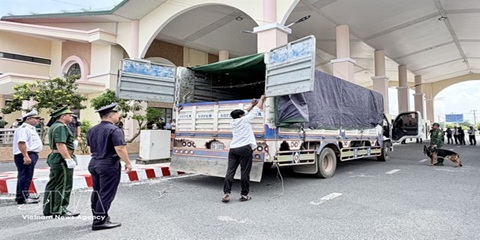
VIỆT NAM-CAMBODIA TRADE GATHERS PACE TOWARDS $20 BILLION TARGET
Trade between Việt Nam and Cambodia continues to grow, remaining a bright spot and a key pillar of bilateral cooperation as the two countries aim to raise two-way trade to US$20 billion in the coming years. After setting a record of more than $11.3 billion last year, bilateral trade reached about $8.7 billion in the first eight months of this year, up 8.3 per cent year on year.
VIETNAM ECONOMY INVESTMENT
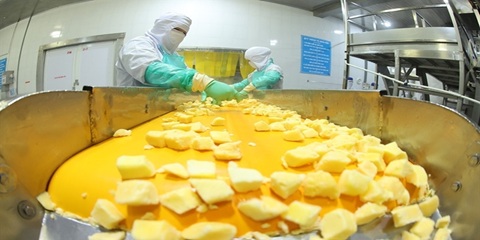
FRUIT AND VEGETABLE EXPORTS POISED TO HIT $10 BILLION IN 2026
Fruit and vegetable exports are on track to reach nearly US$10 billion in 2026, after rising 19.9 per cent year on year to nearly US$7.4 billion in the first nine months, driven by strong seasonal demand and abundant tropical fruit supplies. The Ministry of Agriculture and Environment said the growth reflected stronger international demand for fresh produce and processed agricultural products.
Events Sponsors






















