Want to be in the loop?
subscribe to
our notification
Business News
HANDLING BACKLOGGED COMMODITIES AT SEAPORTS
The Haiphong Department of Customs said that the increase in backlogs at Haiphong ports since 2011 is hurting business operations of seaports and exposing potential environmental and safety risks.
The handling of thousands of “rubbish” containers at seaports in Haiphong, Danang and Ho Chi Minh City has been urgently carried out as directed by Deputy Prime Minister Hoang Trung Hai. The Haiphong Customs Department has actively coordinated with relevant agencies to clear 1,332 containers (by exporting, importing) to reduce the number of backlogged containers to just 3,728. However, the clearance of backlogs in Haiphong ports is quite difficult.
To gradually remove obstacles and end this problem, the Haiphong Customs Department has collected information and checked the status of backlogs and reported them to the General Department of Customs and the Haiphong People’s Committee to have appropriate solutions. Based on solutions to problems proposed by the Haiphong Customs Department, the General Department of Customs built and introduced action plans to deal with the situation, like Plan 98/KH-TCHQ on strengthened inspection and control of backlogged imports at Haiphong ports, and Plan 230/KH-General Department of Vietnam Customs on inspection and handling of 2,796 containers of used rubber and tyres. The authority also hosted dialogues and meetings with shipping companies, forwarding agents and warehouse operators to seek coordinating solutions to deal with backlogs.
The Haiphong Customs Department said the introduction of action plans has produced positive results. Regarding the implementation of Plan 230/KH-TCHQ, the General Department of Customs requested scanning all 2,796 containers. The Haiphong Customs Department teamed up with the Police of Haiphong to examine 397 containers and handled them as guided by the General Department of Customs. It also worked with Anti-smuggling Bureau to scan 688 containers, including 29 containers checked at the request of the Ministry of Industry and Trade to the Ministry of Finance, stated in Official Document 2289/BTC-XNK dated March 24, 2014. However, according to Haiphong customs authority, as the scanning area was different from container sites, containers must be transported to the scanning site, thus giving rise to transport costs and procedural costs. To clear backlogs at ports as required by Deputy Prime Minister Hoang Trung Hai, the Haiphong customs authority proposed encouraging businesses to re-export them out of Vietnam.
As for treatment for used rubber tires and scraps, apart from companies authorised to purchase by the Prime Minister, the Haiphong Customs Department suggested allowing importing companies or capable companies to process them into production inputs in accordance with the law. The fund for disposal is sourced from central State Budget.
In Ho Chi Minh City, customs authorities are cooperating with port operators and carriers to handle over 1,000 containers of backlogged goods. The process will be based on the Circular 15/2014/TT-BTC and Circular 203/2014/TT-BTC of the Ministry of Finance dated December 22, 2014.
Cat Lai Port reports to have over 800 backlogged containers. According to the Customs Bureau for Saigon Port Area 1, Cat Lai Port is preparing procedures to liquidate nearly 140 containers as defined in the Circular 203 as they have laid in the port more than 90 days. Most backlogs are common goods free of hazardous substances or environmental pollutants.
Source: VCCI
Related News

MEMBER CORNER / PROMOTIONS
HCMC | CERTIFIED SUSTAINABILITY PROFESSIONAL (CSP) TRAINING | REGISTRATION OPEN
As sustainability becomes deeply embedded in corporate strategy and supply-chain operations across Vietnam, Hong Kong Business Association Vietnam is pleased to endorse the upcoming Certified Sustainability Professional (CSP) training program by the Asia Institute for Sustainability (AIS) - a premier internationally recognized ESG credential in Vietnam.
VIETNAM ECONOMY INVESTMENT
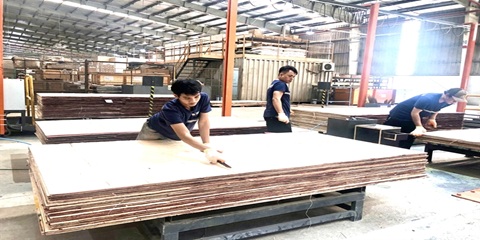
HCM CITY SAYS HOW IT PLANS TO ACHIEVE 10-11% ANNUAL EXPORT GROWTH FOR REST OF DECADE
The southern economic hub aims to strengthen its role as the country’s largest import-export centre while developing into a regional transhipment centre in Southeast Asia, supported by green and digital transformation and a circular economy. HCM City has outlined measures to expand production capacity, cut logistics costs, diversify export markets, and help businesses meet increasingly stringent international standards as it targets average annual export growth of 10-11 per cent through 2030.
VIETNAM ECONOMY INVESTMENT
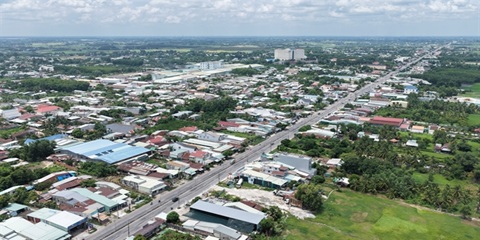
HCM CITY LEADS ECONOMIC RESTRUCTURING IN SOUTHEAST REGION
According to Associate Professor, Dr Vũ Tuấn Hưng, director of the Institute of Social Sciences of the Southern Region, the Southeast is a strategically important socio-economic space in Việt Nam’s development given its advantages in location, industry, trade, services, logistics, science and technology, urbanisation and human resources.
TECHNOLOGY
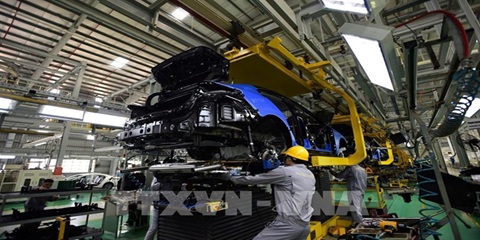
DIGITAL TRANSFORMATION TURNED INTO PRACTICAL TOOLS FOR PEOPLE, BUSINESSES
Việt Nam is moving its digital transformation agenda beyond policy frameworks and individual technology platforms towards practical applications that address everyday needs, as authorities seek measurable outcomes from science, technology and innovation. Under Politburo Resolution No. 57-NQ/TW issued on December 22, 2024, the implementation is increasingly shifting from simply completing assigned tasks towards developing concrete products and services for citizens and businesses.
TECHNOLOGY
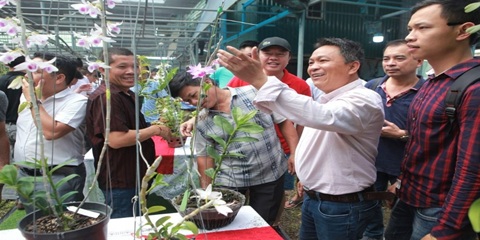
APPLYING TECHNOLOGY FOR ECONOMIC TRANSFORMATION
Having completed its new rural development program, Hanoi is shifting its focus toward improving development quality and building smart, sustainable rural areas. The transformation of Dong La orchid-growing village in An Khanh, a western commune of Hanoi, shows how digital technology is becoming a driver of production, market expansion, and higher incomes for local residents.

MEMBER CORNER / PROMOTIONS
VIGLACERA HONORED AS THE "LEADING GREEN INDUSTRIAL REAL ESTATE DEVELOPER 2026"
Organized by the Vietnam Investment Review, this prestigious awards program recognizes industry pioneers advancing eco-industrial parks, clean energy transition, and rigorous ESG standards. Outperforming competitors through a rigorous evaluation, Viglacera Corporation – JSC proudly ranked among the Top 5 highest-positioned enterprises in the Leading Green Industrial Real Estate Developers 2026 category, reinforcing its premier position in Vietnam’s industrial real estate sector.
Events Sponsors






















