Want to be in the loop?
subscribe to
our notification
Business News
HCM CITY BANKING SECTOR SETS HIGH GOALS FOR 2017
During the 2011-15 period, the city’s banking industry reached an annual growth of 10.1 per cent, ranking second among other sectors in growth.
“This year, the city aims to collect VNĐ348 trillion (US$15.5 billion) for the State budget, an increase of 16.6 per cent year-on-year, and an increase of 26 per cent for city collections, ” he added.
To complete its mission, Phong has told the State Bank of Việt Nam (SBV) and commercial banks to improve supervision and inspection of credit activities for real estate projects and build-operate-transfer (BOT) transport projects; promote the restructuring of the banking industry; and settle bad debts.
“Increasing network security, ensuring safety for customers’assets and further mobilising local residents’ savings are the most important tasks for SBV and commercial banks,” Phong said.
Tô Duy Lâm, director of SBV’s HCM City branch, said that in 2016, total assets of the banking industry in HCM City increased 14.4 per cent to VNĐ2.9 quadrillion ($126 billion), with 10.7 million bank cards, a year-on-year increase of 8.1 per cent; and 36,500 POS, or growth of 8.6 per cent.
The local banking sector’s bad debt ratio was 3.6 per cent, a reduction of nearly 8 per cent compared with 2015.
“Last year, the monetary market and banking activities in HCM City remained stable, despite many unexpected events in the world’s economy, affecting the Vietnamese economy,” Lâm said.
By the end of 2016, the deposit interest rate was 4.8-5.2 per cent for đồng under six month terms, 6.6-7 per cent for over 12 months, and zero for US dollar loans.
The short-term lending interest rate for five priority industries was around 7 per cent and did not exceed 8.5 per cent for other industries. It was 8.7-9.7 per cent for medium- and long-term loans.
The foreign currency exchange rate increased 1.23 per cent compared with last year and total remittances were around $5 billion.
“The liquidity of the banking system remained stable and the safe operation index was ensured. Capital usage ratio was 82.9 per cent,” Lâm added.
He also said that banking activities in HCM City achieved growth and development, in which outstanding loans increased 19.3 per cent, the highest growth in recent years.
“Banking services developed well and business results of financial institutions improved,” he added.
Retail banking services and electronic banking like mobile and internet banking achieved high growth of more than 50 per cent compared with 2015.
“Activities that helped solve difficulties for the business community were executed well, with total outstanding loans of VNĐ770 trillion ($35 billion), an increase of 10 per cent over 2015, in which VNĐ145 trillion was borrowed at preferential interest rates,” Lâm added.
The Banking – Enterprises Connectivity programme allowed nearly 22,000 customers to borrow VNĐ281 trillion.
Lâm also warned that financial institutions in HCM City must be aware of potential risks, especially bad debt and slow restructuring, which could affect the sustainable and stable development of the banking system.
“Technological risks also need more attention,” he said.
This year, the banking industry in HCM City has set a goal of reaching 18 per cent credit growth, 16 per cent growth of capital mobilization, and bad debt under 3 per cent.
“The banking sector will continue to implement the credit programmes of the Government, SBV and the city,” Lâm added.
SBV Governor Lê Minh Hưng said that SBV “would pay attention to bank restructuring and settling of bad debts in 2017”.
Last year, SBV restructured five “special” banks and ensured safe operation of the entire system.
“We have reviewed the last five-year period of restructuring and settling bad debts and will release the next five-year plan soon,” he said.
In addition, SBV will work with agencies to map out a special law on supporting the banking sector in restructuring and resolving bad debts, which will include legal regulations.
Obstacles in existing legal regulations will also be addressed under the new law to remove hindrances in resolving bad debts.
The SBV has set a goal to gain credit increase of 16 per cent for a growth of 16-18 per cent in total payments, and will try to cut medium- and long-term interest rates, as well as stabilise the foreign currency exchange rate.
Source: VNS
Related News
VIETNAM ECONOMY INVESTMENT
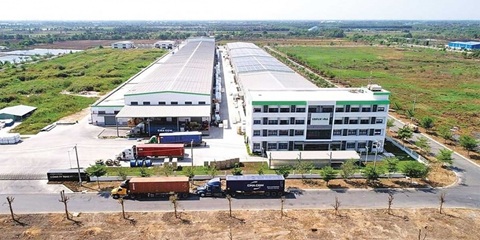
FOREIGN INVESTORS SEEKING A SYNCHRONISED MANUFACTURING ECOSYSTEM
Instead of focusing only on land costs and incentives as usual, foreign investors are seeking a synchronised manufacturing ecosystem, from stable power supply and logistics to shared infrastructure and the convenience of completing residence procedures for experts to serve their long-term investment in the country.
INFRASTRUCTURE / CONSTRUCTION / LOGISTIC / PORT
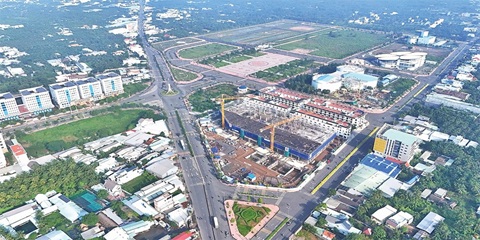
DONG THAP PROVINCE STEPS UP INDUSTRIAL EXPANSION AND INFRASTRUCTURE CONNECTIVITY
Accelerating public investment, strengthening inter-regional connectivity, and expanding industrial land are helping Dong Thap efficiently bolster competitiveness and drive economic growth. Following the 2025 merger of the former Dong Thap and Tien Giang provinces, the expanded Dong Thap province in the Mekong Delta faces mounting pressure to accelerate infrastructure development and strengthen connectivity among local economic zones, urban areas, industrial parks (IPs), and production centres.
PROPERTY / INDUSTRIAL ZONE
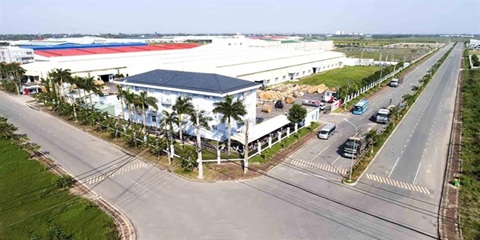
HCM CITY ATTRACTS US$5.7 BILLION INTO EXPORT PROCESSING AND INDUSTRIAL ZONES
HCM City attracted US$5.7 billion in domestic and foreign investment into its export processing and industrial zones during the first nine months of 2026. The figure exceeded the city's full-year target by 31 per cent, highlighting strong momentum in high-quality industrial investment under Resolution No.10-NQ/TW. Total investment reached 131 per cent of the 2026 target of $4.25 billion and represented a 29 per cent increase compared with the same period in 2025, according to the city's Export Processing and Industrial Zones Authority (HEPZA).

BANKING / FINANCE / INSURANCE / TAX
REMITTANCES TO HCM CITY RISE NEARLY 40% IN Q3
Remittances to HCM City reached more than US$2.83 billion in the third quarter of this year, up 39.5 per cent from the previous quarter and 3.6 per cent year-on-year. This was the first quarter showing positive annual growth this year, helping narrow the decline in remittance inflows over the first nine months. According to the State Bank of Vietnam (SBV)’s Regional Branch 2, remittances transferred to HCM City through credit institutions and economic organisations totalled $2.835 billion in Q3, an increase of more than $802 million from the previous quarter.

VIETNAM ECONOMY INVESTMENT
LOCALITIES REPORT BREAKTHROUGH RESULTS IN FDI IN FIRST NINE MONTHS
In Ho Chi Minh City, total registered capital reached $17.2 billion in the first nine months, up 4.2 times from the same period last year. The figure included more than $9.35 billion in newly registered capital and over $4.9 billion in additional capital for existing projects. Foreign investors also registered more than $2.9 billion through capital contributions and share purchases.

TECHNOLOGY
TECH SECTOR GROWTH OPENS UP OPPORTUNITIES FOR VIỆT NAM TO GO GLOBAL
The growth of the electronics, semiconductor and high-tech sectors worldwide is opening up a variety of opportunities for Vietnamese enterprises to integrate more deeply into the global supply chain. However, to become suppliers for these corporations, domestic enterprises must meet rigorous standards regarding quality, technology, productivity and order fulfilment capabilities.
Events Sponsors






















