Want to be in the loop?
subscribe to
our notification
Business News
HCM CITY GOES BIG: POST-MERGER POWERHOUSE TARGETS NEXT WAVE OF HIGH-TECH FDI
After merging with Bình Dương and Bà Rịa-Vũng Tàu, the new HCM City is positioning itself as a regional investment magnet, rolling out sweeping reforms, mega-infrastructure projects, and bold incentives to attract global tech and clean-energy giants. Bồ Xuân Hiệp reports
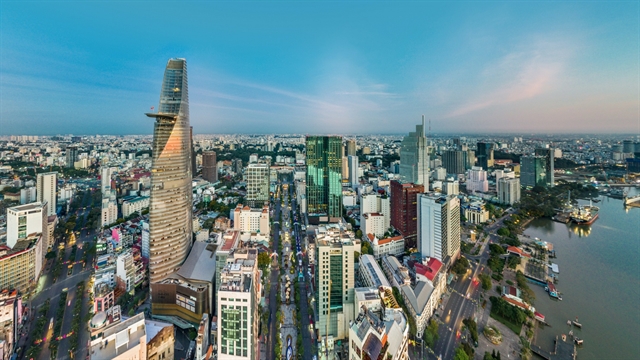
A view of HCM City’s skyline. The newly expanded metropolis is positioning itself as a regional investment powerhouse, driven by sweeping reforms, major infrastructure projects, and bold incentives to attract foreign capital. — VNA/VNS Photo
After merging with Bình Dương and Bà Rịa-Vũng Tàu, the new HCM City is positioning itself as a regional investment magnet, rolling out sweeping reforms, mega-infrastructure projects, and bold incentives to attract global tech and clean-energy giants. Bồ Xuân Hiệp reports
HCM CITY — HCM City is ramping up efforts to attract a new wave of high-quality foreign investment as it targets US$10.44 billion in foreign direct investment (FDI) this year, following a major administrative merger with Bình Dương and Bà Rịa-Vũng Tàu provinces.
The expanded 'Greater HCM City' now encompassing 64 export processing and industrial zones (EPZs and IPs) across 45,000 hectares of industrial land and is positioning itself as a regional innovation and high-tech manufacturing hub, city leaders say.
According to the Department of Finance, the city licensed 945 new FDI projects worth $4.72 billion in the first half of the year, up 32 per cent from a year earlier.
The merger is expected to further boost inflows, with the former city projected to contribute $7 billion of the year’s total, Bình Dương $1.8 billion, and Bà Rịa-Vũng Tàu $1.64 billion.
Shift toward high-tech, green growth
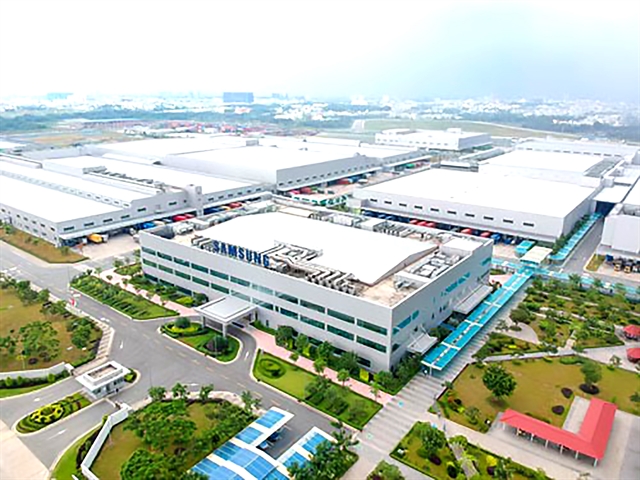
The Saigon Hi-Tech Park in HCM City, Việt Nam’s largest economic hub. The park has become a magnet for global technology giants from the US, South Korea, Japan and beyond. — VNA/VNS Photo
Between 2020 and 2025, HCM City drew over $2.86 billion in FDI into its industrial and export processing zones, exceeding initial targets.
Total FDI inflows surged by more than 45 per cent in the first seven months of 2025, reaching nearly $6.2 billion, according to the HCM City Statistics Department.
Officials say this momentum reflects a broader shift in the city’s investment strategy, from labour-intensive industries to high-tech, clean, and value-added sectors such as semiconductors, renewable energy, advanced materials and smart manufacturing.
“HCM City’s investment policy in this term has focused on quality over quantity,” said Nguyễn Công Vinh, director of the Department of Finance.
“We want to attract investors who bring innovation, technology transfer and sustainable value to our economy.”
The city is finalising a portfolio of priority projects in strategic sectors including international transhipment ports, innovation hubs, R&D centres, clean energy, and semiconductor manufacturing.
One flagship initiative, the Cần Giờ International Transhipment Port, aims to position HCM City as a major logistics and maritime centre in Southeast Asia.
Expanding industrial capacity
The merger has given the city a much-needed boost in industrial land, a long-standing bottleneck for new investments.
Lê Văn Thinh, head of the HCM City Export Processing and Industrial Zones Authority, said the zones aim to attract $3.73 billion in new investment in 2025.
“We are upgrading and transforming traditional industrial parks into high-tech and innovation-driven zones,” he said.
“Our goal is to build an ecosystem for sustainable industries that apply digital technologies and green standards.”
In Bình Dương, which now accounts for nearly half of the city’s total industrial zones, two major new projects, the Cây Trường Industrial Park and Bàu Bàng Phase 2, have been launched at a combined cost of VNĐ5.5 trillion ($210 million).
Both are next-generation industrial zones built to international standards, integrating digital management, smart monitoring systems, and eco-friendly infrastructure.
The Tam Lập 2 cluster in northern Bình Dương, developed by Gia Định Group, has also attracted attention for prioritising investors using clean technologies and low-emission production.
Administrative reforms
Alongside physical infrastructure, HCM City is overhauling administrative procedures to make doing business easier.
According to Vinh of the Finance Department, five of 22 key investment-related procedures are now processed 30 per cent faster, benefiting over 93 per cent of applications this year.
“Soon, procedures such as amending investment registration certificates or adjusting project details will be completed within a single working day,” he said.
The city also plans to launch a digital investment portal detailing available industrial land, planning information, and investment models to improve transparency and help investors quickly access opportunities.
These efforts are in line with Việt Nam’s broader national drive to attract high-quality foreign investment amid global supply chain realignments.
“HCM City’s reforms are sending a strong signal to investors about its readiness to compete for high-value projects,” said Dr. Trần Hoàng Ngân, a member of the National Financial and Monetary Policy Advisory Council.
“The focus on semiconductors, digital economy, and clean energy aligns perfectly with global trends.”
Infrastructure push to enhance competitiveness
Infrastructure remains at the heart of the city’s investment appeal. The Government has accelerated several mega projects including a coastal highway, new railway links and logistics hubs connecting to the southern seaports.
“Efficient logistics and transport systems are critical to enhancing our competitiveness,” said Lâm Đình Thắng, Director of the Department of Science and Technology.
“We are aligning infrastructure upgrades with the needs of the green and digital economy.”
Once completed, the Cần Giờ Transhipment Port will be able to handle up to 16 million TEUs annually, reinforcing HCM City’s ambition to become a major maritime gateway for international trade.
City authorities are also strengthening ties with major foreign business groups, including JETRO (Japan External Trade Organisation), EuroCham, and AmCham, to attract multinational investors and enhance cooperation.
“Beyond attracting capital, we are building long-term partnerships that encourage innovation, knowledge sharing, and technology transfer,” said Thinh from the EPZ Authority.
The city is working with financial institutions to improve access to funding for high-tech enterprises and with universities to train skilled workers for emerging industries.
“We understand that foreign investors not only look for policy stability but also human resource quality and supporting industries,” Thinh added.
Commitment to sustainable growth
City leaders have repeatedly stressed that future growth must be inclusive and sustainable.
“Our priority is not just to attract more FDI, but to ensure it creates jobs, promotes innovation, and protects the environment,” said Trần Lưu Quang, newly appointed secretary of the HCM City Party Committee.
“We are committed to turning the city into a regional hub for technology and green growth.”
The city plans to convert five existing EPZs and IPs, including Tân Thuận, Tân Bình, Hiệp Phước, Cát Lái and Bình Chiểu, into innovation-oriented zones, furthering its industrial transformation.
New incentives are also being drafted for semiconductor design, integrated circuits and advanced battery technologies - industries identified as national priorities.
As the 2020-2025 period draws to a close, economists say the challenge ahead for the city will be maintaining momentum and ensuring that growth remains balanced across the newly integrated regions.
If successful, the 'new HCM City' could redefine Việt Nam’s economic landscape, transforming from a traditional manufacturing base into a regional powerhouse for innovation, sustainability and high-tech investment. — VNS
Source: VNS
Related News
INFRASTRUCTURE / CONSTRUCTION / LOGISTIC / PORT
VIỆT NAM-CAMBODIA TRADE GATHERS PACE TOWARDS $20 BILLION TARGET
Trade between Việt Nam and Cambodia continues to grow, remaining a bright spot and a key pillar of bilateral cooperation as the two countries aim to raise two-way trade to US$20 billion in the coming years. After setting a record of more than $11.3 billion last year, bilateral trade reached about $8.7 billion in the first eight months of this year, up 8.3 per cent year on year.
TECHNOLOGY
AI BEGINNING TO RESHAPE RECRUITMENT CRITERIA
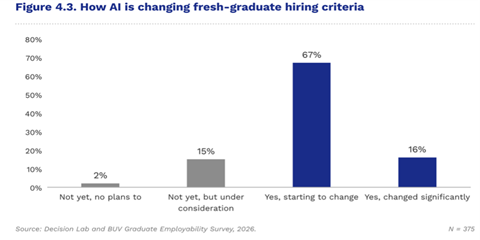
Digital literacy is the only capability area in which fresh graduates meet employers’ expectations, according to a new report. Yet, it is also the standard rising fastest, as businesses increasingly expect new hires to use AI effectively in the workplace. Some 83 per cent of employers say AI has changed, or is beginning to change, their hiring criteria, while 94 per cent report higher expectations for digital and AI capabilities than they had two to three years ago.
INFRASTRUCTURE / CONSTRUCTION / LOGISTIC / PORT
ĐÀ NẴNG GREEN-LIGHTS US$105 MILLION THAI DEVELOPMENT DEAL
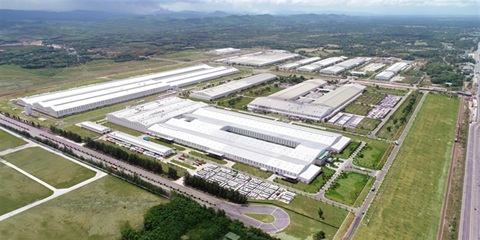
The central city has approved an investment proposal by Thailand’s WHA Group to develop infrastructure for the 400ha WHA Đà Nẵng Industrial Park project on two communes of Thăng Bình and Đồng Dương, with an investment of more than VNĐ2.7 trillion (US$105 million). The city said it approved WHA Industrial Development International's status as an investor in the project, which is expected to take place between 2027 and 2034.
VIETNAM ECONOMY INVESTMENT
MOBILE PHONE EXPORTS RISE 20% TO $51.8 BILLION IN FIRST NINE MONTHS
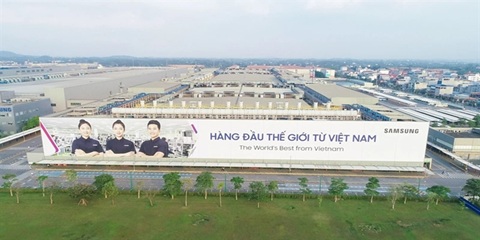
Exports of mobile phones and components rose 20 per cent year-on-year to nearly US$51.8 billion in the first nine months of 2026, with China, the US and Republic of Korea accounting for more than half of the total. Shipments to the three markets reached a combined $26.18 billion, or 50.6 per cent of total exports of the product group during the period, according to data from the Vietnam Department of Customs under the Ministry of Finance.
VIETNAM ECONOMY INVESTMENT
FRUIT AND VEGETABLE EXPORTS POISED TO HIT $10 BILLION IN 2026
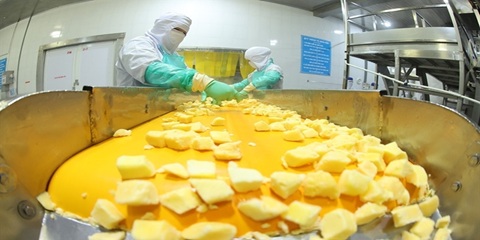
Fruit and vegetable exports are on track to reach nearly US$10 billion in 2026, after rising 19.9 per cent year on year to nearly US$7.4 billion in the first nine months, driven by strong seasonal demand and abundant tropical fruit supplies. The Ministry of Agriculture and Environment said the growth reflected stronger international demand for fresh produce and processed agricultural products.
GARMENT / TEXTILE
TEXTILE EXPORTS FACE DUAL CHALLENGES OF SUSTAINING ORDERS AND BOOSTING EFFICIENCY AMID GROWING COMPETITION
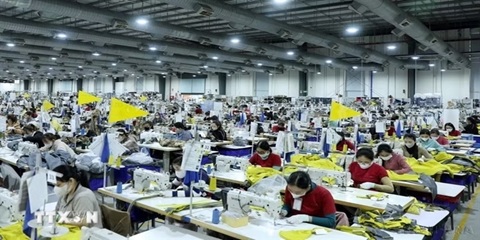
Data shows that the textile and garment sector maintained its growth momentum in the first nine months of this year. The industry's total export turnover reached an estimated US$35.721 billion in the first nine months of this year, up 3.3 per cent year-on-year. Despite posting encouraging export figures, Vietnamese textile and garment enterprises continue to navigate unpredictable market variables.
Events Sponsors






















