Want to be in the loop?
subscribe to
our notification
Business News
HCM CITY TO SPEND $3.3M TO SUPPORT SMALL TRADERS AT TRADITIONAL MARKETS AFFECTED BY PANDEMIC
HCM City is considering a financial support package worth more than VNĐ76 billion (US$3.31 million) from the State budget to support small traders at traditional markets affected by the pandemic.
According to the city’s Department and Industry and Trade, it would be disbursed from now to the end of the year.
The department has proposed that the Department of Planning and Investment petition the People’s Committee to ask the People’s Council to approve the package.
The amount of support would be equivalent to 50 per cent of the maximum market fee payable to market management stipulated in the city’s Decision 24.
Based on the area of the shop, traders at grade-one markets (14 markets) would receive VNĐ100,000 per sq.m per month, grade-two markets (52 markets) VNĐ70,000 per sq.m per month, and grade-three markets (168 markets) VNĐ50,000 per sq.m per month.
According to the Department of Industry and Trade, small traders at traditional markets are facing many difficulties as purchasing power has dropped significantly. Nearly 60,000 shop owners at traditional markets would benefit from the package.
To be eligible, beneficiaries must have fulfilled their financial obligations to the market manager and their tax obligations to the State, and have a tax identification number.
A small trader at Bà Chiểu market in Bình Thạnh District, who declined to be named, said the level of support was not much, but it was encouraging for small traders (such as clothing, fabrics, fashion, and shoes) who have seen sharp drop in the number of shoppers at traditional markets.
In February, city authorities ordered traditional markets to reduce their rent for traders by 50 per cent for six months.
According to many shopkeepers, sales at traditional markets last year fell by 60-80 per cent from previous years.
Bến Thành Market, one of the city’s oldest markets and a major tourist site, has only a few dozen visitors during weekends compared to thousands during normal times. Most of its 3,000 stalls, which sell food, garments, footwear and handcrafts, are closed.
Most shops that sell Vietnamese handicrafts and fried seafood, favoured by both foreign and local visitors, have been closed since March last year.
The same situation has occurred in other wholesale markets in the city, including An Đông in District 5, Bình Tây in District 6 and Soái Kình Lâm in Chợ Lớn (Big Market) in District 5.
Stall owners used to hire at least three salespeople, but have had to let many go since they cannot afford to pay them. Many of them have had to shut their shops due to lack of business.
Taxes are one of the biggest concerns of small businesses, which pay an average of VNĐ4-6 million a month.
Stall owners want the city to reduce or waive taxes for six months, saying it would be of greater help in reducing their financial burden and would help them stay open.
Source: VNS
Related News
VIETNAM ECONOMY INVESTMENT
VIETNAMESE COMPANIES OPTIMISTIC ON INTERNATIONAL GROWTH
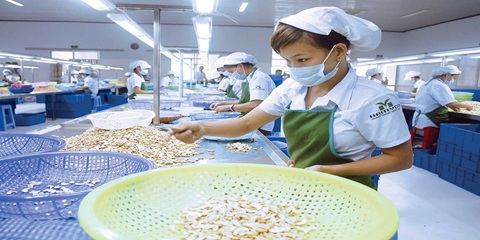
Vietnamese businesses are among the most confident about the outlook for international trade, according to HSBC’s Global Trade Pulse Survey 2026, released on November 16. The survey captures the views of 10,000 senior business leaders across 26 markets on trade, tariffs, supply chains, and technology. Findings show that 94 per cent of Vietnamese businesses expect their international trade to grow over the next two years. Vietnam ranks joint top in the survey with the Philippines, compared with 86 per cent globally.
TECHNOLOGY
VIỆT NAM'S DIGITAL TECHNOLOGY INDUSTRY REVENUE SURGES 53% TO $254.6B
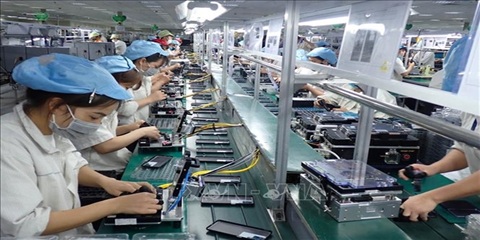
Việt Nam's digital technology industry generated an estimated US$254.6 billion in revenue in the first 10 months of 2026, up 53 per cent from a year earlier, while exports rose 46.2 per cent to $212 billion, the Ministry of Science and Technology said in its latest report. According to the report, hardware and electronics exports reached an estimated $30.681 billion in October, up 108 per cent from the same month last year.
CHARITY / EXHIBITION / OTHER EVENTS
BOCHK ‧ HKPC FUTURE VIETNAM: HANOI BUSINESS DELEGATION ON DIGITAL TRANSFORMATION AND INDUSTRIAL INNOVATION
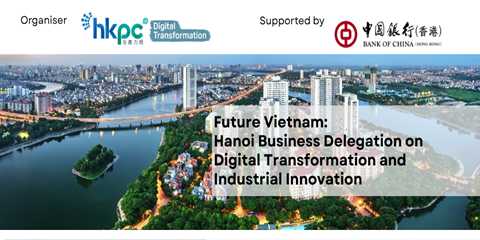
Interested in exploring Vietnam’s latest developments in digital transformation, technology adoption and industrial innovation? Organised by the Hong Kong Productivity Council (HKPC) and fully supported by Bank of China (Hong Kong) Limited, the "Future Vietnam: Hanoi Business Delegation on Digital Transformation and Industrial Innovation” will feature visits to leading high-tech enterprises across Vietnam and engage with local chambers of commerce, industry organisations and associations. Join us to expand your high-value business network and seize emerging opportunities in the ASEAN market!
GARMENT / TEXTILE
TEXTILE, GARMENT FIRMS REFORM TO MEET CPTPP ORIGIN RULES
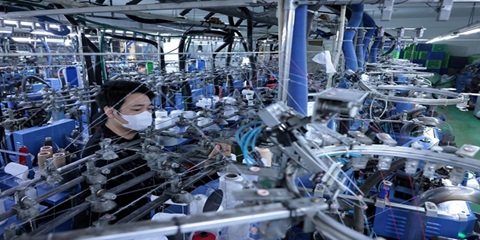
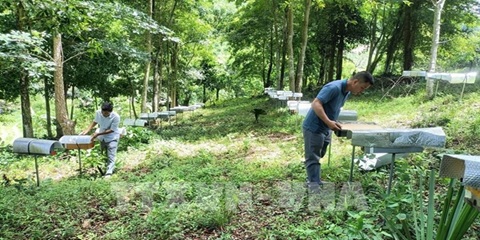
Vietnamese textile and garment manufacturers are aggressively restructuring their supply chains and diversifying material sources to unlock untapped tariff benefits. To capitalise on the Comprehensive and Progressive Agreement for Trans-Pacific Partnership (CPTPP), companies are racing to align with the pact's strict "yarn-forward" rules — a task made difficult by a shortage of raw materials within the trade bloc.
TECHNOLOGY
ĐÀ NẴNG SEEKS TO BUILD HIGH-TECH AGRICULTURE, INTEGRATED VALUE CHAINS
Đà Nẵng is seeking to transform its agricultural sector from a supplier of raw materials into a technology-driven, market-oriented economy, with investment opportunities spanning concentrated production areas, deep processing, logistics and agricultural product distribution. The city aims to shift from traditional agricultural production towards agricultural economic development, organising value chains and increasing the technological content and added value of products through closer links between production and processing.
INFRASTRUCTURE / CONSTRUCTION / LOGISTIC / PORT
HCM CITY ACCELERATES POWER INFRASTRUCTURE INVESTMENT TO ATTRACT HIGH-TECH CAPITAL
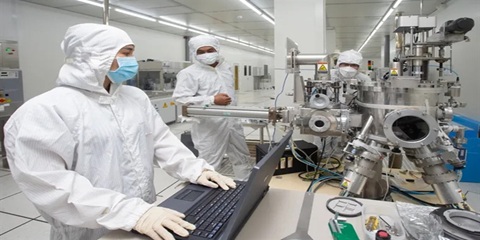
High-tech projects, particularly data centres, are not confined to SHTP but are also expanding into export processing zones and industrial parks across HCM City, driving up electricity demand. Proactively developing power infrastructure, diversifying energy supplies and expanding access to green energy are becoming essential for HCM City to maintain its competitive edge in attracting high-tech foreign direct investment (FDI).
Events Sponsors