Want to be in the loop?
subscribe to
our notification
Business News
HCMC PROPOSES NO MARKUP ON OFFICIAL LAND PRICES
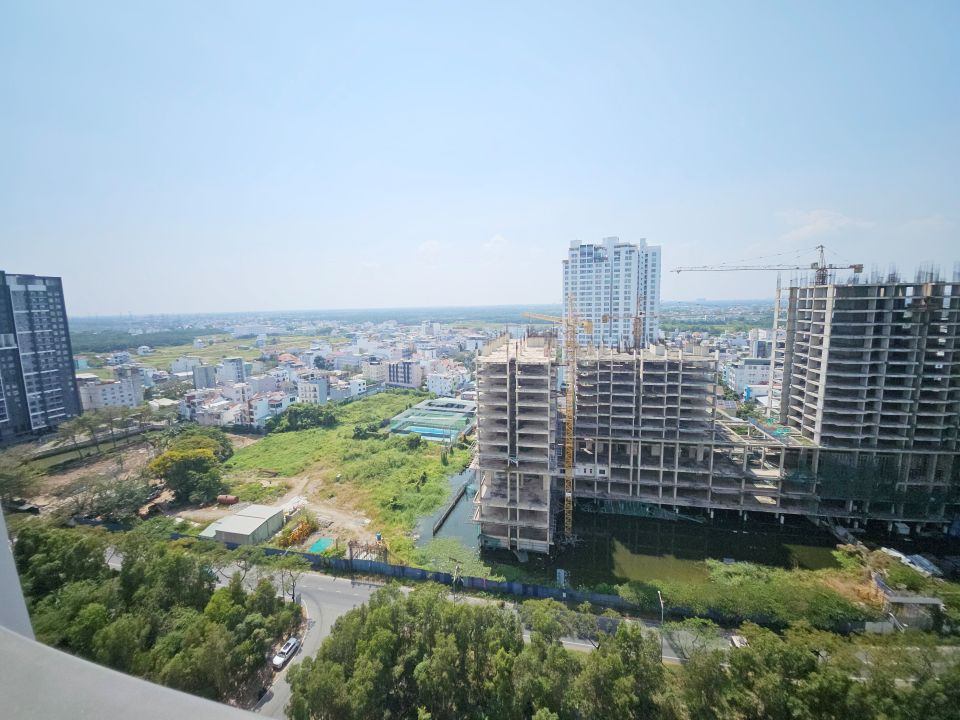
HCMC – HCMC’s Department of Natural Resources and Environment has proposed setting the land price adjustment coefficient, known as the K factor, at 1 for households and businesses, meaning land-use fees and rents would be calculated directly from the official land price table without any upward adjustment.
The proposal, included in the third draft regulation submitted by the department to the land price appraisal council, is intended to ease financial burdens on residents and businesses while supporting a recovery in the real estate market.
Under the proposal, households and individuals converting land-use purposes, receiving land allocations without auctions or obtaining recognition of land-use rights beyond prescribed limits would be eligible for the coefficient. Businesses and economic organizations receiving land allocations subject to land-use fees, leasing land from the State, or converting leased land into allocated land would also qualify.
The measure is based on National Assembly Resolution 254/2025/QH15, under which the K factor is a multiplier used together with the official land price table to calculate land-use fees, land rents, taxes, compensation, administrative fines and starting prices for land-use rights auctions.
City authorities said the proposal seeks to create a more balanced framework for land-related financial obligations amid changes to the land pricing system.
The move comes as HCMC faces competing demands among various stakeholders. Landowners whose properties are acquired typically seek higher valuations to maximize compensation, while households converting land-use purposes and businesses leasing land favor lower and more stable prices to reduce costs.
With a population of around 14 million and more than 160 land clearance projects under way, officials are seeking to avoid excessive increases in land-related charges that could trigger disputes and discourage investment.
The proposal also reflects efforts to smooth the transition to a land price framework that is increasingly aligned with market values. Keeping the coefficient at 1 would prevent land-use fees and rents from rising sharply, helping lower upfront costs for housing and infrastructure projects and encouraging private investment, according to the draft regulation.
Source: The Saigon Times
Related News

INFRASTRUCTURE / CONSTRUCTION / LOGISTIC / PORT
VIỆT NAM-CAMBODIA TRADE GATHERS PACE TOWARDS $20 BILLION TARGET
Trade between Việt Nam and Cambodia continues to grow, remaining a bright spot and a key pillar of bilateral cooperation as the two countries aim to raise two-way trade to US$20 billion in the coming years. After setting a record of more than $11.3 billion last year, bilateral trade reached about $8.7 billion in the first eight months of this year, up 8.3 per cent year on year.
TECHNOLOGY
AI BEGINNING TO RESHAPE RECRUITMENT CRITERIA
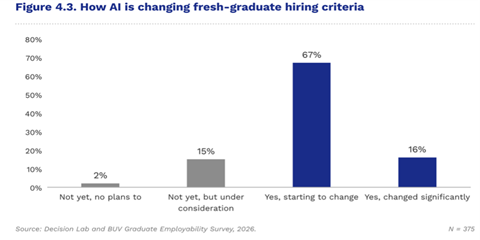
Digital literacy is the only capability area in which fresh graduates meet employers’ expectations, according to a new report. Yet, it is also the standard rising fastest, as businesses increasingly expect new hires to use AI effectively in the workplace. Some 83 per cent of employers say AI has changed, or is beginning to change, their hiring criteria, while 94 per cent report higher expectations for digital and AI capabilities than they had two to three years ago.

INFRASTRUCTURE / CONSTRUCTION / LOGISTIC / PORT
ĐÀ NẴNG GREEN-LIGHTS US$105 MILLION THAI DEVELOPMENT DEAL
The central city has approved an investment proposal by Thailand’s WHA Group to develop infrastructure for the 400ha WHA Đà Nẵng Industrial Park project on two communes of Thăng Bình and Đồng Dương, with an investment of more than VNĐ2.7 trillion (US$105 million). The city said it approved WHA Industrial Development International's status as an investor in the project, which is expected to take place between 2027 and 2034.

VIETNAM ECONOMY INVESTMENT
MOBILE PHONE EXPORTS RISE 20% TO $51.8 BILLION IN FIRST NINE MONTHS
Exports of mobile phones and components rose 20 per cent year-on-year to nearly US$51.8 billion in the first nine months of 2026, with China, the US and Republic of Korea accounting for more than half of the total. Shipments to the three markets reached a combined $26.18 billion, or 50.6 per cent of total exports of the product group during the period, according to data from the Vietnam Department of Customs under the Ministry of Finance.

VIETNAM ECONOMY INVESTMENT
FRUIT AND VEGETABLE EXPORTS POISED TO HIT $10 BILLION IN 2026
Fruit and vegetable exports are on track to reach nearly US$10 billion in 2026, after rising 19.9 per cent year on year to nearly US$7.4 billion in the first nine months, driven by strong seasonal demand and abundant tropical fruit supplies. The Ministry of Agriculture and Environment said the growth reflected stronger international demand for fresh produce and processed agricultural products.
GARMENT / TEXTILE
TEXTILE EXPORTS FACE DUAL CHALLENGES OF SUSTAINING ORDERS AND BOOSTING EFFICIENCY AMID GROWING COMPETITION
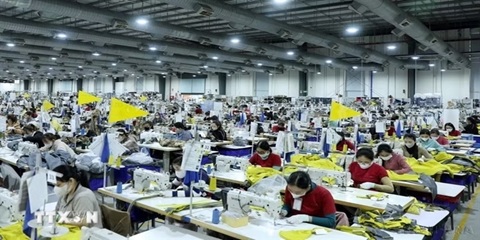
Data shows that the textile and garment sector maintained its growth momentum in the first nine months of this year. The industry's total export turnover reached an estimated US$35.721 billion in the first nine months of this year, up 3.3 per cent year-on-year. Despite posting encouraging export figures, Vietnamese textile and garment enterprises continue to navigate unpredictable market variables.
Events Sponsors






















