Want to be in the loop?
subscribe to
our notification
Business News
HCMC TARGETS VND1 QUADRILLION IN BUDGET REVENUE IN 2026
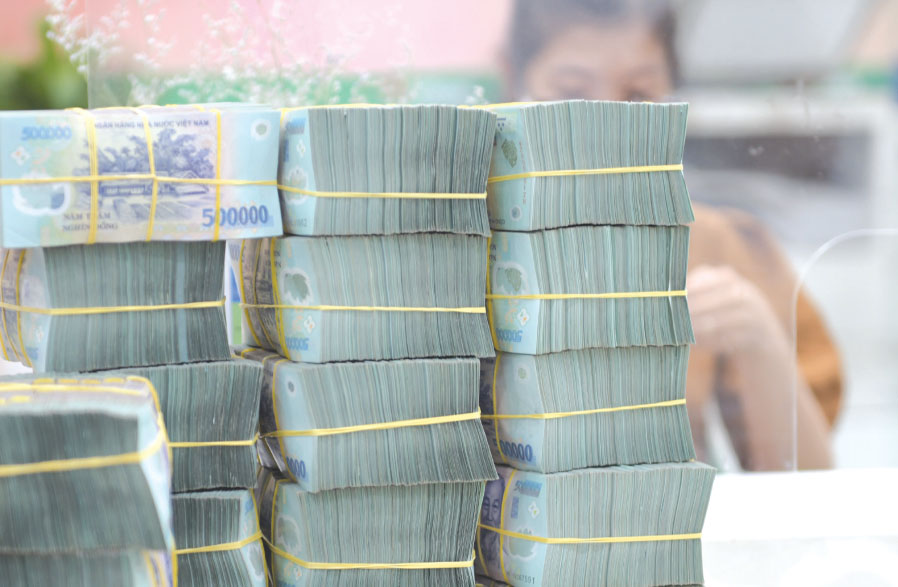
A bank teller is seen working behind stacks of Vietnamese banknotes - PHOTO: LE VU
HCMC – HCMC is aiming to collect VND1 quadrillion in budget revenue this year while accelerating administrative reforms, infrastructure investment, foreign direct investment inflows, and growth drivers from consumption, tourism, industry, and trade.
The HCMC People’s Committee has issued a directive urging departments and local authorities to swiftly roll out key measures and urgent solutions aimed at supporting the city’s double digit economic growth target for 2026.
Under the directive, departments, agencies, and local authorities are required to synchronously deploy major measures to stimulate economic growth, improve governance efficiency, and maximize development resources.
HCMC has set a target of obtaining VND1 quadrillion in budget revenue in 2026, including more than VND500 trillion by the end of the second quarter.
At the same time, the city plans to implement breakthrough measures to create significant progress in socioeconomic development.
To achieve the target, the city will prioritize completing procedures and conditions for launching major infrastructure projects, including the Thu Thiem-Long Thanh railway line, the Can Gio-Vung Tau sea crossing bridge and tunnel project, the Cat Lai-Phu Huu port connector route, Thu Thiem 4 Bridge, along with social housing, urban renewal, and science and technology infrastructure projects.
HCMC will continue accelerating administrative reforms by reviewing procedures related to production and business activities, aiming to cut processing times and compliance costs by 50% compared with 2024 levels, while eliminating all unnecessary business conditions.
HCMC’s economy recorded encouraging growth in the first four months of the year, with trade and services continuing to lead the expansion.
Total retail sales and consumer service revenue during the January to April period were estimated at VND639.3 trillion, marking a 13.2% increase from a year earlier.
Growth was seen across retail, accommodation and catering, travel, and other service segments, underscoring the role of domestic consumption as a major pillar of the city’s economic growth.
Tourism remained a bright spot in the city’s economy. Tourism revenue in the first four months reached VND172 trillion, equivalent to 52.1% of the full-year target, supporting growth in services, consumption, and employment.
Meanwhile, trade activities continued to expand. Export value in the January to April period had totaled US$30.91 billion, up 4.25% year-on-year, while imports rose 8.06% to US$33.99 billion.
HCMC’s industrial production index rose 11.2% in the four-month period, led by a 11.9% increase in the manufacturing and processing sector, which continued to serve as the city’s main growth driver.
Registered foreign direct investment during the January to April period reached nearly US$3.3 billion, fulfilling 30.2% of the annual target and surging 127.1% from the same period in 2025.
State budget revenue in the first four months was estimated at more than VND325.7 trillion, equivalent to 40.5% of the target assigned by the central Government and up 17.9% year-on-year.
Source: The Saigon Times
Related News

INFRASTRUCTURE / CONSTRUCTION / LOGISTIC / PORT
VIỆT NAM-CAMBODIA TRADE GATHERS PACE TOWARDS $20 BILLION TARGET
Trade between Việt Nam and Cambodia continues to grow, remaining a bright spot and a key pillar of bilateral cooperation as the two countries aim to raise two-way trade to US$20 billion in the coming years. After setting a record of more than $11.3 billion last year, bilateral trade reached about $8.7 billion in the first eight months of this year, up 8.3 per cent year on year.
TECHNOLOGY
AI BEGINNING TO RESHAPE RECRUITMENT CRITERIA
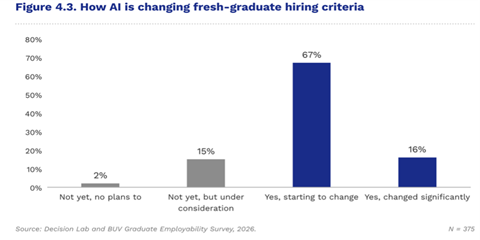
Digital literacy is the only capability area in which fresh graduates meet employers’ expectations, according to a new report. Yet, it is also the standard rising fastest, as businesses increasingly expect new hires to use AI effectively in the workplace. Some 83 per cent of employers say AI has changed, or is beginning to change, their hiring criteria, while 94 per cent report higher expectations for digital and AI capabilities than they had two to three years ago.

INFRASTRUCTURE / CONSTRUCTION / LOGISTIC / PORT
ĐÀ NẴNG GREEN-LIGHTS US$105 MILLION THAI DEVELOPMENT DEAL
The central city has approved an investment proposal by Thailand’s WHA Group to develop infrastructure for the 400ha WHA Đà Nẵng Industrial Park project on two communes of Thăng Bình and Đồng Dương, with an investment of more than VNĐ2.7 trillion (US$105 million). The city said it approved WHA Industrial Development International's status as an investor in the project, which is expected to take place between 2027 and 2034.

VIETNAM ECONOMY INVESTMENT
MOBILE PHONE EXPORTS RISE 20% TO $51.8 BILLION IN FIRST NINE MONTHS
Exports of mobile phones and components rose 20 per cent year-on-year to nearly US$51.8 billion in the first nine months of 2026, with China, the US and Republic of Korea accounting for more than half of the total. Shipments to the three markets reached a combined $26.18 billion, or 50.6 per cent of total exports of the product group during the period, according to data from the Vietnam Department of Customs under the Ministry of Finance.

VIETNAM ECONOMY INVESTMENT
FRUIT AND VEGETABLE EXPORTS POISED TO HIT $10 BILLION IN 2026
Fruit and vegetable exports are on track to reach nearly US$10 billion in 2026, after rising 19.9 per cent year on year to nearly US$7.4 billion in the first nine months, driven by strong seasonal demand and abundant tropical fruit supplies. The Ministry of Agriculture and Environment said the growth reflected stronger international demand for fresh produce and processed agricultural products.
GARMENT / TEXTILE
TEXTILE EXPORTS FACE DUAL CHALLENGES OF SUSTAINING ORDERS AND BOOSTING EFFICIENCY AMID GROWING COMPETITION
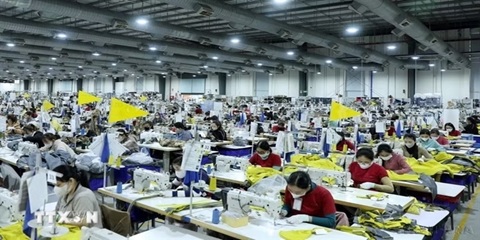
Data shows that the textile and garment sector maintained its growth momentum in the first nine months of this year. The industry's total export turnover reached an estimated US$35.721 billion in the first nine months of this year, up 3.3 per cent year-on-year. Despite posting encouraging export figures, Vietnamese textile and garment enterprises continue to navigate unpredictable market variables.
Events Sponsors






















