Want to be in the loop?
subscribe to
our notification
Business News
HIGH COSTS SETBACK TO GREEN TRANSITION IN MARITIME TRANSPORTATION
High costs are putting obstacles in the way of ocean carriers trying to go green, heard a seminar on sustainable maritime transporation last week.
A representative from the Vietnam Maritime Corporation (VIMC) said the Carbon Intensity Indicator (CII) measures how efficiently a vessel transports goods and passengers.
CII is calculated in grams of CO2 emitted per cargo-carrying capacity and nautical miles, and is categorised into five levels: A (major superior), B (minor superior), C (moderate), D (minor inferior), and E (inferior performance level).
To receive a rating of C, a vessel must cut CO2 emissions in three consecutive years from 2023 to 2026 by 2 per cent per year, which cannot be done without engine upgrades and the use of LNG or Methanol in place of HFO fuels.
Unfortunately, the conversions are beyond the financial capability of most Vietnamese shippers, leaving them with no choice but to run some of their vessels at a lower capacity and idle some others to comply with CII standards.
"The conversions are unfeasible for Vietnamese shippers as well as other small-scale shippers in the world owing to high costs", said the representative.
The representative was concerned that the conflict between the global fleet rejuvenation required by CII standards and the shippers' financial situation would result in a bottleneck in maritime transportation worldwide.
From January 1, 2023, it is mandatory for all vessels to calculate their attained Energy Efficiency Existing Ship Index (EEXI) to measure their energy efficiency and to initiate the collection of data for the reporting of their CII and CII ratings.
VIMC has sent an appeal to the International Maritime Organisation, asking for different time frames for vessels in different regions to give small-scale carriers more time to adapt to the new system.
For instance, carriers in developing countries would need longer time frames to replace their sub-standard vessels with new green ones. Too abrupt a transition could lead to mass bankruptcies among those in weak financial position.
IMO Secretary-General Kitack Lim said IMO raised the target of greenhouse gas emission reduction in maritime transportation to keep pace with the global action on green growth.
As such, his organisation is eager to support Vietnamese carriers in the effort to improve their energy efficiency and reduce their environmental impact. He also believes that Việt Nam will do a good job in the green transition given the country's fast economic growth and long coastline.
A representative from the Vietnam Ocean Shipping JSC (VOSCO) said the CII-compliant costs incurred by global carriers could amount to US$3 trillion in the next decades.
He also said the "going green" in martime transportation would require various country-specific strategies rather than an universal stragegy for all.
Source: VNS
Related News
MEMBER CORNER / PROMOTIONS
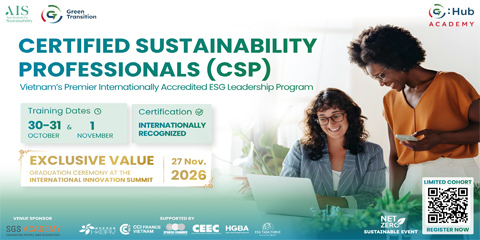
HCMC | CERTIFIED SUSTAINABILITY PROFESSIONAL (CSP) TRAINING | REGISTRATION OPEN
As sustainability becomes deeply embedded in corporate strategy and supply-chain operations across Vietnam, Hong Kong Business Association Vietnam is pleased to endorse the upcoming Certified Sustainability Professional (CSP) training program by the Asia Institute for Sustainability (AIS) - a premier internationally recognized ESG credential in Vietnam.
VIETNAM ECONOMY INVESTMENT
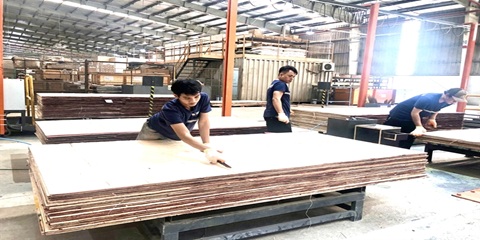
HCM CITY SAYS HOW IT PLANS TO ACHIEVE 10-11% ANNUAL EXPORT GROWTH FOR REST OF DECADE
The southern economic hub aims to strengthen its role as the country’s largest import-export centre while developing into a regional transhipment centre in Southeast Asia, supported by green and digital transformation and a circular economy. HCM City has outlined measures to expand production capacity, cut logistics costs, diversify export markets, and help businesses meet increasingly stringent international standards as it targets average annual export growth of 10-11 per cent through 2030.
VIETNAM ECONOMY INVESTMENT
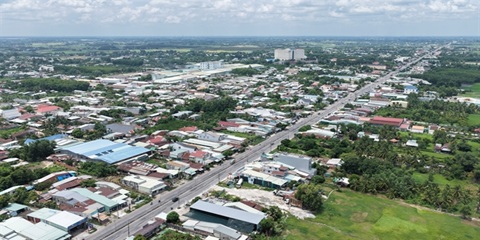
HCM CITY LEADS ECONOMIC RESTRUCTURING IN SOUTHEAST REGION
According to Associate Professor, Dr Vũ Tuấn Hưng, director of the Institute of Social Sciences of the Southern Region, the Southeast is a strategically important socio-economic space in Việt Nam’s development given its advantages in location, industry, trade, services, logistics, science and technology, urbanisation and human resources.
TECHNOLOGY
DIGITAL TRANSFORMATION TURNED INTO PRACTICAL TOOLS FOR PEOPLE, BUSINESSES
Việt Nam is moving its digital transformation agenda beyond policy frameworks and individual technology platforms towards practical applications that address everyday needs, as authorities seek measurable outcomes from science, technology and innovation. Under Politburo Resolution No. 57-NQ/TW issued on December 22, 2024, the implementation is increasingly shifting from simply completing assigned tasks towards developing concrete products and services for citizens and businesses.
TECHNOLOGY
APPLYING TECHNOLOGY FOR ECONOMIC TRANSFORMATION
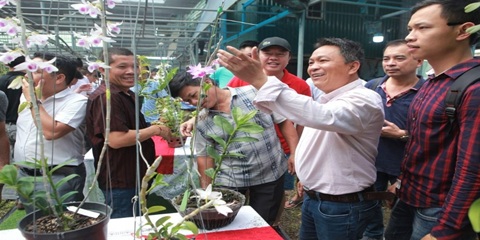
Having completed its new rural development program, Hanoi is shifting its focus toward improving development quality and building smart, sustainable rural areas. The transformation of Dong La orchid-growing village in An Khanh, a western commune of Hanoi, shows how digital technology is becoming a driver of production, market expansion, and higher incomes for local residents.
MEMBER CORNER / PROMOTIONS
VIGLACERA HONORED AS THE "LEADING GREEN INDUSTRIAL REAL ESTATE DEVELOPER 2026"
Organized by the Vietnam Investment Review, this prestigious awards program recognizes industry pioneers advancing eco-industrial parks, clean energy transition, and rigorous ESG standards. Outperforming competitors through a rigorous evaluation, Viglacera Corporation – JSC proudly ranked among the Top 5 highest-positioned enterprises in the Leading Green Industrial Real Estate Developers 2026 category, reinforcing its premier position in Vietnam’s industrial real estate sector.
Events Sponsors






















