Want to be in the loop?
subscribe to
our notification
Business News
HIGH-QUALITY WORKFORCE EMBEDDED IN NINH THUAN'S RENEWABLE ENERGY DEVELOPMENT
Thanks to international cooperation and close collaboration with businesses, the quality of workforce training for the renewable energy sector is steadily improving, paving the way for Ninh Thuan to become a new renewable energy hub.
To harness its vast renewable energy potential, which Statista estimates at 120.30 billion kWh with an annual growth rate of 3.39 per cent from 2024 to 2029, Ninh Thuan, the region with the most favourable natural conditions in Vietnam for such development, recognises that without a skilled workforce, natural advantages alone cannot drive the industry towards sustainable growth.
Nguyen Phan Quoc, principal of Ninh Thuan College, told VIR last week that the college has been tasked with building a workforce training plan to transform Ninh Thuan into the country's renewable energy centre.
“We launched renewable energy training in 2021. After adopting a training programme from Germany, we developed a vocational programme on rooftop solar energy, which has been recognised by the Ministry of Labour, Invalids, and Social Affairs. The college is also implementing a wind power services training course, set to begin this month,” Quoc said.
Although the technology in the sector evolves rapidly, Quoc remains optimistic that students will remain updated with the latest skills.
“Since 2018, we have received support from the German International Cooperation Organisation (GIZ) to enhance our training capacity, with 17 teachers attending solar and wind energy courses led by German experts. GIZ has also provided $700,000 to establish the Centre of Excellence for Renewable Energy at the college,” Quoc continued.
Additionally, with a strong emphasis on aligning training with business realities, the passionate principal expressed gratitude for the support from enterprises.
“We are fortunate to have received support from businesses during the development of our training programmes. The college has now established a vocational advisory board for renewable energy, with participation from various local and national businesses. Businesses collaborate with teachers to design and conduct training directly in the workplace, ensuring that graduates meet job requirements,” he shared.
Quoc proudly highlighted positive feedback from enterprises based on the college’s survey on students’ knowledge, skills, and attitudes, with companies expressing high satisfaction with the quality of graduates.
As of September, according to Ninh Thuan People's Committee, the province is home to 11 wind power plants and 35 solar energy projects, with total capacities of 667MW and 2,466MW, respectively, all of which are now commercially operational.
The training of high-quality human resources is especially crucial as it contributes to the industry’s localisation goals, as outlined in the national power development plan. According to Le Chi Hiep, former chair of the interdisciplinary council on environment, resources, and energy at Vietnam National University, Ho Chi Minh City, reducing dependence on imported energy requires ensuring the capability to execute and operate domestic projects.
“Power Development Plan VIII (PDP 8)encourages the development of domestic renewable energy projects. For these projects to succeed, a skilled workforce is essential for effective implementation, construction, and operation. A local workforce with high expertise will help Vietnam reduce reliance on foreign experts and ensure self-reliance at every stage, from design to installation and maintenance,” Hiep said.
“To achieve localisation, we need a workforce capable of operations and experts who can research, develop, and manufacture renewable energy-related technologies. Training high-quality personnel will accelerate the growth of domestic energy production technologies, reduce the cost of importing technology, and create opportunities for local businesses to participate more deeply in the value chain,” he added.
PDP 8 identifies renewable energy as a key part of the national energy independence strategy. Achieving energy self-sufficiency requires a high-level workforce not only in technology but also in management, planning, and strategy. A well-trained domestic workforce will help optimise operations, enhance efficiency, and minimise risks in renewable energy development.
Hiep emphasised that employing local workers helps cut costs associated with hiring international experts and strengthens the competitiveness of Vietnamese businesses in the energy market. “With a high-quality workforce, companies can optimise processes, reduce construction time and costs, and improve energy production efficiency,” he said.
Moreover, Hiep mentioned the positive ripple effects on supporting industries.
“High-quality personnel will drive the development of supporting industries related to renewable energy, such as equipment manufacturing, component production, and maintenance services. This helps build a sustainable supply chain, allowing local businesses to participate more deeply in the sector and contribute to the localisation process,” said Hiep.
Truong Thi Chi Binh, executive vice president and general secretary of the Vietnam Association of Supporting Industries, acknowledged the limited involvement of Vietnamese enterprises in the renewable energy sector.
“As of now, most renewable energy plants are built using imported equipment. For Vietnamese businesses to join this supply chain, time is needed for preparation, including workforce development, while renewable energy projects are expanding at a rapid pace,” Binh said.
Source: VIR
Related News

MEMBER CORNER / PROMOTIONS
A CULINARY MASTERPIECE
Don't need a special occasion to treat yourself to a perfect Chinese dining experience. This October, Ngan Dinh Restaurant introduces an exquisite three-dish menu, promising to satisfy diners who appreciate culinary innovation and refined flavors. Enjoy 20% OFF a glass of house red/white wine, or Imported German Veltins Draught Beer/Maisel's Weisse Dunkel when ordering any of the above dishes!

MEMBER CORNER / PROMOTIONS
ONE YEAR OF PRIME MOMENTS — LET’S CELEBRATE!
Olivia’s Prime Saigon is turning one, and we’d love to celebrate this special milestone with you! Order any featured steak size and enjoy all its designated complimentary pasta, side dishes and sauces — with a combined value of up to 80% of your steak price! Thank you for being part of our journey. Here’s to great steaks, wonderful company, and many more prime moments together!
MEMBER CORNER / PROMOTIONS
SENTRYSAFE - PROTECT WHAT MATTERS MOST
From cash, important documents and records to valuable belongings, a quality safe gives you greater peace of mind against unexpected risks. SentrySafe - a trusted safe brand from the USA, suitable for homes, offices and various storage needs. Contact Sen Wai Vietnam for expert advice and to find the right safe for your needs.

MEMBER CORNER / PROMOTIONS
50% DISCOUNT FOR HKBAV MEMBER: EUGENE ONEGIN - EIFMAN BALLET OF ST. PETERSBURG WORLD TOUR 2026
Adapted from the classic novel in verse by acclaimed Russian poet Alexander Pushkin, Eugene Onegin explores timeless themes of love, pride, choices, and irreversible regret. Eifman's distinctive language of psychological ballet is brought to life through Tchaikovsky's music alongside contemporary rock by Alexander Sitkovetsky, creating an extraordinary artistic experience.

MEMBER CORNER / PROMOTIONS
COSMOPARK – ENERGY ADVANTAGES FOR POWER-INTENSIVE INDUSTRIES
As global corporations place increasing emphasis on energy security, renewable energy adoption, and carbon emissions reduction, electricity is no longer viewed merely as a component of technical infrastructure. For high-tech projects, data centers, and large-scale manufacturing facilities, reliable energy infrastructure has become a critical factor in investment location decisions.
VIETNAM ECONOMY INVESTMENT
FOREIGN INVESTORS TO BE WIDENED FOR MARKET ACCESS
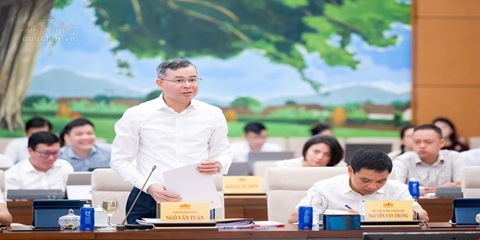
Vietnam is moving to widen market access, improve investment incentives, and streamline procedures, with greater support tied to investors’ actual commitments and results, as part of the law on amending and supplementing a number of articles of the Law on Investment. The proposal was mentioned at the sixth session of the National Assembly Standing Committee in Hanoi on September 30, on amending the Law on Investment.
Events Sponsors






















