Want to be in the loop?
subscribe to
our notification
Business News
HOSPITALITY, SERVICED APARTMENT MARKETS SET TO PICK UP
The resumption of international flights and the borders reopening in March will not only benefit Việt Nam’s hospitality sector but also drive demand for serviced apartments, according to Savills Việt Nam.
Domestic travel boomed in early 2022, thanks to Lunar New Year travel.
According to the Việt Nam National Administration of Tourism, there were more than 6.1 million domestic tourists during the nine-day festival, generating revenue of VNĐ25 trillion. These numbers represent a genuine demand and an optimistic outlook for the revival of domestic tourism.
Matthew Powell, Director of Savills Hà Nội, said: “Northern Việt Nam has an interesting hospitality market. Apart from thriving tourist destinations like Hạ Long, we are witnessing development in Hà Nội’s suburbs and surrounding provinces like Hòa Bình and Thanh Hóa.”
“This trend is understandable, given that transportation links to these areas continue to improve, as such, people can easily travel to surrounding provinces for weekend trips.”
“While domestic travellers currently drive Việt Nam’s hospitality sector, we cannot forget how important foreign tourists are for the market. There are positive signs though, as Việt Nam’s vaccination rate is high and authorities plan to reopen the borders to international travellers from mid-March,” he added.
As part of Việt Nam’s plan to reopen to international guests, the authorities have announced that international flights will resume from March 15, 2022. This reopening will not only benefit the country’s tourism and hospitality segment but is forecast to benefit serviced apartments too.
Foreign experts are the predominant occupiers of serviced apartments in Hà Nội.
Japanese and Korean expatriates are the main tenants in Grade A serviced apartments, accounting for 84 per cent in the second half of 2021.
Neil MacGregor, Managing Director of Savills Vietnam, said: “There is a strong correlation between foreign direct investment (FDI) flows and serviced apartments. As such, it is no surprise that countries leading FDI investments, such as Japan and South Korea, also drive serviced apartment demand.”
“In 2021, many international experts could not enter Việt Nam due to strict border controls; however, once international flights resume, many foreign experts will be able to return, which will greatly enhance tenant pools for serviced apartments.”
According to a 2021 Global Buyer Survey, good healthcare, air quality, and green spaces are top priorities when selecting accommodation. As such, branded serviced apartments could take full advantage of global health initiatives that the brands rolled out, collaborating with sanitisation experts to create safer and healthier projects.
Currently, the outlook for hotels and serviced apartments is good, with the borders set to open in the middle of March. However, both sectors will continue to rely heavily on how well the pandemic is managed and the authorities’ strategies to do so, Savills Việt Nam reports.
After two dormant years, tourism in Việt Nam is slowly coming back to life. After social distancing restrictions eased in October 2021, Vietnamese airlines completed 8,383 flights in December, 538 per cent more than the 1,311 flights in September.
Hotel occupancy also improved in the last quarter of 2021, along with the average room rate, which reached VNĐ1.8 million, increasing 12 per cent compared to the last quarter of 2020.
Between 2022 and 2023, supply is also expected to increase with the entry of 2,900 rooms, demonstrating the rekindling of investor confidence in the hospitality sector, according to Savills Việt Nam.
Source: VNS
Related News

CHARITY / EXHIBITION / OTHER EVENTS
INVESTMENT OPPORTUNITIES IN CA MAU PROVINCE: 96 PROJECTS AND 20 STRATEGIC PROJECTS
We are pleased to share with you information on investment projects currently seeking investors in Ca Mau Province. Should your esteemed company or association be interested, we kindly invite you to review the project information and complete the registration form via the links provided. The Ho Chi Minh City Investment and Trade Promotion Centre (ITPC) will consolidate the expressions of interest and facilitate connections with the leadership of Ca Mau Province at a meeting tentatively scheduled for 13 November 2026 in Ho Chi Minh City.

MEMBER CORNER / PROMOTIONS
BẰNG KIỀU LIVESHOW - A SYMPHONY OF LOVE UNDER THE GOLDEN GLOW
A masterclass in live music that takes the audience on a soulful journey through immortal love songs, guided by the peerless artistry and emotive storytelling of renowned singer Bằng Kiều. The highlight of the night is his seamless musical chemistry with special guest Triệu Hồng Ngọc, promising passionate and deeply resonant duets inside the magnificent Grand Ballroom.
INFRASTRUCTURE / CONSTRUCTION / LOGISTIC / PORT
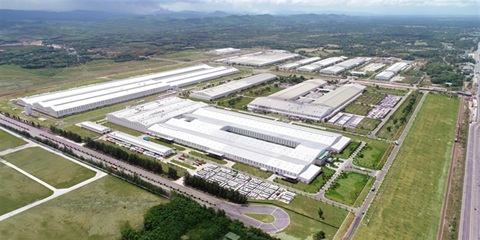
ĐÀ NẴNG GREEN-LIGHTS US$105 MILLION THAI DEVELOPMENT DEAL
The central city has approved an investment proposal by Thailand’s WHA Group to develop infrastructure for the 400ha WHA Đà Nẵng Industrial Park project on two communes of Thăng Bình and Đồng Dương, with an investment of more than VNĐ2.7 trillion (US$105 million). The city said it approved WHA Industrial Development International's status as an investor in the project, which is expected to take place between 2027 and 2034.
VIETNAM ECONOMY INVESTMENT
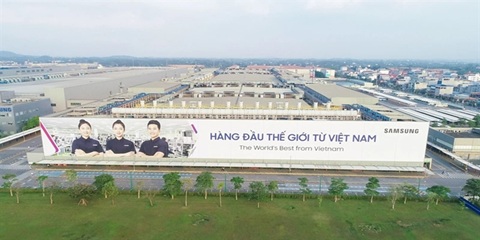
MOBILE PHONE EXPORTS RISE 20% TO $51.8 BILLION IN FIRST NINE MONTHS
Exports of mobile phones and components rose 20 per cent year-on-year to nearly US$51.8 billion in the first nine months of 2026, with China, the US and Republic of Korea accounting for more than half of the total. Shipments to the three markets reached a combined $26.18 billion, or 50.6 per cent of total exports of the product group during the period, according to data from the Vietnam Department of Customs under the Ministry of Finance.
INFRASTRUCTURE / CONSTRUCTION / LOGISTIC / PORT
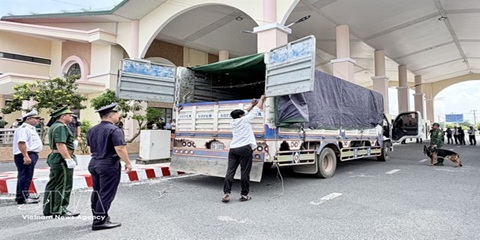
VIỆT NAM-CAMBODIA TRADE GATHERS PACE TOWARDS $20 BILLION TARGET
Trade between Việt Nam and Cambodia continues to grow, remaining a bright spot and a key pillar of bilateral cooperation as the two countries aim to raise two-way trade to US$20 billion in the coming years. After setting a record of more than $11.3 billion last year, bilateral trade reached about $8.7 billion in the first eight months of this year, up 8.3 per cent year on year.
VIETNAM ECONOMY INVESTMENT
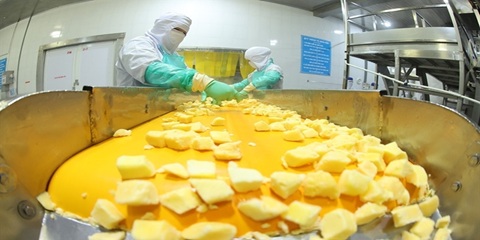
FRUIT AND VEGETABLE EXPORTS POISED TO HIT $10 BILLION IN 2026
Fruit and vegetable exports are on track to reach nearly US$10 billion in 2026, after rising 19.9 per cent year on year to nearly US$7.4 billion in the first nine months, driven by strong seasonal demand and abundant tropical fruit supplies. The Ministry of Agriculture and Environment said the growth reflected stronger international demand for fresh produce and processed agricultural products.
Events Sponsors






















