Want to be in the loop?
subscribe to
our notification
Business News
HOW CAN SUPPORTING INDUSTRIES PARTICIPATE MORE DEEPLY IN GLOBAL SUPPLY CHAINS?
Vietnam is facing many opportunities to accommodate shifting foreign direct investment (FDI) inflows as well as to increase the sustainability of supply chains. However, the country has difficulty participating deeply in the processing and manufacturing industry and is lagging behind other countries in the region in this respect.
In the midst of the gloomy global economy, despite the distress of the pandemic, the macroeconomic indicators still show plenty of room for development. With 13 bilateral and multilateral free trade agreements in force, plus the recently signed Regional Comprehensive Economic Partnership (RCEP) and two other FTAs under negotiation, Vietnam is one of the most open economies in the world, creating great opportunities to develop new supply chains. In attracting investment, in the first ten months of 2020, Vietnam attracted US$23.48 billion worth of foreign direct investment (FDI) in the first ten months of 2020, equivalent to 80.6% of the same period in 2019. In which, the disbursed capital was estimated at US$15.8 billion, equaling 97.5% over the same period in 2019. Thus, compared to the same period in 2019, the first 10 months of 2020 witnessed decreases both in attracting capital and disbursing FDI. Despite the decline, this result is still better than the global reduction of 30% - 40% in 2020. This is a quite good initial result compared to the rest of the world, a lever for Vietnam to reverse the negative effects of Covid-19.
However, according to Mr. Nguyen Van, Vice Chairman of Hanoi Supporting Industries Business Association (HANSIBA), the current concern is that the level of Vietnam's participation in global and regional value chains is still limited, despite being one of the world's most open economies (according to the World Bank, Vietnam's openness is 1.5 times higher than Thailand and 5 times that of China). Vietnam's participation in global and regional value chains is still much lower than that of other ASEAN countries. According to World Bank data, in 2018, Vietnam only generated US$20.4 billion by participating in global and regional value chains, ranking 53rd out of 174 countries. This figure was less than a quarter of the Philippines with US$84.8 billion (ranked 34th).
Besides, Mr. Van said that the level of participation in complex and sophisticated stages of Vietnam was still low. According to the World Development Report (WDR) in 2020, the level of participation of Vietnam is currently at the level of "limited processing and manufacturing" and needs to move up in global value chains (GVC) to improve its productivity.
According to calculations, GVC currently accounts for 66% of commercial transactions, but the level of localization of Vietnam is still low, only 28% of the total trade turnover, nearly half that of China. Not only that, Vietnam focuses too much on a number of markets, products and businesses such as: four leading products (textiles, electronics, chemicals, metals) accounting for two thirds; four largest markets (China, Japan, Korea and the United States) accounting for 60%; the top four groups (Samsung, Foxconn, Intel, Panasonic) accounting for 70% of trade turnover in GVC. This means that 70% of Vietnam's export turnover comes from FDI enterprises. Meanwhile, the ability of domestic enterprises to participate in and connect to the GVC is limited.
In 2020, it is estimated that every 1% increase in participation in GVC will increase per capita income by more than 1% (twice the rate for traditional trade). Therefore, according to many economists, increasing Vietnam's participation in the GVC is an important factor to promote labor productivity growth and economic growth. In the medium and long term, Vietnam should have reforms based on close public-private coordination, and proactively attract investors seeking new production facilities outside China to diversify the global supply chains.
In addition, Mr. Van added that two important factors to prioritize were training high-quality workers and building connected infrastructure, which included focusing on development of infrastructure projects of specialized industrial parks and supporting industrial parks. The Government has approved the planning of industrial parks nationwide; promoted higher post-secondary education and training, and created a highly skilled and qualified workforce. It is especially important to focus on developing domestic supporting industry enterprises. At the same time, all levels of authorities need to coordinate to implement synchronously and drastically "Solutions to promote the development of supporting industries" as stated in Resolution 115/NQ-CP dated August, 2020 by the Prime Minister.
To promote the domestic supporting industry development, according to Mr. Van, it is necessary to reduce costs of loading and unloading goods, storing, transporting and improving administrative procedures. In addition, the business environment should continue to be improved in the direction of transparency, clarity, consistency, stability and predictability.
“This process requires close coordination and joint effort of stakeholders such as the role of the State, the Government, ministries and localities in identifying strategic priorities, creating policy frameworks, improving business investment environment; enhancing the role of groups and associations such as Vietnam Association of Supporting Industries (VASI) and Hanoi Supporting Industries Business Association (HANSIBA) in linking businesses. From there, SMEs, including the supporting industry community, can be proactive and ready to participate in global supply chains,” Mr. Van affirmed.
Source: VCCI
Related News
CHARITY / EXHIBITION / OTHER EVENTS
INVESTMENT OPPORTUNITIES IN CA MAU PROVINCE: 96 PROJECTS AND 20 STRATEGIC PROJECTS
We are pleased to share with you information on investment projects currently seeking investors in Ca Mau Province. Should your esteemed company or association be interested, we kindly invite you to review the project information and complete the registration form via the links provided. The Ho Chi Minh City Investment and Trade Promotion Centre (ITPC) will consolidate the expressions of interest and facilitate connections with the leadership of Ca Mau Province at a meeting tentatively scheduled for 13 November 2026 in Ho Chi Minh City.
MEMBER CORNER / PROMOTIONS
BẰNG KIỀU LIVESHOW - A SYMPHONY OF LOVE UNDER THE GOLDEN GLOW
A masterclass in live music that takes the audience on a soulful journey through immortal love songs, guided by the peerless artistry and emotive storytelling of renowned singer Bằng Kiều. The highlight of the night is his seamless musical chemistry with special guest Triệu Hồng Ngọc, promising passionate and deeply resonant duets inside the magnificent Grand Ballroom.
INFRASTRUCTURE / CONSTRUCTION / LOGISTIC / PORT
ĐÀ NẴNG GREEN-LIGHTS US$105 MILLION THAI DEVELOPMENT DEAL
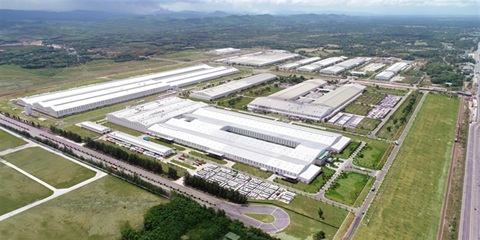
The central city has approved an investment proposal by Thailand’s WHA Group to develop infrastructure for the 400ha WHA Đà Nẵng Industrial Park project on two communes of Thăng Bình and Đồng Dương, with an investment of more than VNĐ2.7 trillion (US$105 million). The city said it approved WHA Industrial Development International's status as an investor in the project, which is expected to take place between 2027 and 2034.
VIETNAM ECONOMY INVESTMENT
MOBILE PHONE EXPORTS RISE 20% TO $51.8 BILLION IN FIRST NINE MONTHS
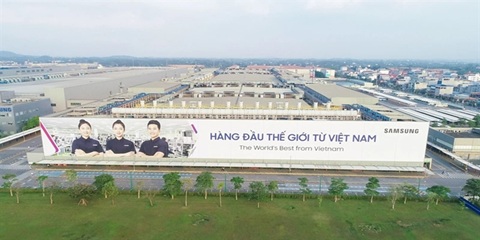
Exports of mobile phones and components rose 20 per cent year-on-year to nearly US$51.8 billion in the first nine months of 2026, with China, the US and Republic of Korea accounting for more than half of the total. Shipments to the three markets reached a combined $26.18 billion, or 50.6 per cent of total exports of the product group during the period, according to data from the Vietnam Department of Customs under the Ministry of Finance.
INFRASTRUCTURE / CONSTRUCTION / LOGISTIC / PORT
VIỆT NAM-CAMBODIA TRADE GATHERS PACE TOWARDS $20 BILLION TARGET
Trade between Việt Nam and Cambodia continues to grow, remaining a bright spot and a key pillar of bilateral cooperation as the two countries aim to raise two-way trade to US$20 billion in the coming years. After setting a record of more than $11.3 billion last year, bilateral trade reached about $8.7 billion in the first eight months of this year, up 8.3 per cent year on year.
VIETNAM ECONOMY INVESTMENT
FRUIT AND VEGETABLE EXPORTS POISED TO HIT $10 BILLION IN 2026
Fruit and vegetable exports are on track to reach nearly US$10 billion in 2026, after rising 19.9 per cent year on year to nearly US$7.4 billion in the first nine months, driven by strong seasonal demand and abundant tropical fruit supplies. The Ministry of Agriculture and Environment said the growth reflected stronger international demand for fresh produce and processed agricultural products.
Events Sponsors






















