Want to be in the loop?
subscribe to
our notification
Business News
INDUSTRIAL PRODUCTION INCREASES IN APRIL
The index of industrial production (IIP) in April was estimated to increase by 3.6 per cent on month and by 0.5 per cent over the same period last year, according to the General Statistics Office (GSO).
However, the office also reported that IIP in the first four months of 2023 decreased by 1.8 per cent on year. The IIP growth in the first four months of 2022 was 7.8 per cent.
Among the sectors, the water supply, waste-water treatment and management activities recorded the highest IIP increase of 5.5 per cent in the first four months. The electricity generation and distribution sector followed with 0.5 per cent.
However, the mining industry and the processing and manufacturing saw a decline of 2.8 per cent and 2.1 per cent in IIP, respectively.
The world economy's slow recovery and tightened monetary policy in many countries has made the consumption demand of major trading partners decline, leading to a decrease in goods orders and export turnover. Those factors affected the growth of industrial production in the first four months of 2023, according to the Ministry of Industry and Trade (MoIT).
In terms of localities, the GSO said in the first four months, 52 localities gained growth in this index compared to the same period of last year, while IIP decreased in the remaining 11 localities.
Of which, Tuyên Quang recorded the highest increase in IIP at 14.8 per cent. Đắk Lắk followed with the IIP growth at 14.2 per cent. Other top ten localities achieving high growth rates included Thái Bình (13.8 per cent), Hậu Giang (13.8 per cent), Hải Phòng (13.4 per cent), Bắc Giang (13.3 per cent), Quảng Trị (12.2 per cent), Nam Định (12 per cent), Kiên Giang (11.6 per cent), and Cao Bằng (11.2 per cent).
Several essential industrial products showed a decrease in IIP during the first four months of 2023, including automobiles (19.3 per cent), bar and angle steel (15.1 per cent), mobile phones (13 per cent), motorbikes (12.3 per cent), urea fertiliser (12.2 per cent), textiles from natural fibres (11.1 per cent), casual wear (10.4 per cent), and phone components (10.1 per cent).
Meanwhile, some other products gained growth in IIP in the same period, such as sugar (23.2 per cent), gasoline (15.1 per cent), garments made from man-made fibres (12.2 per cent), NPK fertiliser (10.4 per cent), and chemical paint (6.1 per cent).
The world economy has shown signs of recovery but it is slow and unequal in different countries, so consumer demand is also recovering slowly. China's reopening also increases competition for Việt Nam's products in export markets.
They are factors that will continuously affect Việt Nam's production and trade activities in the coming months.
Besides that, the slow recovery of the real estate market and low disbursement of investment capital will affect the consumption of some related manufacturing industries.
To promote production development and support businesses, MoIT has said it will closely monitor the production of sectors and fields to promptly grasp and remove difficulties in promoting production development.
In addition, the ministry will continue to implement the connection of domestic enterprises to FDI enterprises and large global enterprises to participate in their global supply chains.
At the same time, it continues to support businesses, especially small and medium-sized enterprises, to recover and develop production through solutions for stabilising financial and monetary markets. Those solutions include proposing the exemption and reduction of some taxes and fees, and favourable conditions on access to credit.
According to experts, Việt Nam should give priority to the development of domestic manufacturing industries, especially the mechanical industry.
According to Nguyễn Ngọc Thành, deputy director of MoIT's Department of Industry, the processing and manufacturing industry plays a key role, creating the largest added value for the industrial sector. Most of Việt Nam's important economic sectors directly or indirectly depend on the manufacturing industry. It is also to provide employment and stable income for the long term.
So it is necessary to have timely and efficient policies and solutions to find markets for industrial products, thereby promoting domestic production and improving economic growth.
Assoc. Prof. Dr. Nguyễn Chí Sáng, vice chairman of the Việt Nam Association of Mechanical Industry, said that the Government should promote the development of finished mechanical products and large mechanical products for several industries such as wind power, high-speed railways and medical equipment. Việt Nam needed a strategy and a roadmap to make those products.
Economist Dr. Lê Đăng Doanh said it was necessary to promote Việt Nam's advantages for sustainable industrial development. Specifically, industrialisation in Việt Nam should combine agriculture and industry with the development of industrial products for lines processing agricultural products to enhance the value of Việt Nam's farm produce.
According to Thành, to promote domestic production, the steel and mechanical industries need to take advantage of public investment capital in large projects in the field of industrial construction, infrastructure, transport and energy, to create a market for mechanical products.
For the auto industry, it is necessary to increase purchasing power to restore the auto market, maintaining and promoting the assembly of automobiles in the country.
MoIT is working with the Ministry of Finance to research and propose the Government issue a number of financial support policies for the industry. They include extending the deadline for paying excise tax or having incentives on registration fees for domestically manufactured and assembled cars.
Source: VNS
Related News

INFRASTRUCTURE / CONSTRUCTION / LOGISTIC / PORT
VIỆT NAM-CAMBODIA TRADE GATHERS PACE TOWARDS $20 BILLION TARGET
Trade between Việt Nam and Cambodia continues to grow, remaining a bright spot and a key pillar of bilateral cooperation as the two countries aim to raise two-way trade to US$20 billion in the coming years. After setting a record of more than $11.3 billion last year, bilateral trade reached about $8.7 billion in the first eight months of this year, up 8.3 per cent year on year.
TECHNOLOGY
AI BEGINNING TO RESHAPE RECRUITMENT CRITERIA
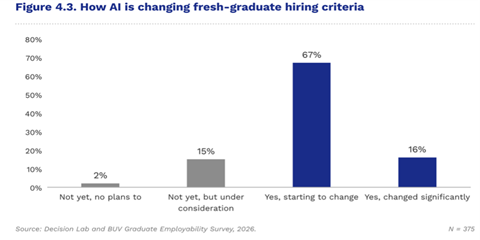
Digital literacy is the only capability area in which fresh graduates meet employers’ expectations, according to a new report. Yet, it is also the standard rising fastest, as businesses increasingly expect new hires to use AI effectively in the workplace. Some 83 per cent of employers say AI has changed, or is beginning to change, their hiring criteria, while 94 per cent report higher expectations for digital and AI capabilities than they had two to three years ago.

INFRASTRUCTURE / CONSTRUCTION / LOGISTIC / PORT
ĐÀ NẴNG GREEN-LIGHTS US$105 MILLION THAI DEVELOPMENT DEAL
The central city has approved an investment proposal by Thailand’s WHA Group to develop infrastructure for the 400ha WHA Đà Nẵng Industrial Park project on two communes of Thăng Bình and Đồng Dương, with an investment of more than VNĐ2.7 trillion (US$105 million). The city said it approved WHA Industrial Development International's status as an investor in the project, which is expected to take place between 2027 and 2034.

VIETNAM ECONOMY INVESTMENT
MOBILE PHONE EXPORTS RISE 20% TO $51.8 BILLION IN FIRST NINE MONTHS
Exports of mobile phones and components rose 20 per cent year-on-year to nearly US$51.8 billion in the first nine months of 2026, with China, the US and Republic of Korea accounting for more than half of the total. Shipments to the three markets reached a combined $26.18 billion, or 50.6 per cent of total exports of the product group during the period, according to data from the Vietnam Department of Customs under the Ministry of Finance.

VIETNAM ECONOMY INVESTMENT
FRUIT AND VEGETABLE EXPORTS POISED TO HIT $10 BILLION IN 2026
Fruit and vegetable exports are on track to reach nearly US$10 billion in 2026, after rising 19.9 per cent year on year to nearly US$7.4 billion in the first nine months, driven by strong seasonal demand and abundant tropical fruit supplies. The Ministry of Agriculture and Environment said the growth reflected stronger international demand for fresh produce and processed agricultural products.
GARMENT / TEXTILE
TEXTILE EXPORTS FACE DUAL CHALLENGES OF SUSTAINING ORDERS AND BOOSTING EFFICIENCY AMID GROWING COMPETITION
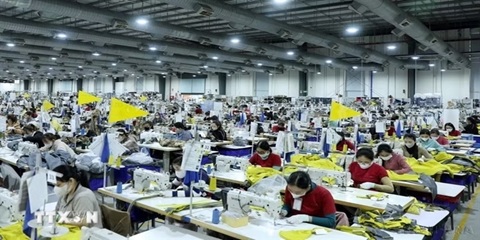
Data shows that the textile and garment sector maintained its growth momentum in the first nine months of this year. The industry's total export turnover reached an estimated US$35.721 billion in the first nine months of this year, up 3.3 per cent year-on-year. Despite posting encouraging export figures, Vietnamese textile and garment enterprises continue to navigate unpredictable market variables.
Events Sponsors






















