Want to be in the loop?
subscribe to
our notification
Business News
INDUSTRIAL PROPERTY COULD BECOME NEXT KEY FDI MAGNET
Experts at last week’s Vietnam Industrial Property Forum 2024, co-organised by Vietnam Investment Review and the Vietnam Industrial Real Estate Association in Ho Chi Minh City, confirmed that stable foreign investment growth is providing a strong foundation for the industrial property sector.
Vu Van Chung, deputy general director of the Foreign Investment Agency under the Ministry of Planning and Investment (MPI), highlighted Vietnam’s competitive advantages in attracting investment, which help foreign investors set long-term goals.
“Vietnam’s economy maintains robust growth and participates in 16 free trade agreements, offering vast opportunities for investors,” Chung said.
He also pointed out that Vietnam’s large market of over 100 million people, combined with a substantial labour force where 57-59 per cent are of working age, provides a solid foundation for investment. “Many investors see Vietnam as an attractive market, presenting a significant opportunity for the industrial real estate sector to grow explosively,” Chung said.
He noted that the current trend is shifting from merely attracting foreign investment to fostering cooperative development. The government has tasked the MPI with reviewing existing preferential policies to focus on key industries and areas to draw in investors.
“Once these policies are approved, they will further attract foreign investment and promote the development of the industrial real estate market to better meet foreign investors’ needs,” he said.
Despite the global supply chain restructuring and complex economic conditions, Vietnam remains a standout destination for medium- and long-term foreign direct investment (FDI).
Data from the MPI shows continued improvement in Vietnam’s business environment. In 2023, registered FDI capital reached over $39.4 billion, an on-year 34.5 per cent increase, with disbursed capital hitting a record $23.2 billion. In the first seven months of this year alone, newly registered capital surpassed $18 billion, up 10.9 per cent on-year.
The rise in large-scale projects in sectors such as semiconductors, energy, component manufacturing, electronics, and high value-added products is particularly notable. Recently, Vietnam has emerged as a key player in the semiconductor supply chain, attracting interest from major corporations like Amkor, Nvidia, and Hana Micron.
Hardy Diec, COO of KCN Vietnam, highlighted that while FDI inflows into Vietnam have shown promising results, industrial real estate developers must not become complacent.
“Competition from neighbouring countries is increasing, and the demands and standards of foreign investors are continuously rising,” Diec said. “Continuously improving and offering innovative solutions, along with enhancing consulting services, are crucial to not only attracting FDI but also maintaining it sustainably.”
Truong An Duong, general manager of North Vietnam and Residential at Frasers Property Vietnam, observed that Vietnam’s foreign investment has predominantly focused on the manufacturing sector, which accounts for 60 to 70 per cent of investments. This trend drives demand for industrial real estate and associated amenities.
“Vietnam is also rapidly advancing in infrastructure investment, including roads, airports, and energy. The government’s and provinces’ active promotion of foreign investment also enhances competitiveness,” Duong said.
Duong noted that new-generation FDI in Vietnam is increasingly concentrated in high-tech industries, electronics, semiconductors, automobile manufacturing, and renewable energy. However, Vietnam faces stiff competition from countries like Thailand, Malaysia, the Philippines, and Indonesia, which have also developed policies to entice foreign investment in these industries.
“Vietnam will face intense competition as other countries also work to entice investment in these sectors,” Duong said.
Trang Le, head of Research and Consulting at JLL Vietnam, reflected on Vietnam’s industrial development over the past decade, noting significant progress.
“In 2023, FDI attraction in Vietnam increased by 34 per cent, far outpacing the global FDI growth rate of just 3 per cent. This highlights Vietnam as a bright spot amidst a global slowdown,” Trang said.
By the end of May 2024, Vietnam had established around 430 industrial parks (IPs) and export processing zones, covering approximately 89,200 hectares. Of these, around 300 IPs are operational, with the remainder under development. By the end of 2023, these zones had attracted over 11,200 foreign ventures and 10,600 domestic projects.
Meanwhile, Vietnam is making strides towards green foreign investment by implementing a national strategy on green growth and other policies. Major foreign investors like Lego, Heineken, and Pandora are increasingly focusing on green production in Vietnam, building carbon-neutral factories and using renewable energy.
As a result, eco-IPs are becoming a priority for foreign investors aiming for sustainable development, economic benefits, and corporate social responsibility, particularly in line with environmental, social, and governance criteria. To prepare for this influx of green capital, the MPI plans that by 2030, 40-50 per cent of localities will convert existing IPs into eco-parks, with 8-10 per cent planning new eco-IPs from the outset.
Michael Piro, co-CEO of Indochina Capital, the investor behind the Core5 project chain, noted that green capital flows are increasingly influencing Vietnam’s investment market.
“Significant capital is being allocated to green development. Vietnam may not only attract investment but also green capital,” Piro said. “There are billions of US dollars waiting to enter the Vietnamese market, and green real estate products, especially in the industrial segment, are poised for a boom,” he said.
Piro pointed out that green real estate commands a premium, with selling and rental prices 20 per cent higher than conventional products. “Green initiatives are creating added value for businesses’ products. Market participants should embrace green transformation – it is beneficial for businesses,” he added.
Source: VIR
Related News

INFRASTRUCTURE / CONSTRUCTION / LOGISTIC / PORT
VIỆT NAM-CAMBODIA TRADE GATHERS PACE TOWARDS $20 BILLION TARGET
Trade between Việt Nam and Cambodia continues to grow, remaining a bright spot and a key pillar of bilateral cooperation as the two countries aim to raise two-way trade to US$20 billion in the coming years. After setting a record of more than $11.3 billion last year, bilateral trade reached about $8.7 billion in the first eight months of this year, up 8.3 per cent year on year.
TECHNOLOGY
AI BEGINNING TO RESHAPE RECRUITMENT CRITERIA
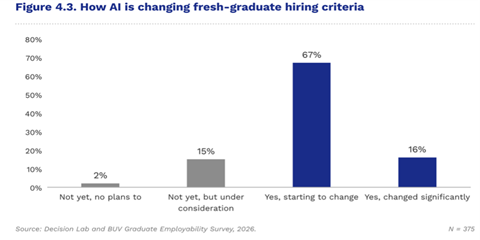
Digital literacy is the only capability area in which fresh graduates meet employers’ expectations, according to a new report. Yet, it is also the standard rising fastest, as businesses increasingly expect new hires to use AI effectively in the workplace. Some 83 per cent of employers say AI has changed, or is beginning to change, their hiring criteria, while 94 per cent report higher expectations for digital and AI capabilities than they had two to three years ago.

INFRASTRUCTURE / CONSTRUCTION / LOGISTIC / PORT
ĐÀ NẴNG GREEN-LIGHTS US$105 MILLION THAI DEVELOPMENT DEAL
The central city has approved an investment proposal by Thailand’s WHA Group to develop infrastructure for the 400ha WHA Đà Nẵng Industrial Park project on two communes of Thăng Bình and Đồng Dương, with an investment of more than VNĐ2.7 trillion (US$105 million). The city said it approved WHA Industrial Development International's status as an investor in the project, which is expected to take place between 2027 and 2034.

VIETNAM ECONOMY INVESTMENT
MOBILE PHONE EXPORTS RISE 20% TO $51.8 BILLION IN FIRST NINE MONTHS
Exports of mobile phones and components rose 20 per cent year-on-year to nearly US$51.8 billion in the first nine months of 2026, with China, the US and Republic of Korea accounting for more than half of the total. Shipments to the three markets reached a combined $26.18 billion, or 50.6 per cent of total exports of the product group during the period, according to data from the Vietnam Department of Customs under the Ministry of Finance.

VIETNAM ECONOMY INVESTMENT
FRUIT AND VEGETABLE EXPORTS POISED TO HIT $10 BILLION IN 2026
Fruit and vegetable exports are on track to reach nearly US$10 billion in 2026, after rising 19.9 per cent year on year to nearly US$7.4 billion in the first nine months, driven by strong seasonal demand and abundant tropical fruit supplies. The Ministry of Agriculture and Environment said the growth reflected stronger international demand for fresh produce and processed agricultural products.
GARMENT / TEXTILE
TEXTILE EXPORTS FACE DUAL CHALLENGES OF SUSTAINING ORDERS AND BOOSTING EFFICIENCY AMID GROWING COMPETITION
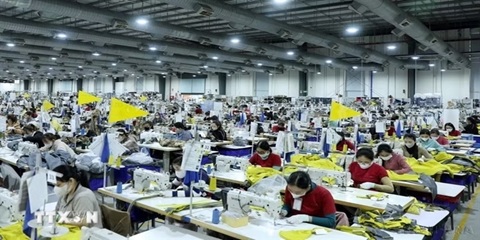
Data shows that the textile and garment sector maintained its growth momentum in the first nine months of this year. The industry's total export turnover reached an estimated US$35.721 billion in the first nine months of this year, up 3.3 per cent year-on-year. Despite posting encouraging export figures, Vietnamese textile and garment enterprises continue to navigate unpredictable market variables.
Events Sponsors






















