Want to be in the loop?
subscribe to
our notification
Business News
INDUSTRIAL ZONES DEVOID OF TRUE MANAGEMENT?
Although Vietnam is one of the globe’s biggest manufacturers, industrial zones must be managed and handled properly in order to function efficiently, boost their appeal, and fulfil the growing demands of investors.
“Industrial real estate is an area with great promise, and a growing number of investors are entering this arena. However, we have a severe lack of units specialised in the administration and operation of industrial zones (IZs),” said Nguyen Dinh Nam, founder and general director of IPA Vietnam Corporation.
According to Nam, although hotels, offices, and condos have numerous local and foreign expert management and operation units, IZs lack this capability.
“Senior investors who self-manage and run IZs satisfy the qualifications. However, with the fast growth of the business and the emergence of an increasing number of new players, the demand for competent management and operation is enormous and essential,” Nam said. “Therefore, pioneering firms in the administration and operation of IZs will gain substantially in the future and contribute positively to the overall growth of the market.”
Trang Bui, country head of Cushman & Wakefield Vietnam, attributes the lack of experienced IZs operators to the market’s history, rapid expansion, and diverse demand. “The majority of IZs in Vietnam were founded by the government, delegated to local authorities for administration, and subsequently transferred to the local management boards. The market did not require dedicated management and operation units because of this historical factor,” Bui said.
In recent years, Vietnam has drawn a large number of international investors. Additionally, the domestic manufacturing sector has flourished, and more IZs have been formed to suit the production and business demands of companies and investors. In the process of building IZs in particular, the private sector’s shadow has becomes increasingly obvious.
In addition, new types of IZs, such as industrial cities and service zones, are gaining popularity with a variety of goods such as prefabricated factories, high-rise factories, and cold storage that are entirely distinct from those for rental land. They now include a more significant number of aspects such as services and housing for employees and specialists, which generates new needs and necessitates a skilled management and operations staff.
Real estate expert Vu Cong Vu stressed that the professional operator must assist tenants in several stages before, during, and after the investment, including a survey, human resource search, business connection, and investment promotion, to increase the occupancy rate. “Numerous investors such as VSIP, DEEP C Industrial Zones, and Thang Long Investment are likewise striving in this direction,” Vu said.
Possibilities and tendencies
There have been facilities administered and controlled by experienced international professional units, according to experts from CBRE Vietnam, but the number is still minimal. It is not feasible to certify that domestic management and operation units that have been in existence for a decade are truly professional, they noted.
In recent years, the demand for renting property in Vietnam to establish industries and warehouses has skyrocketed. New investors entering into IZs and inexperienced real estate agents often opt to collaborate with expert management units to guarantee the effective running of them, therefore increasing their appeal to enterprises, industries, and investors.
According to one CBRE specialist, despite the problematic progression of the pandemic, the real estate market for IZs in Vietnam continues to expand significantly, spurred by the trend of transferring the global supply chain away from China. The demand for new investments as well as the expansion of factories and warehouses is on the rise, resulting in a growth in the need for industrial real estate development.
“This reality creates more potential for enterprises in the spheres of management and operations, but it also increases the need to comprehend the market, clients, and IZs of management and service providers,” the specialist said.
The administration and operation is evidently a lucrative market niche. The question is why this section has received so little attention. According to Bui of Cushman & Wakefield, the local management boards of IZs give excellent assistance to investors throughout the operation process, in part because those that have been founded and put into operation are still working well.
“In the meantime, the return on investment for this increased market share is insufficient for enterprises to participate,” Bui said.
This was also cited by Nguyen Anh Minh, deputy general director and finance director of Shinec JSC, in addition to the fact that the legal basis for the administration and operation of IZs has not been finalised.
“Specifically, for housing and hotel projects, investors simply need to finish and then employ an operation management unit; however, for IZs, several additional issues must be addressed, such as environmental protection and fire prevention,” Minh said.
In other words, resolving legal concerns in the administration and operation is complicated. For example, the management unit is responsible for collecting operational fees for housing and hotel projects, while the investor is responsible for IZs.
“Managing and running such projects does not provide a significant profit, even though the same task is being performed. This is the primary reason why the IZ real estate market lacks competent management units,” Minh stressed.
Source: VIR
Related News

INFRASTRUCTURE / CONSTRUCTION / LOGISTIC / PORT
VIỆT NAM-CAMBODIA TRADE GATHERS PACE TOWARDS $20 BILLION TARGET
Trade between Việt Nam and Cambodia continues to grow, remaining a bright spot and a key pillar of bilateral cooperation as the two countries aim to raise two-way trade to US$20 billion in the coming years. After setting a record of more than $11.3 billion last year, bilateral trade reached about $8.7 billion in the first eight months of this year, up 8.3 per cent year on year.
TECHNOLOGY
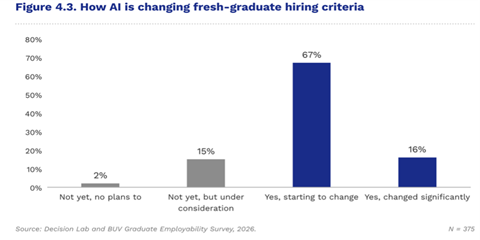
AI BEGINNING TO RESHAPE RECRUITMENT CRITERIA
Digital literacy is the only capability area in which fresh graduates meet employers’ expectations, according to a new report. Yet, it is also the standard rising fastest, as businesses increasingly expect new hires to use AI effectively in the workplace. Some 83 per cent of employers say AI has changed, or is beginning to change, their hiring criteria, while 94 per cent report higher expectations for digital and AI capabilities than they had two to three years ago.
INFRASTRUCTURE / CONSTRUCTION / LOGISTIC / PORT
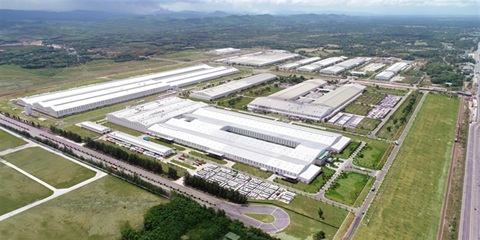
ĐÀ NẴNG GREEN-LIGHTS US$105 MILLION THAI DEVELOPMENT DEAL
The central city has approved an investment proposal by Thailand’s WHA Group to develop infrastructure for the 400ha WHA Đà Nẵng Industrial Park project on two communes of Thăng Bình and Đồng Dương, with an investment of more than VNĐ2.7 trillion (US$105 million). The city said it approved WHA Industrial Development International's status as an investor in the project, which is expected to take place between 2027 and 2034.
VIETNAM ECONOMY INVESTMENT
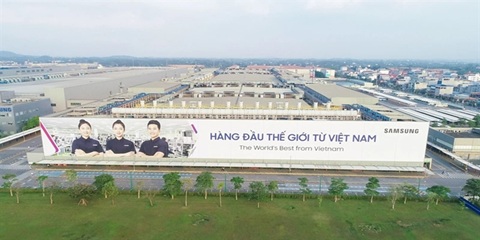
MOBILE PHONE EXPORTS RISE 20% TO $51.8 BILLION IN FIRST NINE MONTHS
Exports of mobile phones and components rose 20 per cent year-on-year to nearly US$51.8 billion in the first nine months of 2026, with China, the US and Republic of Korea accounting for more than half of the total. Shipments to the three markets reached a combined $26.18 billion, or 50.6 per cent of total exports of the product group during the period, according to data from the Vietnam Department of Customs under the Ministry of Finance.

VIETNAM ECONOMY INVESTMENT
FRUIT AND VEGETABLE EXPORTS POISED TO HIT $10 BILLION IN 2026
Fruit and vegetable exports are on track to reach nearly US$10 billion in 2026, after rising 19.9 per cent year on year to nearly US$7.4 billion in the first nine months, driven by strong seasonal demand and abundant tropical fruit supplies. The Ministry of Agriculture and Environment said the growth reflected stronger international demand for fresh produce and processed agricultural products.
GARMENT / TEXTILE
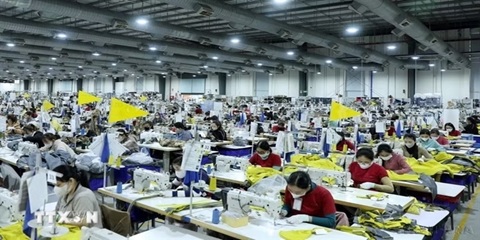
TEXTILE EXPORTS FACE DUAL CHALLENGES OF SUSTAINING ORDERS AND BOOSTING EFFICIENCY AMID GROWING COMPETITION
Data shows that the textile and garment sector maintained its growth momentum in the first nine months of this year. The industry's total export turnover reached an estimated US$35.721 billion in the first nine months of this year, up 3.3 per cent year-on-year. Despite posting encouraging export figures, Vietnamese textile and garment enterprises continue to navigate unpredictable market variables.
Events Sponsors






















