Want to be in the loop?
subscribe to
our notification
Business News
INFRASTRUCTURE FOCUS SETS STAGE FOR REAL ESTATE BONANZA
Although infrastructure development in Vietnam’s biggest cities is gradually helping to bolster real estate in neighbouring areas and push up prices, investors are advised to remain cautious and take local livelihoods into account.
Located in Thu Duc of Ho Chi Minh City, the Dong Tang Long project was once expected to be a model urban area, but it has remained unused for many years and is now a series of abandoned and degraded villas.
Twenty kilometres from the heart of Ho Chi Minh City, it was established in 2005 by Housing and Urban Development Investment Corporation. The project was expected to be increase its land price after nearby Nguyen Duy Trinh street was listed in the expanded routes of the city. However, plans to expand the route were delayed and no updated on the matter have been forthcoming.
The project was priced at $2,700-2,900 per square metre of land and from $333,000-750,000 for a townhouse, as well as up to $1.6 million per villa, depending on location. Many of those were completed, but few residents live there. Villas have been left uninhabited and vacant for many years, causing deterioration and the areas overgrown with grass.
According to Nguyen Nam, a resident of the project, there are few people living there as it is far from the centre with few amenities and leisure services. “It is too desolated and there are no services. People owning a house here would probably have other properties in the city centre, so they do not live here,” Nam said.
In Hanoi, Lideco urban area located in Hoai Duc district was started in 2007, but is still unfinished. Most of the villas have been only partially completed and left abandoned and uninhabited.
The project includes around 650 villas and over 130 town houses. It should have completed construction in 2013, but a lack of effective infrastructure has been deemed the reason for the standstill.
Infrastructure comes first
A report on infrastructure real estate released by the Vietnam Institute for Real Estate Research (VIRES) last week evaluates the essential role of parallel development of real estate and transport infrastructure projects.
The VIRES believes that in the process of urbanisation, transport infrastructure projects play a leading role in development thanks to convenient connectivity and awakening of potential localities.
The formation of a residential area or a large urban area starts with roads and traffic. The promotion of infrastructure deployment encourages population movement, land transfer, and the development of new areas. This creates motivation for formation of real estate projects to meet new local development needs, thereby attracting investment.
“Transport infrastructure is the backbone of the real estate market in each certain area and is also a key and fundamental factor in bringing added value to real estate,” it said.
Peter Meyer, vice chairman of Lodgis Hospitality, said that the government had invested into the infrastructure system in 2024 with a range of projects and investment in infrastructure crucial for economic growth.
“The Vietnamese government is focusing on roads, public transport, and other things that are fundamental as they relate directly to properties. Efficient functioning airports are also crucial to all of our destinations,” said Meyer.
Michael Piro, COO of Indochina Capital, said that the accessibility to project sites was a crucial factor in deciding the efficiency of any given project.
“Infrastructure is a key factor for project’s development and real estate developers are finding projects where infrastructure development is happening, but they are facing challenges when land price around the world is rocketing and becoming too expensive for investment,” Piro said.
Real estate projects adjacent to airports, ports, or located in areas with ring roads and highways running through them always have higher value and the ability to increase in price compared to other real estate projects.
Location is a top factor determining the value of real estate. The VIRES cited the example of the Van Don-Mong Cai Expressway opening in September 2022, which helped reduce travel time from Hanoi to Mong Cai city from seven to three hours, creating a boost for the local market.
A VIRES survey shows that real estate prices in Mong Cai have increased by about 30-40 per cent compared before the expressway planning. To benefit from the route, industrial and commercial real estate projects, smart urban areas, and resorts in Mong Cai are being promoted for investment and development.
In some localities with expressways running through them, such as Cau Gie-Ninh Binh, land prices are also increasing.
According to the Ho Chi Minh City Real Estate Association, dozens of projects along Metro Line 1 have increased sharply in price compared to those in 2018.
Kiet Vo, national head of Residential Project Marketing at CBRE Vietnam, said the average price in some projects located along the line have increased from 50 to 150 per cent over the last eight years.
“Many projects on this route have increased in price rapidly, and many others are in the pipeline. The apartment market in areas near the metro line still has a lot of potential for price increases, attracting business and commercial units to set up retail stores, as well as increasing parallel development of office projects,” said Vo.
A study by the Environment for Development in Vietnam has shown that the areas within a radius from 1-3 kilometres from a metro station have a 15 per cent increase in real estate value, and 5 per cent for 3-5 km. With new transportation infrastructure projects being implemented to connect with Ring Road 3, real estate projects in Hanoi have recorded high price increases, especially in the past five years.
Risks for real estate investors
From a positive perspective, infrastructure projects create development space and investment opportunities for the real estate market in neighbouring areas.
However, according to the VIRES, after the news of an infrastructure project upgrading is leaked, land prices start rising rapidly.
Therefore, planning infrastructure projects is a key factor that can easily be exploited by speculators to create a real estate bubble, it said.
Real estate speculators are constantly looking for information on planning infrastructure projects to stay one step ahead, buying land and other real estate located in or near the planned infrastructure areas to enjoy the increased price after the infrastructure is complete.
Vo Hong Thang, deputy director of Research and Development at DKRA Vietnam, said that transport infrastructure positively impacted the real estate market. However, in the current difficult times, investors who want to be successful must pay attention to a number of factors.
“The first is to have strong finances, avoid using loans, and to carefully review the project’s legality, and review local planning,” Thang said. “Another important factor that cannot be ignored when investing in infrastructure is people’s livelihood. Real estate values can increase in areas that form urban areas, with residential areas with full amenities such as markets, hospitals, schools, and parks. Just being near a transport infrastructure system alone is not enough.”
In a volatile period, investors need to determine a medium- and long-term investment strategy to ensure expected profits because large transportation infrastructure projects often have long-term falling points, so it is necessary to increase capital, especially equity capital, Thang added.
“Investors need to determine a medium and long-term investment strategy, thereby ensuring expected profits because large transportation infrastructure projects often have long, complicated timelines. To minimise risks, investors must pay attention to preparing sustainable and stable financial flows for 3-5 years,” Thang said.
Source: VIR
Related News

MEMBER CORNER / PROMOTIONS
HCMC | CERTIFIED SUSTAINABILITY PROFESSIONAL (CSP) TRAINING | REGISTRATION OPEN
As sustainability becomes deeply embedded in corporate strategy and supply-chain operations across Vietnam, Hong Kong Business Association Vietnam is pleased to endorse the upcoming Certified Sustainability Professional (CSP) training program by the Asia Institute for Sustainability (AIS) - a premier internationally recognized ESG credential in Vietnam.
VIETNAM ECONOMY INVESTMENT
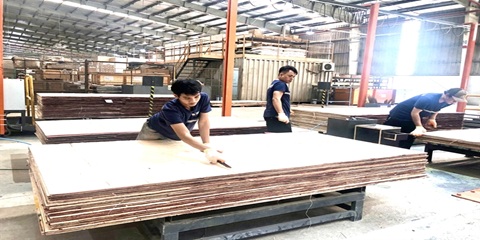
HCM CITY SAYS HOW IT PLANS TO ACHIEVE 10-11% ANNUAL EXPORT GROWTH FOR REST OF DECADE
The southern economic hub aims to strengthen its role as the country’s largest import-export centre while developing into a regional transhipment centre in Southeast Asia, supported by green and digital transformation and a circular economy. HCM City has outlined measures to expand production capacity, cut logistics costs, diversify export markets, and help businesses meet increasingly stringent international standards as it targets average annual export growth of 10-11 per cent through 2030.
VIETNAM ECONOMY INVESTMENT
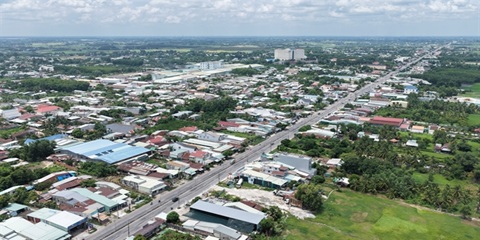
HCM CITY LEADS ECONOMIC RESTRUCTURING IN SOUTHEAST REGION
According to Associate Professor, Dr Vũ Tuấn Hưng, director of the Institute of Social Sciences of the Southern Region, the Southeast is a strategically important socio-economic space in Việt Nam’s development given its advantages in location, industry, trade, services, logistics, science and technology, urbanisation and human resources.
TECHNOLOGY
DIGITAL TRANSFORMATION TURNED INTO PRACTICAL TOOLS FOR PEOPLE, BUSINESSES
Việt Nam is moving its digital transformation agenda beyond policy frameworks and individual technology platforms towards practical applications that address everyday needs, as authorities seek measurable outcomes from science, technology and innovation. Under Politburo Resolution No. 57-NQ/TW issued on December 22, 2024, the implementation is increasingly shifting from simply completing assigned tasks towards developing concrete products and services for citizens and businesses.
TECHNOLOGY
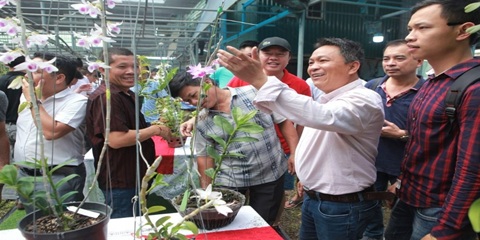
APPLYING TECHNOLOGY FOR ECONOMIC TRANSFORMATION
Having completed its new rural development program, Hanoi is shifting its focus toward improving development quality and building smart, sustainable rural areas. The transformation of Dong La orchid-growing village in An Khanh, a western commune of Hanoi, shows how digital technology is becoming a driver of production, market expansion, and higher incomes for local residents.

MEMBER CORNER / PROMOTIONS
VIGLACERA HONORED AS THE "LEADING GREEN INDUSTRIAL REAL ESTATE DEVELOPER 2026"
Organized by the Vietnam Investment Review, this prestigious awards program recognizes industry pioneers advancing eco-industrial parks, clean energy transition, and rigorous ESG standards. Outperforming competitors through a rigorous evaluation, Viglacera Corporation – JSC proudly ranked among the Top 5 highest-positioned enterprises in the Leading Green Industrial Real Estate Developers 2026 category, reinforcing its premier position in Vietnam’s industrial real estate sector.
Events Sponsors






















