Want to be in the loop?
subscribe to
our notification
Business News
INVESTMENT OPPORTUNITIES IN LOGISTICS SERVICES
In spite of holding numerous advantages for strong development of logistics industry, Vietnam's logistics growth is still very modest. In early 2017, the Prime Minister of Vietnam issued Decision 200/QD-TTg with a view to increasing the share of logistics services to GDP to 8 - 10 per cent in 2025, four times more than now.
Logistics costs: Three times that of Singapore
According to the World Bank (WB), Vietnam ranked 64th out of 160 economies in logistics development in the world and fourth in ASEAN after Singapore, Malaysia and Thailand. With an annual growth rate of 16 - 20 per cent, this is one of the fastest-growing sectors in Vietnam in recent years.
However, also according to the WB, logistics costs in Vietnam were estimated at 25 per cent of GDP, significantly higher than that of Thailand's 19 per cent, China's 18 per cent, Malaysia's 13 per cent, and nearly three times higher than those of the United States and Singapore.
Statistics from the Vietnam Logistics Business Association (VLA) showed that logistics service is currently valued US$20-22 billion a year, accounting for 20.9 per cent of the nation’s gross domestic product (GDP), a relatively high rate in the economy and a heavy burden on enterprises. Transportation, the most important part of logistics, accounts for 40 - 60 per cent of costs.
Quantifying shipping costs in cost structure, Dr Tran Dinh Thien, Director of the Vietnam Institute of Economics, commented, “In Vietnam, transportation costs account for more than two thirds of the value of goods, compared to only a half in other countries.”
Vietnam has about 3,000 logistics firms, of which 1,300 are regular, including foreign invested firms, according to VLA.
Although domestic firms account for 80 per cent, they hold just 20 per cent of the market share. They mainly provide small supply chains in the Vietnamese territory.
Operating on seaports, warehouses, transport means, and handling equipment supplied by domestic companies, about 30 foreign multinational corporations with superior advantages in technology and human resources, without having to invest in infrastructure can handle almost all international shipping services.
High hopes on ambitious goals
In February 2017, the Prime Minister approved an Action Plan for Vietnam Logistics Service Competitiveness Improvement and Development to 2025. Accordingly, by 2025, the share of logistics industry to GDP will reach 8 - 10 per cent in 2025, the industry will expand 15 - 20 per cent a year, the ratio of logistics outsource services will be brought to 50 - 60 per cent, and logistics cost will be reduced to 16 - 20 per cent of GDP. The country’s Logistics Performance Index (LPI) will be in the Top 50 of the world.
In order to realise these objectives, the Government defines six main tasks: Perfecting logistics services policies and laws; completing logistics infrastructure; improving business capacity and service quality; developing logistics services market; training and raising awareness and quality of human resources; and others.
Particularly, Vietnam will improve policies; attract more funds for logistics infrastructure development; strengthen cooperation with foreign partners to expand logistics infrastructure connectivity; invest to upgrade logistics infrastructure to connect Vietnamese ports with neighbouring countries; raise funds for building Grade-A logistics centres in Hanoi and Ho Chi Minh City and Grade-B logistics centres in Lang Son, Lao Cai, Hai Phong, Da Nang, Quy Nhon, Can Tho and other localities.
The Government will encourage and guide enterprises in some industries like garment and textile, leather and footwear, wooden furniture, agricultural products, foods and mechanical engineering to apply advanced supply chain management models. It will also encourage industrial parks and export processing zones to build logistics-based industrial zone model; integrate downstream logistics services with agricultural and industrial production, import and export; support the construction of strong logistics corporations to make inroads in foreign countries and export logistic services.
To develop the logistics services market and promote logistics services, Vietnam will issue mechanisms to draw freight from Laos, Cambodia, Thailand and South China to transit Vietnam to other countries and vice versa; and support improving the performance, marketing and input sources for Cai Mep-Thi Vai Port Complex.
VLA Chairman Le Duy Hiep said this decision will leverage the comprehensive development of logistics services. This is also a good opportunity for domestic and foreign businesses to invest in this potential service in Vietnam.
Source: VCCI
Related News
MEMBER CORNER / PROMOTIONS
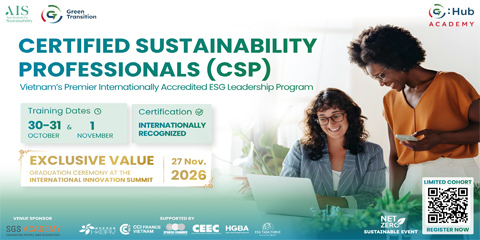
HCMC | CERTIFIED SUSTAINABILITY PROFESSIONAL (CSP) TRAINING | REGISTRATION OPEN
As sustainability becomes deeply embedded in corporate strategy and supply-chain operations across Vietnam, Hong Kong Business Association Vietnam is pleased to endorse the upcoming Certified Sustainability Professional (CSP) training program by the Asia Institute for Sustainability (AIS) - a premier internationally recognized ESG credential in Vietnam.
VIETNAM ECONOMY INVESTMENT
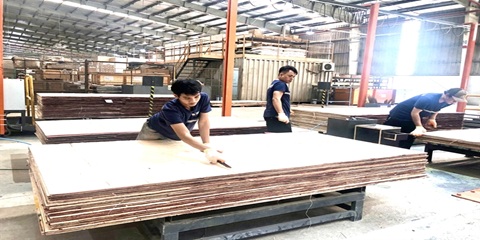
HCM CITY SAYS HOW IT PLANS TO ACHIEVE 10-11% ANNUAL EXPORT GROWTH FOR REST OF DECADE
The southern economic hub aims to strengthen its role as the country’s largest import-export centre while developing into a regional transhipment centre in Southeast Asia, supported by green and digital transformation and a circular economy. HCM City has outlined measures to expand production capacity, cut logistics costs, diversify export markets, and help businesses meet increasingly stringent international standards as it targets average annual export growth of 10-11 per cent through 2030.
VIETNAM ECONOMY INVESTMENT
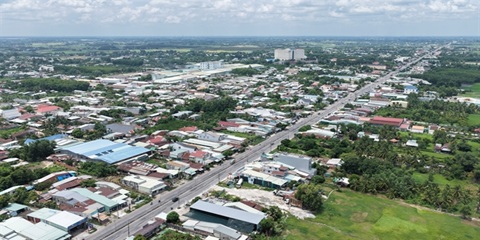
HCM CITY LEADS ECONOMIC RESTRUCTURING IN SOUTHEAST REGION
According to Associate Professor, Dr Vũ Tuấn Hưng, director of the Institute of Social Sciences of the Southern Region, the Southeast is a strategically important socio-economic space in Việt Nam’s development given its advantages in location, industry, trade, services, logistics, science and technology, urbanisation and human resources.
TECHNOLOGY
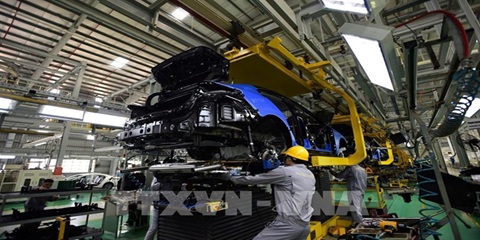
DIGITAL TRANSFORMATION TURNED INTO PRACTICAL TOOLS FOR PEOPLE, BUSINESSES
Việt Nam is moving its digital transformation agenda beyond policy frameworks and individual technology platforms towards practical applications that address everyday needs, as authorities seek measurable outcomes from science, technology and innovation. Under Politburo Resolution No. 57-NQ/TW issued on December 22, 2024, the implementation is increasingly shifting from simply completing assigned tasks towards developing concrete products and services for citizens and businesses.
TECHNOLOGY
APPLYING TECHNOLOGY FOR ECONOMIC TRANSFORMATION
Having completed its new rural development program, Hanoi is shifting its focus toward improving development quality and building smart, sustainable rural areas. The transformation of Dong La orchid-growing village in An Khanh, a western commune of Hanoi, shows how digital technology is becoming a driver of production, market expansion, and higher incomes for local residents.

MEMBER CORNER / PROMOTIONS
VIGLACERA HONORED AS THE "LEADING GREEN INDUSTRIAL REAL ESTATE DEVELOPER 2026"
Organized by the Vietnam Investment Review, this prestigious awards program recognizes industry pioneers advancing eco-industrial parks, clean energy transition, and rigorous ESG standards. Outperforming competitors through a rigorous evaluation, Viglacera Corporation – JSC proudly ranked among the Top 5 highest-positioned enterprises in the Leading Green Industrial Real Estate Developers 2026 category, reinforcing its premier position in Vietnam’s industrial real estate sector.
Events Sponsors






















