Want to be in the loop?
subscribe to
our notification
Business News
INVESTORS BETTING ON CONSTRUCTION STEEL THROUGH 2025
Domestic construction steel is set to grow, driven by strong third-quarter (Q3) earnings, favourable Chinese policies, and government-led economic stimulus packages for highways and real estate.
Despite a recovery in Vietnam’s steel industry this year, difficulties have persisted, particularly following anti-dumping investigations by the United States in late October that have negatively impacted Vietnam's exports.
Vietnamese steel companies are increasingly focusing on the domestic market, capitalising on demand from local construction and public ventures, stated a 2025 Vietnamese steel industry report from CSI Securities. "This approach is seen as both necessary and strategic, enabling businesses to stabilise production, maintain growth, and better prepare for sustainable opportunities ahead," it said.
MB Securities (MBS) forecasts a 5 per cent rebound in domestic construction steel prices from August lows starting in Q4, with local consumption expected to drive growth over the next two years.
"During 2025-2026, MBS expects construction steel and hot-rolled coil steel to increase by 7 per cent and 8 per cent, respectively, due to rising demand and easing pressure from China. Domestic manufacturers stand to gain market share as anti-dumping duties take effect in December," noted the MBS steel sector Q3 report.
Since early Q3, global steel prices have risen steadily, fuelled by China’s largest economic stimulus since the pandemic, boosting steel demand, especially in real estate, the largest consumer of steel through 2026.
Supply constraints have further supported price recovery. China has delayed approval for several coal-based steel mills to reduce environmental impact since the start of the year, and major steel-producing regions like Hebei and Jiangsu have cut output by 20-30 per cent.
In addition to China’s influence, MBS sees growth potential for the domestic steel industry from Vietnam’s recovering real estate market and highway projects. Rising housing supply and public investment have recently driven the recovery in construction steel demand.
The Q3 steel sector report from VCBS noted, "The recovering real estate sector is essential for steel demand, with construction accounting for 60 per cent of steel use. Policy reforms have stimulated significant project growth in the north and spurred a rebound in the south, sustaining demand for building materials."
Currently, the Ministry of Industry and Trade is drafting a long-term development strategy for Vietnam’s steel industry through 2030, with a vision for 2050, for submission to the government. If approved, this strategy would provide substantial advantages for Vietnam’s steel industry in executing key national projects.
The north-south high-speed railway project, in particular, is expected to contribute significantly to infrastructure demand. Major domestic steel contractors are already mobilising personnel and equipment ahead of large-scale construction activities.
At a government conference on socioeconomic development in late September, Hoa Phat Group chairman Tran Dinh Long underscored the importance of the high-speed railway project, with an estimated total investment of $70 billion, as a strategic infrastructure endeavour.
"Hoa Phat is prepared to supply steel for high-speed rail projects in Vietnam and is ready to bid for this project," said Long.
Dr. Bui Xuan Phong, former chairman of the Vietnam Economics and Railway Transport Association, expressed strong support for Vietnamese companies like Hoa Phat, Vietnam’s leading steel manufacturer, taking part in high-speed rail initiatives. "We are committed to promoting localisation and supporting private enterprise growth, so there is every reason to back these companies," he said.
Steel companies have recently completed their Q3 financial reports, with many close to achieving their annual targets.
Hoa Phat reported a 51 per cent on-year increase in Q3 net profit, reaching more than $1.4 billion in revenue. Its after-tax profit for the first nine months reached just under $384 million, a 140 per cent increase, fulfilling 92 per cent of its annual target.
"With strong investment in the Dung Quat 2 project and positive financial recovery, Hoa Phat stock is an attractive prospect for 2025-2026. Long-term investors may view this as an opportunity to accumulate shares, benefiting from the company’s growth as the steel market expands," stated Faviz Investment’s Q3 industry outlook report.
Nam Kim Steel posted a 22 per cent on-year revenue increase in Q3, reaching almost $216.2 million, with gross profit margin rising to 8.7 per cent, pushing net profit up by 2.7 times on-year.
Hoa Sen Group closed its financial year with a 17-fold increase in after-tax profit. Although it reported a loss exceeding $7.7 million in the last quarter of the 2023-2024 fiscal year, strong results from earlier quarters enabled Hoa Sen to conclude the year with an after-tax profit of more than $21.2 million, marking a 17-fold increase from the previous year.
Numerous medium and smaller steel firms also showed strong performance. Thong Nhat Flat Steel reported a Q3 after-tax profit increase of 250 per cent on-year, reaching over $454,000. Cumulative nine-month revenue reached $96.6 million, a 251 per cent increase, well above its 2024 revenue target of $41.7 million.
Thai Nguyen Steel also posted robust growth, with nine-month revenue nearing $458.5 million, up 16 per cent on-year, completing 86 per cent of its annual target.
Source: VIR
Related News

MEMBER CORNER / PROMOTIONS
HCMC | CERTIFIED SUSTAINABILITY PROFESSIONAL (CSP) TRAINING | REGISTRATION OPEN
As sustainability becomes deeply embedded in corporate strategy and supply-chain operations across Vietnam, Hong Kong Business Association Vietnam is pleased to endorse the upcoming Certified Sustainability Professional (CSP) training program by the Asia Institute for Sustainability (AIS) - a premier internationally recognized ESG credential in Vietnam.
VIETNAM ECONOMY INVESTMENT
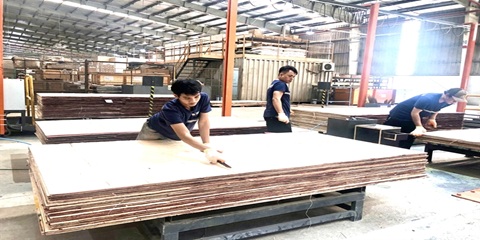
HCM CITY SAYS HOW IT PLANS TO ACHIEVE 10-11% ANNUAL EXPORT GROWTH FOR REST OF DECADE
The southern economic hub aims to strengthen its role as the country’s largest import-export centre while developing into a regional transhipment centre in Southeast Asia, supported by green and digital transformation and a circular economy. HCM City has outlined measures to expand production capacity, cut logistics costs, diversify export markets, and help businesses meet increasingly stringent international standards as it targets average annual export growth of 10-11 per cent through 2030.
VIETNAM ECONOMY INVESTMENT
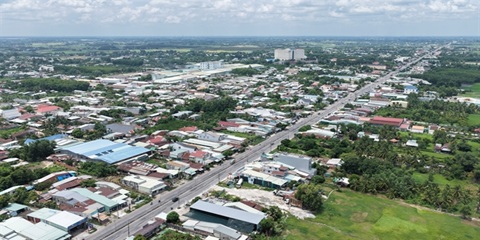
HCM CITY LEADS ECONOMIC RESTRUCTURING IN SOUTHEAST REGION
According to Associate Professor, Dr Vũ Tuấn Hưng, director of the Institute of Social Sciences of the Southern Region, the Southeast is a strategically important socio-economic space in Việt Nam’s development given its advantages in location, industry, trade, services, logistics, science and technology, urbanisation and human resources.
TECHNOLOGY
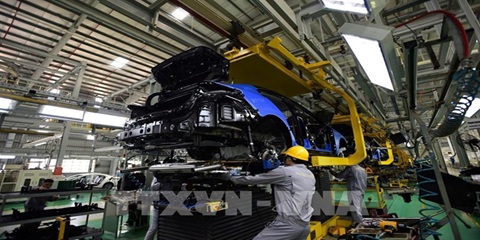
DIGITAL TRANSFORMATION TURNED INTO PRACTICAL TOOLS FOR PEOPLE, BUSINESSES
Việt Nam is moving its digital transformation agenda beyond policy frameworks and individual technology platforms towards practical applications that address everyday needs, as authorities seek measurable outcomes from science, technology and innovation. Under Politburo Resolution No. 57-NQ/TW issued on December 22, 2024, the implementation is increasingly shifting from simply completing assigned tasks towards developing concrete products and services for citizens and businesses.
TECHNOLOGY
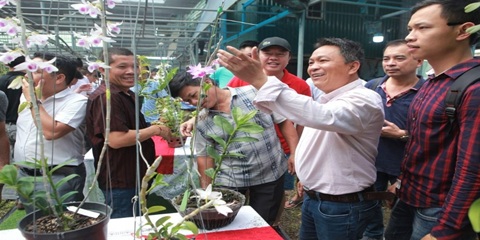
APPLYING TECHNOLOGY FOR ECONOMIC TRANSFORMATION
Having completed its new rural development program, Hanoi is shifting its focus toward improving development quality and building smart, sustainable rural areas. The transformation of Dong La orchid-growing village in An Khanh, a western commune of Hanoi, shows how digital technology is becoming a driver of production, market expansion, and higher incomes for local residents.
MEMBER CORNER / PROMOTIONS
VIGLACERA HONORED AS THE "LEADING GREEN INDUSTRIAL REAL ESTATE DEVELOPER 2026"
Organized by the Vietnam Investment Review, this prestigious awards program recognizes industry pioneers advancing eco-industrial parks, clean energy transition, and rigorous ESG standards. Outperforming competitors through a rigorous evaluation, Viglacera Corporation – JSC proudly ranked among the Top 5 highest-positioned enterprises in the Leading Green Industrial Real Estate Developers 2026 category, reinforcing its premier position in Vietnam’s industrial real estate sector.
Events Sponsors






















