Want to be in the loop?
subscribe to
our notification
Business News
IPS WITH SEAPORTS WILL HAVE THE ADVANTAGE IN ATTRACTING NEW-GENERATION FDI FLOWS
The COVID-19 pandemic affected global supply chains and the transport industry, especially aviation, was disrupted, thus shipping took the throne. Meanwhile, new developments from free trade agreements are creating new opportunities for Vietnam's industrial real estate market.
Recently, China officially applied to join the Comprehensive and Progressive Agreement for Trans-Pacific Partnership (CPTPP). If China joins, the CPTPP will surpass the Regional Comprehensive Economic Partnership (RCEP) as the trade agreement possessing the world's largest value with the combined GDP of economies accounting for 30 per cent of global GDP compared to the current figure of about 13 per cent.
Previously, in November 2020, China also joined the RCEP including 10 ASEAN member countries and four countries with which ASEAN signed a free trade agreement (FTA), namely Australia, Japan, South Korea, and New Zealand.
The CPTPP currently includes 11 members, ranking third in size among FTAs in the world, after RCEP, which is worth $26 trillion and the US-Mexico-Canada FTA (USMCA) which is worth $21 trillion.
The admission of new members will become a controversial topic among member countries as it will shift the balance of trade, economy, and politics in the region.
Putting aside political and economic goals, these moves are increasingly reinforcing the trend of capital flows in the direction of "China + 1".
Before that, since the US-China trade war broke out in 2018, the US and some developed western countries have moved part of their supply chains out of China. This is to avoid putting all of their eggs in the same basket, minimising political and commercial risks.
Accordingly, companies maintain production activities in China while expanding to another country. At this time, ASEAN is particularly appealing because it is close to the Chinese market.
Advantages of seaports
With the above developments, it is understandable why the ASEAN region has received large foreign direct investment (FDI) inflows in recent years, including Vietnam. Vietnam shares a land and sea border with China, with an international seaport system, developed industrial park (IP) infrastructure, and stable policies. It is also a member of the CPTPP and RCEP. Therefore, Vietnam is rated as one of the most attractive destinations in ASEAN.
Whether China is agreed to join the CPTPP or the US returns to the CPTPP, ASEAN will continue to be the focus of FDI flows. Vietnam is making good use of this opportunity to welcome new, high-quality, and environmentally friendly FDI flows.
Especially in the context of the pandemic, aviation and road transport face many difficulties, and sea transport is emerging as the optimal transportation channel. Countries in ASEAN that have seaports will have more advantages in attracting investment, and one of two seaports of class 1A (international gateway port) is located in Haiphong city.
This partly explains the growth of FDI inflows to Vietnam, particularly to Haiphong, in the first nine months of 2021, despite the impact of the fourth outbreak.
Nam Dinh Vu IP of Sao Do Group owns this great advantage. Nguyen Thanh Phuong, general director of the group said: "Since the beginning of 2021, the IP has been continuously attracting new projects, and the group must also accelerate the leveling of our vacant land fund to meet the demand of investors."
With the advantage of having a seaport located in the area, the Seaport and Logistics subzone with a scale of nearly 200 hectares is one of the most potential convergence areas of the IP, with a scale of seven container terminals and a total investment of VND6 trillion ($260.87 million). Currently, the entire technical infrastructure of the first phase of Nam Dinh Vu port has been completed, with two berths already in operation with a capacity of about 800,000 to 1 million TEUs per year. The next two berths of the second phase are already underway and are expected to be launched in mid-2022.
In addition, the group has also invested in a bonded warehouse with a scale of 13ha and is currently putting it into operation quite effectively, gradually contributing to the improvement of facilities and services for this area. In the coming time, Sao Do Group will invest in building a liquid cargo wharf, providing petroleum, gas and natural gas services to industrial customers.
Besides developing the advantage of a seaport in the IP, the group also uses VR technology to assist foreign investors in visiting Nam Dinh Vu IP from afar, and promote investment in infrastructure to create sufficient land bank for large corporations and expand ready-built factories.
All these factors will help Nam Dinh Vu IP increase services and business efficiency for investors.
Source: VIR
Related News
MEMBER CORNER / PROMOTIONS
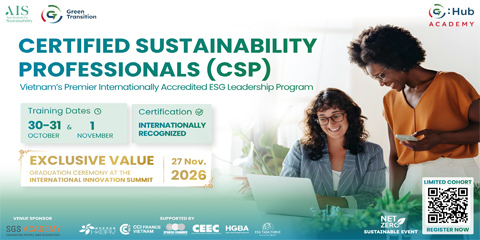
HCMC | CERTIFIED SUSTAINABILITY PROFESSIONAL (CSP) TRAINING | REGISTRATION OPEN
As sustainability becomes deeply embedded in corporate strategy and supply-chain operations across Vietnam, Hong Kong Business Association Vietnam is pleased to endorse the upcoming Certified Sustainability Professional (CSP) training program by the Asia Institute for Sustainability (AIS) - a premier internationally recognized ESG credential in Vietnam.
VIETNAM ECONOMY INVESTMENT
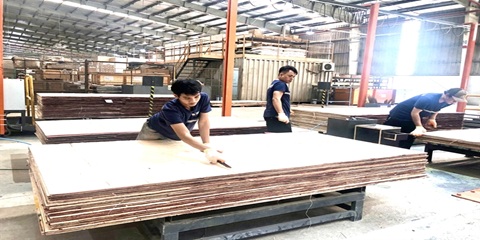
HCM CITY SAYS HOW IT PLANS TO ACHIEVE 10-11% ANNUAL EXPORT GROWTH FOR REST OF DECADE
The southern economic hub aims to strengthen its role as the country’s largest import-export centre while developing into a regional transhipment centre in Southeast Asia, supported by green and digital transformation and a circular economy. HCM City has outlined measures to expand production capacity, cut logistics costs, diversify export markets, and help businesses meet increasingly stringent international standards as it targets average annual export growth of 10-11 per cent through 2030.
VIETNAM ECONOMY INVESTMENT
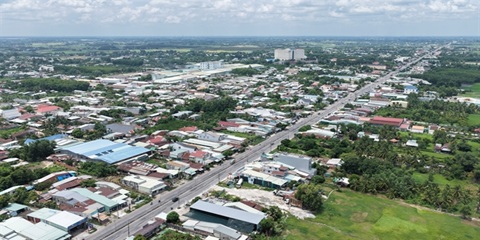
HCM CITY LEADS ECONOMIC RESTRUCTURING IN SOUTHEAST REGION
According to Associate Professor, Dr Vũ Tuấn Hưng, director of the Institute of Social Sciences of the Southern Region, the Southeast is a strategically important socio-economic space in Việt Nam’s development given its advantages in location, industry, trade, services, logistics, science and technology, urbanisation and human resources.
TECHNOLOGY
DIGITAL TRANSFORMATION TURNED INTO PRACTICAL TOOLS FOR PEOPLE, BUSINESSES
Việt Nam is moving its digital transformation agenda beyond policy frameworks and individual technology platforms towards practical applications that address everyday needs, as authorities seek measurable outcomes from science, technology and innovation. Under Politburo Resolution No. 57-NQ/TW issued on December 22, 2024, the implementation is increasingly shifting from simply completing assigned tasks towards developing concrete products and services for citizens and businesses.
TECHNOLOGY
APPLYING TECHNOLOGY FOR ECONOMIC TRANSFORMATION
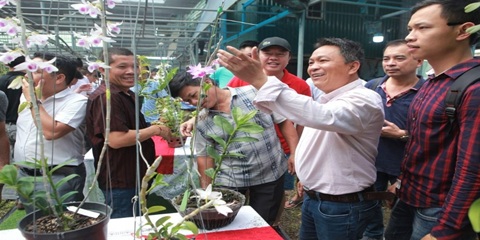
Having completed its new rural development program, Hanoi is shifting its focus toward improving development quality and building smart, sustainable rural areas. The transformation of Dong La orchid-growing village in An Khanh, a western commune of Hanoi, shows how digital technology is becoming a driver of production, market expansion, and higher incomes for local residents.
MEMBER CORNER / PROMOTIONS
VIGLACERA HONORED AS THE "LEADING GREEN INDUSTRIAL REAL ESTATE DEVELOPER 2026"
Organized by the Vietnam Investment Review, this prestigious awards program recognizes industry pioneers advancing eco-industrial parks, clean energy transition, and rigorous ESG standards. Outperforming competitors through a rigorous evaluation, Viglacera Corporation – JSC proudly ranked among the Top 5 highest-positioned enterprises in the Leading Green Industrial Real Estate Developers 2026 category, reinforcing its premier position in Vietnam’s industrial real estate sector.
Events Sponsors






















