Want to be in the loop?
subscribe to
our notification
Business News
LABOR PRODUCTIVITY - IMPORTANT FACTOR FOR GROWTH
Vietnam has not yet experienced a real productivity growth phase, which is a key factor for an economy to rise to high-income status, according to the Vietnam Productivity Report jointly conducted by the Vietnam Institute for Economic and Policy Research (VEPR), the University of Economics and Business (Vietnam National University of Hanoi, and the National Graduate Institute for Policy Studies of Japan.
Productivity growth is not fast enough to close the gap with other countries
Dr. Vu Tien Loc, President of the Vietnam Chamber of Commerce and Industry (VCCI), said that Vietnam has made strong efforts to improve its labor productivity in the past years and achieved significant growth, both in value and in speed.
Labor productivity in 2020 (referred to the base price in 2010) grew by only 5.4% (compared to 6.2% in 2019), lowest in five years, reaching VND117.94 million (US$5,081). This growth was higher than that of other countries in the region.
Vietnam's labor productivity has picked up markedly, rising by 5.8% a year on average in the 2016-2020 period, higher than that in the 2011-2015 period (4.3%) and higher than the expected target (5%). The average contribution of total factor productivity (TFP) in five years was about 45.2% (higher than the target of 30 - 35%). The growth model has gradually shifted from breadth to depth: Gradually reduced dependence on resources, raw exports, cheap labor and expansive credit; and gradually shifted to relying on scientific and technological application and innovation.
According to the International Labor Organization (ILO), Vietnam's labor productivity growth was 5.11% in the 2011-2020 phase, higher than the ASEAN median (3.11%) and higher than most ASEAN countries, second only to Cambodia, VCCI President Loc said. However, this rate was still lower than that of China (7%) and India (6%).
Labor productivity growth has not been fast enough for Vietnam to close the gap with other countries. According to ILO, Vietnam’s labor productivity in 2020 was seven times lower than that of Malaysia, four times lower than China, three times lower than Thailand, two times lower than the Philippines and 26 times lower than Singapore. The 2020 Report released by the Asian Productivity Organization (APO) also showed that Vietnam's labor productivity lagged behind Japan by 60 years, Malaysia by 40 years and Thailand by 10 years. This indicated that Vietnam needs to make stronger efforts to enhance its productivity.
Good formula for Vietnam’s labor productivity
Dr. Nguyen Duc Thanh, Director of the Vietnam Center for Economic and Strategic Studies (VESS), said that by sector, the agricultural productivity remains low and the industrial productivity is the highest of all. Thus, like a typically industrialized country, Vietnam's industrial productivity plays a leading role in the economy as a whole. However, manufacturing productivity - the most expected sector - has not increased over time, from 2000 to the present.
By ownership, the foreign-invested sector is often reported to be highly productive because of its effective operation methods. But this was only true before 2000. After that, its productivity dropped sharply. This happened at the same time as manufacturing productivity was stuck since 2000. Meanwhile, the private sector had very low productivity at first but then improved quickly and steadily.
Notably, during the Covid-19 pandemic, the labor productivity of the state-owned sector was the highest. This is possible, according to Mr. Thanh, because this sector has continuous reforms, and those which were lowly productive and lowly effective, are eliminated or privatized, helping raise productivity. Importantly, all SOEs are capital-intensive. When the business fund is high enough, labor productivity will naturally be high because workers work with much capital. In addition, industries engaged by SOEs are monopolistic or protected by the government such as telecommunications and energy.
In order to boost labor productivity in the coming time, Vietnam needs to rely on corporate labor productivity to have appropriate solutions rather than copy foreign models, according to Mr. Nguyen Tung Lam, Deputy Director of the Vietnam Productivity Institute (VNPI). Therefore, it is necessary to improve the capacity of Vietnamese labor productivity experts. In addition, it requires qualified experts to make an inclusive overview of labor productivity, know issues of enterprises and give a formula for labor productivity growth.
“At present, enterprises are innovating science and technology very quickly, but their technology operators' capacity cannot keep up that change. Many companies have spent a lot of money on technology, but their management cannot keep up, resulting in ineffective operations. This force that can effectuate reforms and change labor productivity for Vietnam is very necessary but seriously lacking. Without doubt, improving the capacity of this force is essential," he noted.
Source: VCCI
Related News

INFRASTRUCTURE / CONSTRUCTION / LOGISTIC / PORT
VIỆT NAM-CAMBODIA TRADE GATHERS PACE TOWARDS $20 BILLION TARGET
Trade between Việt Nam and Cambodia continues to grow, remaining a bright spot and a key pillar of bilateral cooperation as the two countries aim to raise two-way trade to US$20 billion in the coming years. After setting a record of more than $11.3 billion last year, bilateral trade reached about $8.7 billion in the first eight months of this year, up 8.3 per cent year on year.
TECHNOLOGY
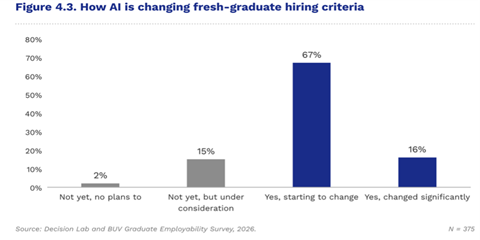
AI BEGINNING TO RESHAPE RECRUITMENT CRITERIA
Digital literacy is the only capability area in which fresh graduates meet employers’ expectations, according to a new report. Yet, it is also the standard rising fastest, as businesses increasingly expect new hires to use AI effectively in the workplace. Some 83 per cent of employers say AI has changed, or is beginning to change, their hiring criteria, while 94 per cent report higher expectations for digital and AI capabilities than they had two to three years ago.
INFRASTRUCTURE / CONSTRUCTION / LOGISTIC / PORT
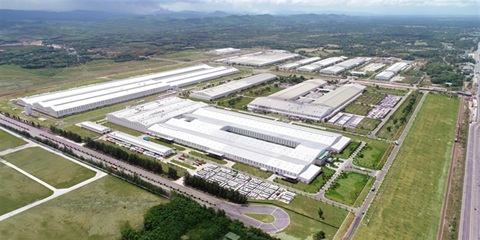
ĐÀ NẴNG GREEN-LIGHTS US$105 MILLION THAI DEVELOPMENT DEAL
The central city has approved an investment proposal by Thailand’s WHA Group to develop infrastructure for the 400ha WHA Đà Nẵng Industrial Park project on two communes of Thăng Bình and Đồng Dương, with an investment of more than VNĐ2.7 trillion (US$105 million). The city said it approved WHA Industrial Development International's status as an investor in the project, which is expected to take place between 2027 and 2034.
VIETNAM ECONOMY INVESTMENT
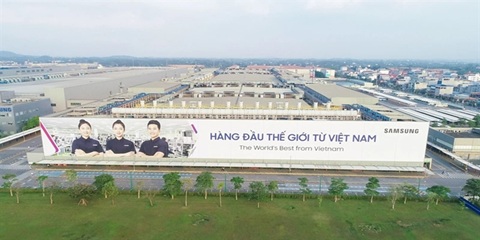
MOBILE PHONE EXPORTS RISE 20% TO $51.8 BILLION IN FIRST NINE MONTHS
Exports of mobile phones and components rose 20 per cent year-on-year to nearly US$51.8 billion in the first nine months of 2026, with China, the US and Republic of Korea accounting for more than half of the total. Shipments to the three markets reached a combined $26.18 billion, or 50.6 per cent of total exports of the product group during the period, according to data from the Vietnam Department of Customs under the Ministry of Finance.
VIETNAM ECONOMY INVESTMENT
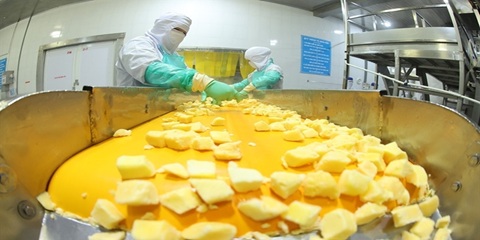
FRUIT AND VEGETABLE EXPORTS POISED TO HIT $10 BILLION IN 2026
Fruit and vegetable exports are on track to reach nearly US$10 billion in 2026, after rising 19.9 per cent year on year to nearly US$7.4 billion in the first nine months, driven by strong seasonal demand and abundant tropical fruit supplies. The Ministry of Agriculture and Environment said the growth reflected stronger international demand for fresh produce and processed agricultural products.
GARMENT / TEXTILE
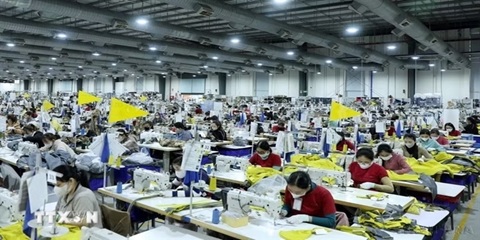
TEXTILE EXPORTS FACE DUAL CHALLENGES OF SUSTAINING ORDERS AND BOOSTING EFFICIENCY AMID GROWING COMPETITION
Data shows that the textile and garment sector maintained its growth momentum in the first nine months of this year. The industry's total export turnover reached an estimated US$35.721 billion in the first nine months of this year, up 3.3 per cent year-on-year. Despite posting encouraging export figures, Vietnamese textile and garment enterprises continue to navigate unpredictable market variables.
Events Sponsors






















