Want to be in the loop?
subscribe to
our notification
Business News
LOCAL F&B FIRMS EXPAND TO COUNTER FOREIGN COMPETITION
Local food and beverage (F&B) firms are expanding operations and upgrading the management technology and production lines in response to foreign competition.
Efforts to increase market share
Vietnam has seen sustained growth in the F&B sector, with the entry of both local and foreign firms. According to statistics from Euromonitor, the F&B sector will reach an average growth speed of 18 per cent per year in 2014-2019.
Amidst this strict competition, and especially reacting to the threat of foreign firms, local F&B firms are developing their factories to expand manufacturing operations.
According to Pham Cao Vinh, chairman of Redsun-ITI Corporation, the firm has invested VND250 billion ($10.8 million) into building a food processing plant in Hiep Phuc Industrial Zone in Ho Chi Minh City. The capacity of the first phase is expected to reach 15,000 tonnes of products per year.
Along with Redsun-ITI, Golden Gate Restaurant Group, which owns a series of restaurant chains, namely Gogi House, Sumo BBQ, Cowboy Jacks, and Vuvuzela, with more than 200 restaurant units in 2017, plans to expand its operations.
Nguyen Cao Tri, CEO of Golden Gate’s Ho Chi Minh City branch stated that the firm expects to increase the number of its restaurants to 400 or more in a short time.
James Duong Nguyen, CEO of Dcorp R-Keeper Vietnam, said that the F&B sector in Vietnam has great potential. In the last five years, numerous local firms increased investments in the sector, along with a growing number of foreign investors making a landfall.
In the F&B industry, modern management technology plays an important role in contributing to the development of firms. It is the reason why more and more firms are starting to pay attention in upgrading this technology.
In 2017, Dcorp R-Keeper Vietnam introduced its professional management solution to more than 1,000 large- and medium-sized restaurant chains. Besides, numerous other large- and medium-sized restaurants plan to upgrade their management and operation solutions.
The potential of the F&B industry
In general, with a population of more than 93 million, more than half of whom are under the age of 30, the Vietnamese F&B industry has been getting great attention from foreign investors, according to experts.
A report of Business Monitor International forecast that the growth of the F&B industry will maintain an annual double-digit growth of 10.9 per cent in 2017-2019 and consumption demand will focus on food and necessities, thanks to people’s increasing income and a trend of using high-value products.
Food production and processing, especially milk, beverages, confectionery, and cooking oil, are seen as the most lucrative market segments. According to data from the Ministry of Industry and Trade (MoIT), fresh milk consumption is forecast to reach 27-28 litres per person per year in 2020; confectionery consumption will increase by 10 per cent per year; cooking oil consumption will hit 17 kilogrammes by 2020 and 20 kilogrammes by 2025; beverage consumption will hit 6.8 billion litres in 2020 and 9.1 billion litres in 2025.
One business deal which attracted a lot of media attention in 2015 was the successful call for capital by Kafe Group.
Notably, restaurant-coffee chain Kafe received $5.5 million from Cassia Investment from Hong Kong which has invested in many F&B chains in Asia.
According to Chad Ovel, CEO of Mekong Capital, restaurant chains attract investors because almost all restaurants in Vietnam are individual ones, not parts of chains. There are only several well-known F&B chains (not including franchised ones) run by Nam An Group, Huy Viet Nam, Golden Gate, and TNG Holdings.
Source: VIR
Related News

TECHNOLOGY
TECH SECTOR GROWTH OPENS UP OPPORTUNITIES FOR VIỆT NAM TO GO GLOBAL
The growth of the electronics, semiconductor and high-tech sectors worldwide is opening up a variety of opportunities for Vietnamese enterprises to integrate more deeply into the global supply chain. However, to become suppliers for these corporations, domestic enterprises must meet rigorous standards regarding quality, technology, productivity and order fulfilment capabilities.
INFRASTRUCTURE / CONSTRUCTION / LOGISTIC / PORT
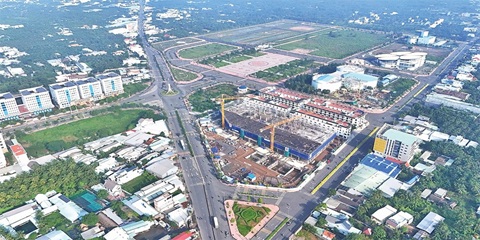
DONG THAP PROVINCE STEPS UP INDUSTRIAL EXPANSION AND INFRASTRUCTURE CONNECTIVITY
Accelerating public investment, strengthening inter-regional connectivity, and expanding industrial land are helping Dong Thap efficiently bolster competitiveness and drive economic growth. Following the 2025 merger of the former Dong Thap and Tien Giang provinces, the expanded Dong Thap province in the Mekong Delta faces mounting pressure to accelerate infrastructure development and strengthen connectivity among local economic zones, urban areas, industrial parks (IPs), and production centres.
PROPERTY / INDUSTRIAL ZONE
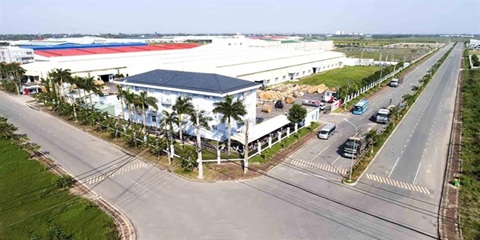
HCM CITY ATTRACTS US$5.7 BILLION INTO EXPORT PROCESSING AND INDUSTRIAL ZONES
HCM City attracted US$5.7 billion in domestic and foreign investment into its export processing and industrial zones during the first nine months of 2026. The figure exceeded the city's full-year target by 31 per cent, highlighting strong momentum in high-quality industrial investment under Resolution No.10-NQ/TW. Total investment reached 131 per cent of the 2026 target of $4.25 billion and represented a 29 per cent increase compared with the same period in 2025, according to the city's Export Processing and Industrial Zones Authority (HEPZA).

BANKING / FINANCE / INSURANCE / TAX
REMITTANCES TO HCM CITY RISE NEARLY 40% IN Q3
Remittances to HCM City reached more than US$2.83 billion in the third quarter of this year, up 39.5 per cent from the previous quarter and 3.6 per cent year-on-year. This was the first quarter showing positive annual growth this year, helping narrow the decline in remittance inflows over the first nine months. According to the State Bank of Vietnam (SBV)’s Regional Branch 2, remittances transferred to HCM City through credit institutions and economic organisations totalled $2.835 billion in Q3, an increase of more than $802 million from the previous quarter.
VIETNAM ECONOMY INVESTMENT
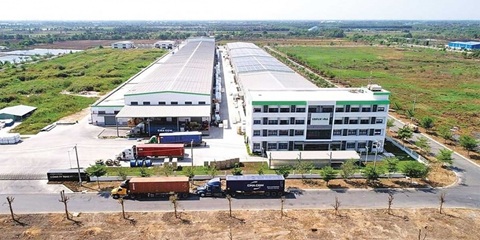
FOREIGN INVESTORS SEEKING A SYNCHRONISED MANUFACTURING ECOSYSTEM
Instead of focusing only on land costs and incentives as usual, foreign investors are seeking a synchronised manufacturing ecosystem, from stable power supply and logistics to shared infrastructure and the convenience of completing residence procedures for experts to serve their long-term investment in the country.
VIETNAM ECONOMY INVESTMENT
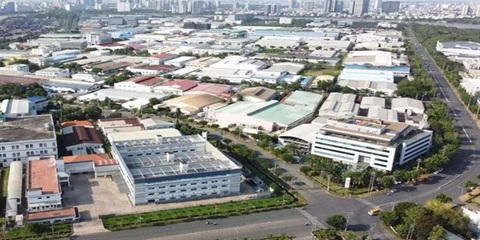
HCM CITY ADDRESSES MANUFACTURING, LAND HURDLES FOR Q4 GROWTH PUSH
HCM City is adjusting growth scenarios for lagging sectors and removing key bottlenecks in manufacturing and industrial land pricing to achieve a 13.23 per cent expansion in the fourth quarter of 2026. This sharp fourth-quarter acceleration is required to secure the city's full-year double-digit targets, following a 9.06 per cent GRDP growth recorded in the first nine months.
Events Sponsors






















