Want to be in the loop?
subscribe to
our notification
Business News
LOGISTICS HUMAN RESOURCE DEVELOPMENT - KEY TO SERVICE COMPETITIVENESS IMPROVEMENT
To overcome the inadequacies and create more favorable conditions for logistics human resource development in general and logistics training in particular, the Minister of Home Affairs issued Decision 568/QD-BNV dated April 30, 2021 allowing the establishment of the Vietnam Association for Logistics Manpower Development. The association has the task of participating in the implementation of the Government's decisions to develop logistics human resources, improve the competitiveness of logistics enterprises and spur the logistics industry in order to achieve the goals set by the Government.
Along with many practical activities to overcome the human resources shortage in the logistics industry, it can be seen that this is a specific step to implement the tasks in the Action Plan to Improve Competitiveness and the Development of Vietnam's Logistics Services by 2025 as stated in Decision 200 and Decision 221 of the Prime Minister, in which Vietnam sets the target that: "By 2025, the contribution of logistics services to GDP will reach 5 - 6%; the growth rate of logistics services will reach 15 - 20%; the rate of outsourcing logistics services will reach 50 - 60%; logistics costs will be reduced to 16 - 20% of GDP; the country will manage to secure the 50th position or higher in the logistics performance index (LPI) in the world”.
Low quantity and weak quality
In recent years, especially under the impacts of the COVID-19 pandemic, logistics services in Vietnam have made strong developments. The development of logistics services in Vietnam has created a very high demand for human resources in this field, both in quantity and quality. Along with policy institutions, infrastructure, enterprise capacity, and technology, human resource is a fundamental aspect in the development of logistics services. In particular, in the long run, human resources will be a decisive factor to help Vietnamese logistics enterprises quickly catch up with peers in other countries, improve competitiveness, and expand markets both domestically and internationally.
Currently, Vietnam has about 3,000 logistics enterprises and the industry will employ over 200,000 people. However, according to the Vietnam Logistics Business Association (VLA), logistics businesses are facing a shortage of professional staff and well-trained workers, because the country can meet only about 10% of the market's demand.
The statistics show that Vietnam currently has about 6,000 employees working in the logistics field, but the number of trained workers in logistics services only accounts for about 5-7% of the total number of employees and those with experience and knowledge of international law are still lacking.
Main human resources for this industry come from shipping agents, shipping companies and are used according to existing capacity. Meanwhile, this is an area that requires an understanding of the legal system and practices of the host country and the understanding of international law, as well as having wide relationships around the world. This situation leads to a shortage of human resources for businesses.
Moreover, the problem of labor discipline, the sense of law compliance as well as the low labor intensity are also limitations that need to be overcome in the near future for Vietnamese logistics human resources.
For the last three years, the training of human resources for the logistics industry in training institutions has begun to garner attention. At the undergraduate level, as of October 2021, Vietnam had 49 universities out of a total of 286 universities nationwide enrolling and training in logistics with a total enrollment target of 4,100 students. At the college and intermediate level, there are 54 colleges and 11 intermediate schools out of a total of 936 logistics vocational training colleges and intermediate schools with the respective enrollment targets of 3,560 college students and 2,815 intermediate school students.
However, in reality, the scale of long-term formal training and short-term training still has some limitations. Currently, there are only a few universities specializing in logistics training, the rest of the students from other universities have not received intensive training. In addition, the teaching staff is still lacking and not properly trained, the curriculum system has not been standardized, and the connection with businesses is still low, not meeting the logistics human resource needs of enterprises. Therefore, 85.7% of Vietnamese enterprises have to self-train and foster logistics human resources through actual work, a number of large-scale logistics enterprises have invested in their own logistics human resource training centers and supply chain management to ensure development goals.
High-quality human resources help improve competitiveness and expand the market
In the context of globalization and the Fourth Industrial Revolution taking place strongly, the requirements for quality, professional qualifications and skills of logistics human resources increasingly need to be improved. In particular, the workforce with specialized knowledge of the industry, foreign language skills, information technology application, communication and negotiation skills will be a key factor to help improve the capacity of enterprises. According to Mr. Tran Thanh Hai, Deputy Director of the Import-Export Department, Ministry of Industry and Trade, in the long run, human resources will be a decisive factor to help Vietnamese logistics enterprises quickly catch up with other countries, improve their competitiveness and expand their markets both domestically and internationally.
To develop human resources in logistics, according to Dr. Ho Thi Thu Hoa, Director of the Vietnam Logistics Research and Development Institute (VLI-VLA) - International University, Vietnam National University – Ho Chi Minh City, Vietnam needs to perfect the occupational skill set with the constructive comments from both schools and businesses. A training institution, in general, should pay attention to training and improving the quality of lecturers, especially in the field of logistics through short-term training programs such as FIATA Diploma in International Freight Management or FIATA Higher Diploma in Supply Chain Management or training programs of AFFA. In particular, it is necessary to initiate the cooperation of State management authorities-Schools and Entrepreneurs and focus on training human resources to adapt to volatility and risks.
In addition, according to many experts, the Government needs to review and continue to implement policies to facilitate logistics activities, especially fostering the close coordination between specialized agencies and businesses to accurately identify labor needs and recruitment; the authorities need to develop professional standards for logistics, support schools to invest in facilities and equipment. Localities should work with vocational schools having specialized training in logistics, especially with investors from abroad in training this human resource.
In addition, in order to improve the capacity and quality of training logistics human resources, training institutions need to be consistent in developing human resources of logistics lecturers; attracting domestic and international logistics experts to participate in teaching and training; closely associating with enterprises to build training programs, practice, internship. It is essential to boost cooperation with enterprises to facilitate students to go on field trips, and support them to do scientific research and find jobs after graduation.
Training institutions also need to pay attention to equipping students with additional soft skills such as teamwork, the ability to adapt to the situation, how to identify and face difficulties, and a sense of responsibility. Today, logistics service providers can provide a package service. Therefore, in the process of specialized training in logistics and supply chain services, students need to be equipped with knowledge and skills related to these contents.
Source: VCCI
Related News
MEMBER CORNER / PROMOTIONS
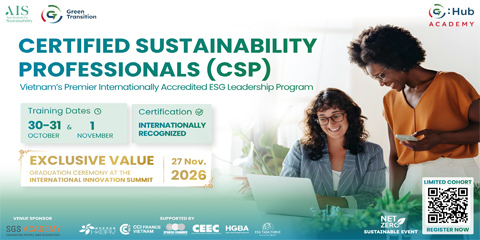
HCMC | CERTIFIED SUSTAINABILITY PROFESSIONAL (CSP) TRAINING | REGISTRATION OPEN
As sustainability becomes deeply embedded in corporate strategy and supply-chain operations across Vietnam, Hong Kong Business Association Vietnam is pleased to endorse the upcoming Certified Sustainability Professional (CSP) training program by the Asia Institute for Sustainability (AIS) - a premier internationally recognized ESG credential in Vietnam.
VIETNAM ECONOMY INVESTMENT
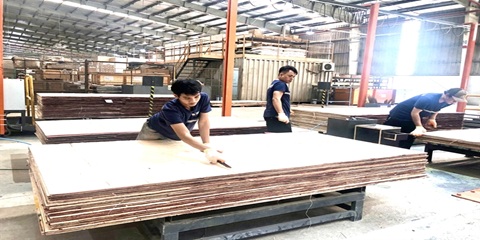
HCM CITY SAYS HOW IT PLANS TO ACHIEVE 10-11% ANNUAL EXPORT GROWTH FOR REST OF DECADE
The southern economic hub aims to strengthen its role as the country’s largest import-export centre while developing into a regional transhipment centre in Southeast Asia, supported by green and digital transformation and a circular economy. HCM City has outlined measures to expand production capacity, cut logistics costs, diversify export markets, and help businesses meet increasingly stringent international standards as it targets average annual export growth of 10-11 per cent through 2030.
VIETNAM ECONOMY INVESTMENT
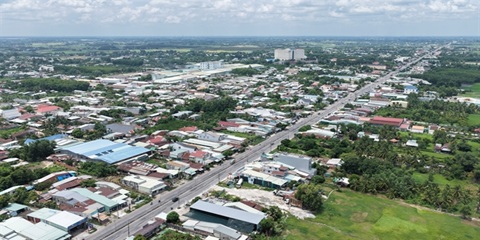
HCM CITY LEADS ECONOMIC RESTRUCTURING IN SOUTHEAST REGION
According to Associate Professor, Dr Vũ Tuấn Hưng, director of the Institute of Social Sciences of the Southern Region, the Southeast is a strategically important socio-economic space in Việt Nam’s development given its advantages in location, industry, trade, services, logistics, science and technology, urbanisation and human resources.
TECHNOLOGY
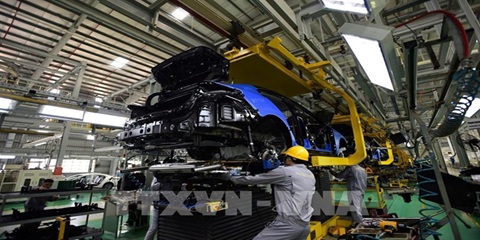
DIGITAL TRANSFORMATION TURNED INTO PRACTICAL TOOLS FOR PEOPLE, BUSINESSES
Việt Nam is moving its digital transformation agenda beyond policy frameworks and individual technology platforms towards practical applications that address everyday needs, as authorities seek measurable outcomes from science, technology and innovation. Under Politburo Resolution No. 57-NQ/TW issued on December 22, 2024, the implementation is increasingly shifting from simply completing assigned tasks towards developing concrete products and services for citizens and businesses.
TECHNOLOGY
APPLYING TECHNOLOGY FOR ECONOMIC TRANSFORMATION
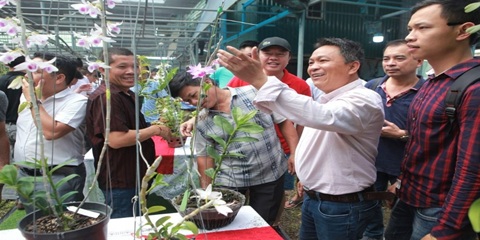
Having completed its new rural development program, Hanoi is shifting its focus toward improving development quality and building smart, sustainable rural areas. The transformation of Dong La orchid-growing village in An Khanh, a western commune of Hanoi, shows how digital technology is becoming a driver of production, market expansion, and higher incomes for local residents.
MEMBER CORNER / PROMOTIONS
VIGLACERA HONORED AS THE "LEADING GREEN INDUSTRIAL REAL ESTATE DEVELOPER 2026"
Organized by the Vietnam Investment Review, this prestigious awards program recognizes industry pioneers advancing eco-industrial parks, clean energy transition, and rigorous ESG standards. Outperforming competitors through a rigorous evaluation, Viglacera Corporation – JSC proudly ranked among the Top 5 highest-positioned enterprises in the Leading Green Industrial Real Estate Developers 2026 category, reinforcing its premier position in Vietnam’s industrial real estate sector.
Events Sponsors






















