Want to be in the loop?
subscribe to
our notification
Business News
LOGISTICS KEY FOR AVIATION SECTOR
Việt Nam’s aviation sector must use advanced technologies such as e-commerce for its management, operations and business as it is a trend in global aviation transport, experts said in HCM City.
Speaking at an international conference and exhibition on Air Freight Logistics Vietnam, Stanlay Lim, International Air Transportation Association (IATA)’s regional President for Asia Pacific, on Saturday said that new technology would help reduce the cost of logistics, baodientu.vn reported.
According to the IATA, Việt Nam’s aviation market is the seventh fastest-growing in the world from 2013 to 2017, with an annual expected growth rate of 6.9 per cent and 6.6 per cent for international passengers and freight, respectively. By the end of 2016, the domestic aviation market had attracted 50 foreign airlines from 25 countries to operate flights in the country.
Participants at the conference agreed that in the past few years, the Vietnamese Government had devoted a large budget and Official Development Assistance (ODA) funds for improving traffic infrastructure in order to create favourable conditions for the development of goods transport and logistics services. The airport system had also been upgraded and expanded, with modern loading facilities.
The Government’s macro policies, as well as reforms in sectors such as transport, customs and taxation have been paving the way for the development of the logistics sector in general, and the aviation sector in particular.
Đỗ Xuân Quang, the vice-chairman of Vietnam Logistics Business Association (VLA), said export had increased rapidly in recent years and had triggered a greater need for aviation transport.
Meanwhile, the volume of goods transported by domestic airlines has also grown. In 2016, of the 1.4 million tonnes of goods transported by airlines, domestic transport occupied around one million tonnes. Several big clients such as telecom group Viettel, crossed 60 tonnes a week, while the Vietnam Posts and Telecommunications Group was at nearly 100 tonnes per week.
Quang, who is also general director of Vietjet Cargo, said the aviation sector had not developed in accordance with its potential. He pointed out that there was no association to create a logistics supply chain. The connection between production and consumption and among transport vehicles were also weak links in the Vietnamese aviation market.
In addition, the domestic aviation sector is facing challenges caused by the global economic crisis, from which big markets such as the US and EU have not recovered fully. The fuel price is still high.
Experts said that though domestic airlines were posting a fast growth rate, they were still not capable of competing with international airlines firms on big orders.
Huseyin Ceyhan, Turkish Airlines’ Asia-Pacific regional director, said the logistics chain would not only increase corporate profits, but it would also help aviation businesses to compete with other firms in the region and across the world.
At the conference, participants agreed that to create a global logistics chain, the Government has to set up an association and joint venture among businesses as it would help meet the increasing demand of passengers and reduce cost and transport time, among other things.
The conference was held jointly by VLA and the Civil Aviation Authority of Việt Nam and saw the participation of representatives from ministries of transport and industry and trade, general department of customs, as well as 20 speakers from other sectors.
Source: VIR
Related News
MEMBER CORNER / PROMOTIONS
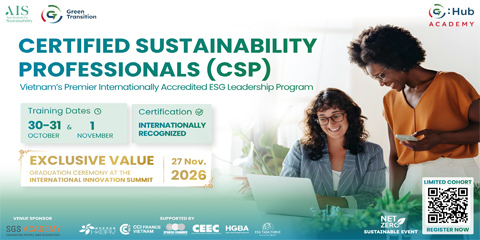
HCMC | CERTIFIED SUSTAINABILITY PROFESSIONAL (CSP) TRAINING | REGISTRATION OPEN
As sustainability becomes deeply embedded in corporate strategy and supply-chain operations across Vietnam, Hong Kong Business Association Vietnam is pleased to endorse the upcoming Certified Sustainability Professional (CSP) training program by the Asia Institute for Sustainability (AIS) - a premier internationally recognized ESG credential in Vietnam.
VIETNAM ECONOMY INVESTMENT
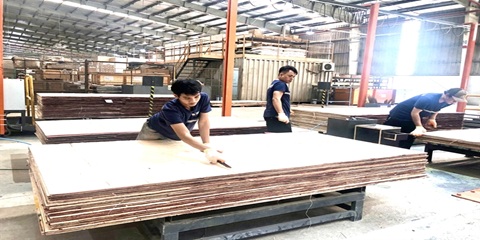
HCM CITY SAYS HOW IT PLANS TO ACHIEVE 10-11% ANNUAL EXPORT GROWTH FOR REST OF DECADE
The southern economic hub aims to strengthen its role as the country’s largest import-export centre while developing into a regional transhipment centre in Southeast Asia, supported by green and digital transformation and a circular economy. HCM City has outlined measures to expand production capacity, cut logistics costs, diversify export markets, and help businesses meet increasingly stringent international standards as it targets average annual export growth of 10-11 per cent through 2030.
VIETNAM ECONOMY INVESTMENT
HCM CITY LEADS ECONOMIC RESTRUCTURING IN SOUTHEAST REGION
According to Associate Professor, Dr Vũ Tuấn Hưng, director of the Institute of Social Sciences of the Southern Region, the Southeast is a strategically important socio-economic space in Việt Nam’s development given its advantages in location, industry, trade, services, logistics, science and technology, urbanisation and human resources.
TECHNOLOGY
DIGITAL TRANSFORMATION TURNED INTO PRACTICAL TOOLS FOR PEOPLE, BUSINESSES
Việt Nam is moving its digital transformation agenda beyond policy frameworks and individual technology platforms towards practical applications that address everyday needs, as authorities seek measurable outcomes from science, technology and innovation. Under Politburo Resolution No. 57-NQ/TW issued on December 22, 2024, the implementation is increasingly shifting from simply completing assigned tasks towards developing concrete products and services for citizens and businesses.
TECHNOLOGY
APPLYING TECHNOLOGY FOR ECONOMIC TRANSFORMATION
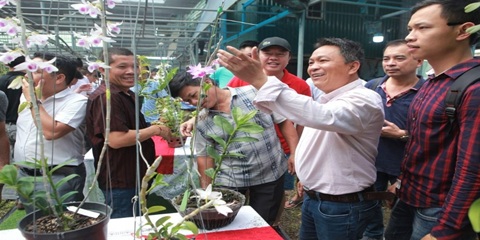
Having completed its new rural development program, Hanoi is shifting its focus toward improving development quality and building smart, sustainable rural areas. The transformation of Dong La orchid-growing village in An Khanh, a western commune of Hanoi, shows how digital technology is becoming a driver of production, market expansion, and higher incomes for local residents.

MEMBER CORNER / PROMOTIONS
VIGLACERA HONORED AS THE "LEADING GREEN INDUSTRIAL REAL ESTATE DEVELOPER 2026"
Organized by the Vietnam Investment Review, this prestigious awards program recognizes industry pioneers advancing eco-industrial parks, clean energy transition, and rigorous ESG standards. Outperforming competitors through a rigorous evaluation, Viglacera Corporation – JSC proudly ranked among the Top 5 highest-positioned enterprises in the Leading Green Industrial Real Estate Developers 2026 category, reinforcing its premier position in Vietnam’s industrial real estate sector.
Events Sponsors






















