Want to be in the loop?
subscribe to
our notification
Business News
LONG-TERM PROPERTY PREFERRED, NOT HIT-AND-RUN
The COVID-19 pandemic not only changed all plans of investors but also made investors in Vietnam more cautious. The long-term investment trend is clearly taking shape in the market. That is also the reason why investor confidence is still quite strong despite the complicated development of COVID-19 pandemic.
According to some experts, the COVID-19 pandemic is exerting a strong impact on property investment trends in Vietnam. It is quite clear that the market is now not for the so-called hit-and-run strategy but a race for long-term investors. This means that real estate is still a money-spinning investment option for investors with medium- and long-term approach.
Sharing with the press recently, real estate expert Tran Khanh Quang said, this is the time for long-term investors to pick up true products. Projects eyeing short-term needs are gradually being replaced by long-term investment projects, both in scale and quality, to meet end-buyer needs. This is an opportunity for long-term investors because they always aim for a profit in 3-5 years, not in a short time.
“After the pandemic, the market will certainly face certain difficulties. This once again helps long-term investors opt for a clean and reputable product with less competition. Interest rates on housing loans have declined while investors have introduced reasonable pricing policies and product incentive packages, which also bring many favorable opportunities for investors and customers with real housing needs,” he said.
Sharing the same point of view, Mr. Mai Duc Toan, Sales and Marketing Director of CNT Group, said that many investors do not hesitate to invest their long-term money in real estate. When the land frenzy is weakening, investors should opt for medium- and long-term investment.
“We shouldn't expect much from hit-and-run investment now and in the next few years because Vietnam's real estate market has established a new price level on a large scale in the past five years. However, this does not mean there is no room for short-term investments. If well calculated, investors can still “buy fast, sell fast for profit” but, I think, the chance of success will be lower than years ago," he emphasized.
After the land frenzy and COVID-19 outbreak, investors should comprehensively reassess the market and arrange suitable investment portfolios. In addition, most investors will be more cautious about planning information, which is a necessary lesson for the real estate market to develop in a more transparent and sustainable direction. Accordingly, medium- and long-term investments will bring many investment opportunities for investors.
Speaking to the press earlier, Mr. Dinh Minh Tuan, HCM City and Binh Duong Branch Director of Batdongsan.com.vn, said that capital inflows will be still focused on the main investment channels - securities and property - in 2021. Given very low deposit rates at banks, weakening appeal of non-yield gold and unattractive corporate bonds, the stock market is a shelter of choice for now. However, for medium and long-term investors, real estate is the most preferred playground. The Vietnamese investor sentiment is always optimistic about property price hikes because the population is kept expanding while the land cannot be expanded.
In this context, many experts advised this to investors when they entered the market. For the time being, investors need to be alert in the market. If buying real estate for a sure profit, it is advisable to buy more. If buying for a belief in a higher price in the future, it is simply a game of gambling because others may not share the same belief. And, the belief is placed on an overpriced property, it is really high risk.
Investors should also note a number of factors that need to be avoided during and after this sensitive time like herd-driven investment, beyond-financial-capacity investment or one-for-all investment. In particular, excessive financial leverage should be avoided because pressures on principal and interest payment will be very high (given the loan accounting for 50 - 80% of the value). If liquidity is poor, investors will lose their expected profit over time or even sell off their property at low prices to repay loans if they run out of cash.
Besides, to ensure a safe capital flow during this period, investors should look to well-reputed investors and projects/products with transparent legality.
“Given the ongoing pandemic, investors should be careful about each transaction decision. Currently, the cash flows into real estate sourced from remittances, savings and business are slower than at the start of the year. Only when the COVID-19 pandemic ends and signs of economic recovery become clearer, can we be optimistic about the health of the real estate market. The recovery of the real estate market depends on pandemic evolution,” Toan concluded.
Source: VCCI
Related News

INFRASTRUCTURE / CONSTRUCTION / LOGISTIC / PORT
VIỆT NAM-CAMBODIA TRADE GATHERS PACE TOWARDS $20 BILLION TARGET
Trade between Việt Nam and Cambodia continues to grow, remaining a bright spot and a key pillar of bilateral cooperation as the two countries aim to raise two-way trade to US$20 billion in the coming years. After setting a record of more than $11.3 billion last year, bilateral trade reached about $8.7 billion in the first eight months of this year, up 8.3 per cent year on year.
TECHNOLOGY
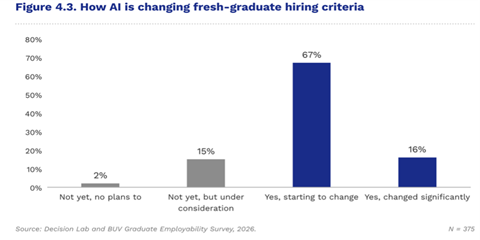
AI BEGINNING TO RESHAPE RECRUITMENT CRITERIA
Digital literacy is the only capability area in which fresh graduates meet employers’ expectations, according to a new report. Yet, it is also the standard rising fastest, as businesses increasingly expect new hires to use AI effectively in the workplace. Some 83 per cent of employers say AI has changed, or is beginning to change, their hiring criteria, while 94 per cent report higher expectations for digital and AI capabilities than they had two to three years ago.

INFRASTRUCTURE / CONSTRUCTION / LOGISTIC / PORT
ĐÀ NẴNG GREEN-LIGHTS US$105 MILLION THAI DEVELOPMENT DEAL
The central city has approved an investment proposal by Thailand’s WHA Group to develop infrastructure for the 400ha WHA Đà Nẵng Industrial Park project on two communes of Thăng Bình and Đồng Dương, with an investment of more than VNĐ2.7 trillion (US$105 million). The city said it approved WHA Industrial Development International's status as an investor in the project, which is expected to take place between 2027 and 2034.

VIETNAM ECONOMY INVESTMENT
MOBILE PHONE EXPORTS RISE 20% TO $51.8 BILLION IN FIRST NINE MONTHS
Exports of mobile phones and components rose 20 per cent year-on-year to nearly US$51.8 billion in the first nine months of 2026, with China, the US and Republic of Korea accounting for more than half of the total. Shipments to the three markets reached a combined $26.18 billion, or 50.6 per cent of total exports of the product group during the period, according to data from the Vietnam Department of Customs under the Ministry of Finance.

VIETNAM ECONOMY INVESTMENT
FRUIT AND VEGETABLE EXPORTS POISED TO HIT $10 BILLION IN 2026
Fruit and vegetable exports are on track to reach nearly US$10 billion in 2026, after rising 19.9 per cent year on year to nearly US$7.4 billion in the first nine months, driven by strong seasonal demand and abundant tropical fruit supplies. The Ministry of Agriculture and Environment said the growth reflected stronger international demand for fresh produce and processed agricultural products.
GARMENT / TEXTILE
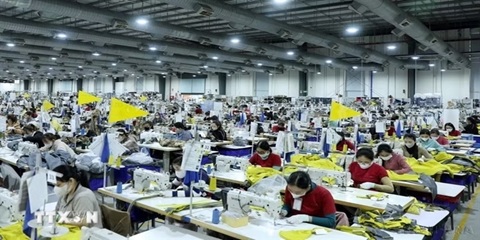
TEXTILE EXPORTS FACE DUAL CHALLENGES OF SUSTAINING ORDERS AND BOOSTING EFFICIENCY AMID GROWING COMPETITION
Data shows that the textile and garment sector maintained its growth momentum in the first nine months of this year. The industry's total export turnover reached an estimated US$35.721 billion in the first nine months of this year, up 3.3 per cent year-on-year. Despite posting encouraging export figures, Vietnamese textile and garment enterprises continue to navigate unpredictable market variables.
Events Sponsors






















