Want to be in the loop?
subscribe to
our notification
Business News
LOW COSTS ENTICE DATA CENTRE INVESTORS TO VIETNAM
Vietnam continues to be recognised as an attractive destination for data centre investors.
According to the Asia Pacific Data Centre Construction Cost Guide 2025 released by Cushman & Wakefield released on February 4, which covers 90 data centres in 26 cities, Vietnam boasts some of the lowest construction costs in the Asia-Pacific region, second only to Taiwan, with from $5.5-8.5 million per megawatt.
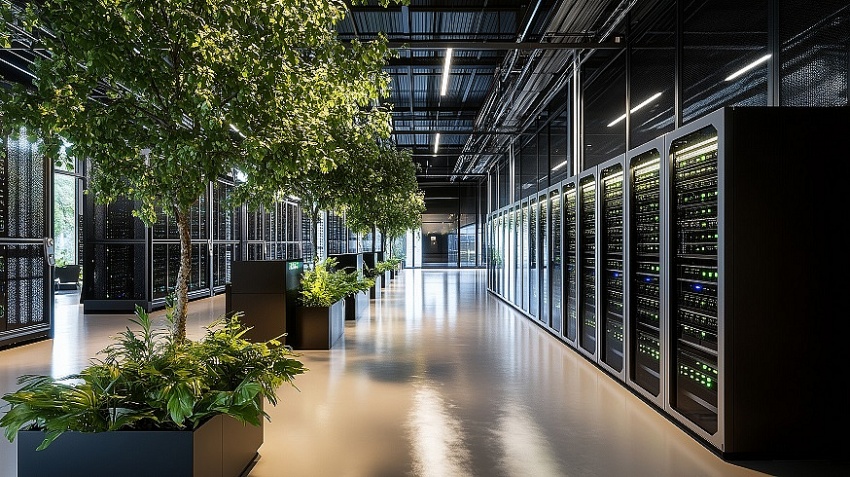
The guide reveals that the average construction cost for a mid-specification standard data centre in Vietnam is around $6,935 per MW, an increase of 3.5 per cent on-year.
Electrical systems account for the greatest share of this cost (26 per cent), followed by mechanical systems and interior fit-out/finishes at 13 per cent each.
Other expenses include cooling systems, fire suppression and life safety systems, security systems, furniture and fixtures, and IT racks, equipment, and cabling.
Land represents only 5 per cent of the total, with the price for mid cost-category suburban land with available infrastructure averaging $209 per square metre across both Ho Chi Minh City and Hanoi.
Commenting on this issue, Bui Trang, country head of Cushman & Wakefield Vietnam, said that compared to mature markets, the data centre market in Vietnam is still in its infancy with a more 'modest' growth rate.
“However, with competitive construction costs and land prices, along with a prime geographical location, Vietnam has great potential to become a data centre market, as evidenced by the level of interest from international operators. Although current barriers have limited actual investment volumes, increasing transparency, openness to foreign investment, and national regulatory reforms will create more opportunities for international investors and drive industry growth," said Trang.
Leading companies such as Apple, Intel, Canon, Samsung, LG, LEGO, Airbus, and other global organisations have begun working with Vietnamese partners to establish digital transformation strategies as part of a comprehensive approach to global business.
The Vietnamese government has also announced the National Data Centre to securely store government data as it advances towards robust digitalisation in the public sector. These efforts will drive the growth of booming businesses and expand the capacity of data centres in Vietnam.
According to Cushman & Wakefield's 2024 data, Vietnam currently has 51MW of operational data centre capacity, 11MW under construction, and an additional 28 MW planned within the next five to seven years.
Ho Chi Minh City currently accounts for half of the operational capacity in Vietnam, which is dominated by local telecom providers who have struggled to meet the demand in Vietnam's domestic market.
However, the landscape is poised to change since the Vietnamese government announced the Law on Telecommunications that eases processes around data localisation and cancels foreign ownership caps for data and cloud providers to allow for foreign ownership in the country.
These exemptions from the usual market entry constraints in Vietnam will entice more international operators to enter the market: STT Telemedia Global Data Centres have announced a joint venture with VNG Corporation, Alibaba and South Korean industrial conglomerate Hyosung Corporation have both also recently announced plans or expressed interest in developing data centres in Ho Chi Minh City.
Viettel has announced that it has collaborated with Singtel to develop a submarine cable connecting Vietnam to Singapore and Southeast Asian neighbours Cambodia, Thailand, and Malaysia.
Viettel is also planning for at least two Vietnamese-owned cables to be operational by 2030, prioritising shorter routes to other Asian digital hubs to support the government in building and developing digital infrastructure in Vietnam. As such advances take place, Vietnam will become a more attractive market for data centre investment.
However, according to Trang, the data centre market in Vietnam still faces many challenges. One of the biggest challenges is the ability to provide stable and robust power, which is crucial for maintaining data centre operations.
“In Vietnam, frequent power outages occur as the national grid struggles to meet peak demand. The government is working to add about 6.6GW of power capacity, but this could take years to complete,” Trang said.
Additionally, complex legal regulations and administrative procedures are also major barriers.
“Obtaining the necessary permits and navigating the broader legal landscape in Vietnam can be challenging. Finally, the skilled labour force in the construction and operation of data centres is still limited. This is especially true in emerging markets, where the workforce capable of building large-scale industrial projects requiring high reliability is still relatively small,” she added.
Source: VIR
Related News

CHARITY / EXHIBITION / OTHER EVENTS
INVESTMENT OPPORTUNITIES IN CA MAU PROVINCE: 96 PROJECTS AND 20 STRATEGIC PROJECTS
We are pleased to share with you information on investment projects currently seeking investors in Ca Mau Province. Should your esteemed company or association be interested, we kindly invite you to review the project information and complete the registration form via the links provided. The Ho Chi Minh City Investment and Trade Promotion Centre (ITPC) will consolidate the expressions of interest and facilitate connections with the leadership of Ca Mau Province at a meeting tentatively scheduled for 13 November 2026 in Ho Chi Minh City.

MEMBER CORNER / PROMOTIONS
BẰNG KIỀU LIVESHOW - A SYMPHONY OF LOVE UNDER THE GOLDEN GLOW
A masterclass in live music that takes the audience on a soulful journey through immortal love songs, guided by the peerless artistry and emotive storytelling of renowned singer Bằng Kiều. The highlight of the night is his seamless musical chemistry with special guest Triệu Hồng Ngọc, promising passionate and deeply resonant duets inside the magnificent Grand Ballroom.

INFRASTRUCTURE / CONSTRUCTION / LOGISTIC / PORT
ĐÀ NẴNG GREEN-LIGHTS US$105 MILLION THAI DEVELOPMENT DEAL
The central city has approved an investment proposal by Thailand’s WHA Group to develop infrastructure for the 400ha WHA Đà Nẵng Industrial Park project on two communes of Thăng Bình and Đồng Dương, with an investment of more than VNĐ2.7 trillion (US$105 million). The city said it approved WHA Industrial Development International's status as an investor in the project, which is expected to take place between 2027 and 2034.

VIETNAM ECONOMY INVESTMENT
MOBILE PHONE EXPORTS RISE 20% TO $51.8 BILLION IN FIRST NINE MONTHS
Exports of mobile phones and components rose 20 per cent year-on-year to nearly US$51.8 billion in the first nine months of 2026, with China, the US and Republic of Korea accounting for more than half of the total. Shipments to the three markets reached a combined $26.18 billion, or 50.6 per cent of total exports of the product group during the period, according to data from the Vietnam Department of Customs under the Ministry of Finance.

INFRASTRUCTURE / CONSTRUCTION / LOGISTIC / PORT
VIỆT NAM-CAMBODIA TRADE GATHERS PACE TOWARDS $20 BILLION TARGET
Trade between Việt Nam and Cambodia continues to grow, remaining a bright spot and a key pillar of bilateral cooperation as the two countries aim to raise two-way trade to US$20 billion in the coming years. After setting a record of more than $11.3 billion last year, bilateral trade reached about $8.7 billion in the first eight months of this year, up 8.3 per cent year on year.

VIETNAM ECONOMY INVESTMENT
FRUIT AND VEGETABLE EXPORTS POISED TO HIT $10 BILLION IN 2026
Fruit and vegetable exports are on track to reach nearly US$10 billion in 2026, after rising 19.9 per cent year on year to nearly US$7.4 billion in the first nine months, driven by strong seasonal demand and abundant tropical fruit supplies. The Ministry of Agriculture and Environment said the growth reflected stronger international demand for fresh produce and processed agricultural products.
Events Sponsors






















