Want to be in the loop?
subscribe to
our notification
Business News
LOW-VALUE IMPORTS NO LONGER EXEMPT FROM VAT
Effective February 18, 2025, low-value imported goods (under VND1 million) sent via express delivery services is longer exempt from value-added tax (VAT), as stipulated in Decision 01/2025 issued by the Prime Minister.
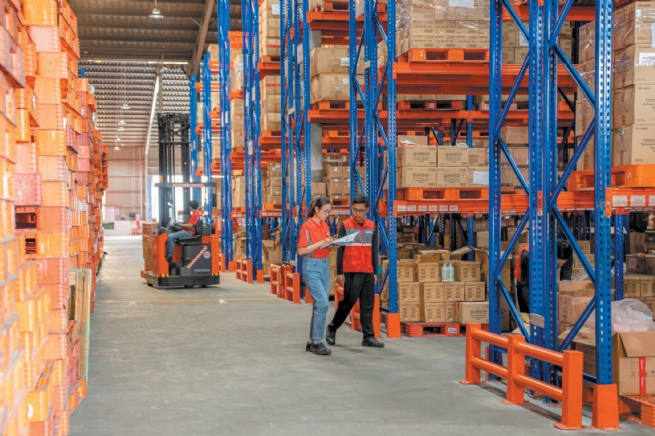
Vietnam has removed the VAT exemption for low-value imported goods (under VND 1 million) sent via express delivery
Expanding the tax base in line with international trends
This policy change follows the rapid expansion of e-commerce, which has led to a significant rise in low-value imported goods.
According to the Department of Vietnam Customs, in 2023, the total value of such imports (under VND1 million) via express delivery services amounted to VND27.7 trillion. With a 10% VAT rate applied, the State budget stands to gain an estimated VND2.7 trillion annually.
According to Resolution 78 issued by the Prime Minister in 2010, Vietnam had granted tax exemptions under the 1973 Kyoto Convention to streamline customs procedures and facilitate international trade. However, data from the Department of Customs shows that between January and June 2024, the country recorded an average of US$1.3-1.9 billion in low-value cross-border goods exempt from taxes each month.
With such a substantial volume of tax-exempt goods, an average of US$500 million worth crosses the border daily. Meanwhile, domestic manufacturers are subject to standard taxes, creating a competitive imbalance between locally produced and imported goods. This lack of taxation not only undermines the competitiveness of domestic enterprises but also places many at risk of bankruptcy.
The Department of Customs said that taxation fosters fairness and aligns with ongoing tax reform efforts. It broadens the tax base, prevents revenue losses and reflects global trends. With the rise of digitalization and streamlined customs procedures, most countries have already eliminated VAT exemptions on low-value imports.
Global trend of eliminating VAT exemptions on low-value imports
The Customs Department said that Vietnam is following a global trend, as many countries have eliminated VAT exemptions on low-value imports. Since 2021, EU countries have removed VAT exemptions for shipments under €22, while the UK abolished VAT exemptions for imported goods valued at £135 or less as of January 1, 2021. Similarly, Australia has removed VAT exemptions for goods worth US$666 or less.
Likewise, Singapore removed VAT exemptions for low-value goods, particularly in e-commerce, starting January 1, 2023. To promote fair trade, Thailand has also implemented VAT on all imported goods, regardless of value, effective May 1, 2024. The elimination of VAT exemptions for low-value goods reflects a broader global trend toward tax fairness and revenue optimization.
Many economists argue that this policy fosters fair competition for domestic businesses, allowing them to adjust costs and compete more effectively with imported goods. For consumers, the tax impact is expected to be minimal, as sellers often maintain previous pricing even without VAT. In some cases, foreign businesses may absorb the tax when importing and selling, leading to a slight price increase but keeping overall costs within normal levels.
Implementing VAT on low-value imported goods presents challenges, particularly as the current customs declaration system and related processes were not originally designed for this tax collection. To address this, the Customs Department plans to handle customs procedures for express-delivered exports and imports via the Remote Customs Declaration System. However, upgrading the Vietnam Automated Cargo and Port Consolidated System (VNACCS) will take time, as it depends on investment capital availability.
The Customs Department is currently executing Contract 05092024/HDKT/CNTT-HITD, dated September 16, 2024, for the development of a customs clearance processing system to address potential issues with VNACCS/VCIS (Remote Customs Declaration System).
To ensure the effective implementation of Decision 01/2025/QD-TTg, which repeals Decision 78/2020/QD-TTg and takes effect on February 18, 2025, the General Customs Department plans to submit a proposal to the Ministry of Finance. This document will provide guidance to provincial and municipal customs departments and international express delivery service providers on compliance measures during the interim period before the support system becomes fully operational.
The Customs Department has prepared support resources to assist individuals and businesses facing difficulties in paying taxes on low-value imported goods sent via express delivery services. Support is available through the Support Center at 19009299 (extension 2) and via email at bophanhotrotchq@customs.gov.vn.
Additionally, the department will promptly publish updates on the implementation of Decision 01/2025/QD-TTg on its electronic information portal. It will also organize meetings with express delivery service providers to guide them on VAT collection procedures, effective February 18, 2025.
Source: VCCI
Related News
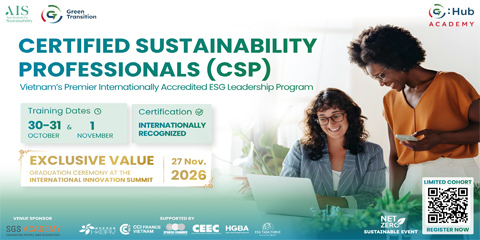
MEMBER CORNER / PROMOTIONS
HCMC | CERTIFIED SUSTAINABILITY PROFESSIONAL (CSP) TRAINING | REGISTRATION OPEN
As sustainability becomes deeply embedded in corporate strategy and supply-chain operations across Vietnam, Hong Kong Business Association Vietnam is pleased to endorse the upcoming Certified Sustainability Professional (CSP) training program by the Asia Institute for Sustainability (AIS) - a premier internationally recognized ESG credential in Vietnam.
VIETNAM ECONOMY INVESTMENT
HCM CITY SAYS HOW IT PLANS TO ACHIEVE 10-11% ANNUAL EXPORT GROWTH FOR REST OF DECADE
The southern economic hub aims to strengthen its role as the country’s largest import-export centre while developing into a regional transhipment centre in Southeast Asia, supported by green and digital transformation and a circular economy. HCM City has outlined measures to expand production capacity, cut logistics costs, diversify export markets, and help businesses meet increasingly stringent international standards as it targets average annual export growth of 10-11 per cent through 2030.
VIETNAM ECONOMY INVESTMENT
HCM CITY LEADS ECONOMIC RESTRUCTURING IN SOUTHEAST REGION
According to Associate Professor, Dr Vũ Tuấn Hưng, director of the Institute of Social Sciences of the Southern Region, the Southeast is a strategically important socio-economic space in Việt Nam’s development given its advantages in location, industry, trade, services, logistics, science and technology, urbanisation and human resources.
TECHNOLOGY
DIGITAL TRANSFORMATION TURNED INTO PRACTICAL TOOLS FOR PEOPLE, BUSINESSES
Việt Nam is moving its digital transformation agenda beyond policy frameworks and individual technology platforms towards practical applications that address everyday needs, as authorities seek measurable outcomes from science, technology and innovation. Under Politburo Resolution No. 57-NQ/TW issued on December 22, 2024, the implementation is increasingly shifting from simply completing assigned tasks towards developing concrete products and services for citizens and businesses.

TECHNOLOGY
APPLYING TECHNOLOGY FOR ECONOMIC TRANSFORMATION
Having completed its new rural development program, Hanoi is shifting its focus toward improving development quality and building smart, sustainable rural areas. The transformation of Dong La orchid-growing village in An Khanh, a western commune of Hanoi, shows how digital technology is becoming a driver of production, market expansion, and higher incomes for local residents.

MEMBER CORNER / PROMOTIONS
VIGLACERA HONORED AS THE "LEADING GREEN INDUSTRIAL REAL ESTATE DEVELOPER 2026"
Organized by the Vietnam Investment Review, this prestigious awards program recognizes industry pioneers advancing eco-industrial parks, clean energy transition, and rigorous ESG standards. Outperforming competitors through a rigorous evaluation, Viglacera Corporation – JSC proudly ranked among the Top 5 highest-positioned enterprises in the Leading Green Industrial Real Estate Developers 2026 category, reinforcing its premier position in Vietnam’s industrial real estate sector.
Events Sponsors






















