Want to be in the loop?
subscribe to
our notification
Business News
MAKING VIETNAM A REGIONAL LOGISTICS HUB
“Developing a healthy logistics service market, creating equal opportunities for enterprises of all economic sectors, and attracting domestic and foreign investment capital in accordance with Vietnamese law and international treaties to which Vietnam is a member etc.” is an objective of the Action Plan for Vietnam Logistics Service Competitiveness Improvement and Development to 2025 approved by the Prime Minister in Decision 200/QD-TTg dated February 14, 2017. This action plan is expected to create momentums for logistics companies in Vietnam already being at an advantage to make a progress.
According to the Ministry of Industry and Trade, Vietnam currently has about 1,300 active logistics companies, including foreign-invested firms, mainly engaged in forwarding, shipping, warehousing, seaport, stevedoring, distribution, agent, customs procedure, and integrated logistics services. Vietnam’s logistics services generate US$20-22 billion a year, accounting for 20.9 per cent of the country’s gross domestic product (GDP). According to the Logistics Performance Index (LPI) launched by the World Bank (WB), Vietnam ranked 64th out of 160 countries and fourth in the ASEAN region (after Singapore, Malaysia and Thailand). With an annual growth rate of 16 - 20 per cent, this is one of the most steady-growing sectors in Vietnam in recent years.
Nevertheless, statistics also showed that although local logistics firms account for more than per cent of the business community, with 72 per cent rated small and medium (VND4-6 billion of investment capital), they hold only 20 per cent of the logistics market share. Most of them are engaged in only small logistics segments as freight forwarding, warehousing, customs clearance, bulk consolidation and port services. Meanwhile, foreign logistics firms, in spite of just accounting for less than 20 per cent of the total, they occupy up to 80 per cent of the market share. Transnational shipping and high value-added operations are provided by these multinational corporations.
Not only losing much of the market share to multinational corporations, logistics costs in Vietnam also account for a high proportion of GDP, thus reducing the country’s economic competitiveness. This is also an important “bottleneck” that the domestic logistics industry must find a solution to tackle if they want to integrate deeply and effectively into the international economy.
It is clear that other countries in the region have specific policies and action plans to grasp opportunities from rising demands for high-quality global full package logistics services when commitments of the ASEAN Economic Community (AEC) and new-generation free trade agreements (FTAs) are implemented. For example, Japan, South Korea, Malaysia, Indonesia or Thailand have built logistics development plans and established specialised agencies to support the Government to develop logistics services. Thailand also developed the Logistics Development Strategy for the 2007 - 2011 period and then a similar one to 2020 with the goal of making Thailand a logistics service centre for Indochinese nations. Meanwhile, Vietnam has not had a comprehensive strategy for logistics services development. More importantly, the competitiveness of logistics companies in particular and logistics services of Vietnam in general is very weak.
In that context, on February 14, 2017, the Prime Minister issued Decision 200/QD-TTg approving the Action Plan on Vietnam Logistics Services Competitiveness Improvement and Development to 2025. The plan states that Vietnam will develop a healthy logistics service market, create equal opportunities for enterprises of all economic sectors, and attract domestic and foreign investment capital in accordance with Vietnamese law and international treaties to which Vietnam is a member etc. By the end of 2025, the share of logistics services to GDP will be 8 - 10 per cent. The sector will expand 15 - 20 per cent annually; the rate of outsourcing logistics will be 50 - 60 per cent; logistics costs will fall to 16 - 20 per cent of GDP; and its LPI will rank 50th or higher in the world. In addition, Vietnam will focus on attracting investment capital to develop logistics infrastructure, build regional and international logistics centres, improve the connectivity between Vietnam and other countries, and turn Vietnam into a logistics hub of the region. At the same time, it will form “leading” logistics service providers capable of competing on domestic and international markets, and increase supports for logistics service firms to develop professionally.
In order to realise these objectives, the plan also includes six main tasks: Perfecting logistics services policies and laws; completing logistics infrastructure; improving business capacity and service quality; developing logistics services market; training and raising awareness and quality of human resources; and others.
According to industry experts, Decision 200/QD-TTg is considered a breakthrough expected to bring new airflows to the development of logistics services in Vietnam in the coming time because this is the first time a decision is issued with a 60-task roadmap assigned to State agencies and localities. If carried out seriously, the Action Plan for Vietnam Logistics Service Competitiveness Improvement and Development to 2025 will not only help improve the competitiveness of domestic logistics services but also develop it sustainably and efficiently and make Vietnam an attractive destination for logistics enterprises around the globe.
Source: VCCI
Related News
MEMBER CORNER / PROMOTIONS
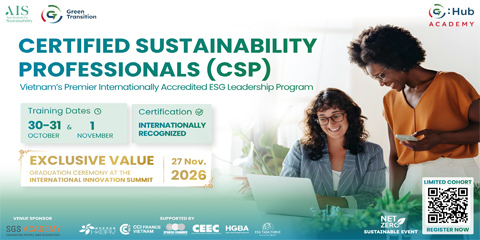
HCMC | CERTIFIED SUSTAINABILITY PROFESSIONAL (CSP) TRAINING | REGISTRATION OPEN
As sustainability becomes deeply embedded in corporate strategy and supply-chain operations across Vietnam, Hong Kong Business Association Vietnam is pleased to endorse the upcoming Certified Sustainability Professional (CSP) training program by the Asia Institute for Sustainability (AIS) - a premier internationally recognized ESG credential in Vietnam.
VIETNAM ECONOMY INVESTMENT
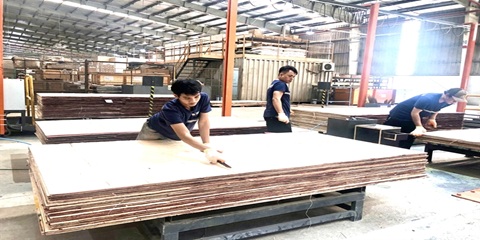
HCM CITY SAYS HOW IT PLANS TO ACHIEVE 10-11% ANNUAL EXPORT GROWTH FOR REST OF DECADE
The southern economic hub aims to strengthen its role as the country’s largest import-export centre while developing into a regional transhipment centre in Southeast Asia, supported by green and digital transformation and a circular economy. HCM City has outlined measures to expand production capacity, cut logistics costs, diversify export markets, and help businesses meet increasingly stringent international standards as it targets average annual export growth of 10-11 per cent through 2030.
VIETNAM ECONOMY INVESTMENT
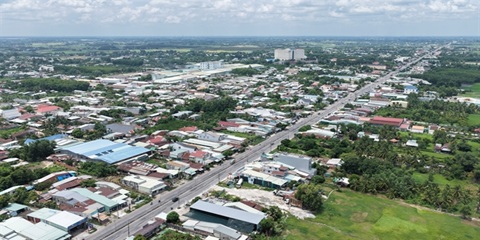
HCM CITY LEADS ECONOMIC RESTRUCTURING IN SOUTHEAST REGION
According to Associate Professor, Dr Vũ Tuấn Hưng, director of the Institute of Social Sciences of the Southern Region, the Southeast is a strategically important socio-economic space in Việt Nam’s development given its advantages in location, industry, trade, services, logistics, science and technology, urbanisation and human resources.
TECHNOLOGY
DIGITAL TRANSFORMATION TURNED INTO PRACTICAL TOOLS FOR PEOPLE, BUSINESSES
Việt Nam is moving its digital transformation agenda beyond policy frameworks and individual technology platforms towards practical applications that address everyday needs, as authorities seek measurable outcomes from science, technology and innovation. Under Politburo Resolution No. 57-NQ/TW issued on December 22, 2024, the implementation is increasingly shifting from simply completing assigned tasks towards developing concrete products and services for citizens and businesses.

TECHNOLOGY
APPLYING TECHNOLOGY FOR ECONOMIC TRANSFORMATION
Having completed its new rural development program, Hanoi is shifting its focus toward improving development quality and building smart, sustainable rural areas. The transformation of Dong La orchid-growing village in An Khanh, a western commune of Hanoi, shows how digital technology is becoming a driver of production, market expansion, and higher incomes for local residents.

MEMBER CORNER / PROMOTIONS
VIGLACERA HONORED AS THE "LEADING GREEN INDUSTRIAL REAL ESTATE DEVELOPER 2026"
Organized by the Vietnam Investment Review, this prestigious awards program recognizes industry pioneers advancing eco-industrial parks, clean energy transition, and rigorous ESG standards. Outperforming competitors through a rigorous evaluation, Viglacera Corporation – JSC proudly ranked among the Top 5 highest-positioned enterprises in the Leading Green Industrial Real Estate Developers 2026 category, reinforcing its premier position in Vietnam’s industrial real estate sector.
Events Sponsors






















