Want to be in the loop?
subscribe to
our notification
Business News
MARITIME TRANSPORT MAINTAINS STRONG GROWTH
The nation's maritime and inland waterway transport sectors have continued to demonstrate robust growth in the first four months of 2025, signaling a steady recovery in trade and logistics activities after a period of economic uncertainty.
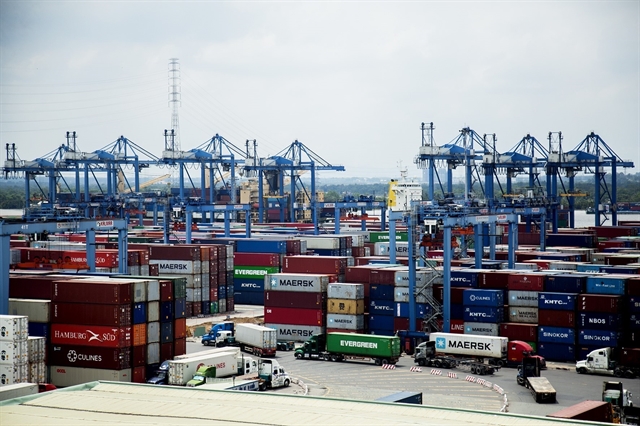
Tân Cảng Saigon - the most modern and largest port in Việt Nam. Total cargo via ports reached 370.5 million tonnes, up 11 per cent compared to the same period last year. VNA/VNS Photo
HÀ NỘI — The nation's maritime and inland waterway transport sectors have continued to demonstrate robust growth during the first four months of 2025, signalling a steady recovery in trade and logistics activities after a period of economic uncertainty.
According to the Vietnam Maritime and Waterway Administration (VIMAWA), under the Ministry of Construction, total cargo via ports reached 370.5 million tonnes, up 11 per cent compared to the same period last year.
Container cargo played a pivotal role in this upward trend, with an output of 10.52 million TEUs, an 11 per cent year-on-year increase. Both imports and exports posted impressive gains, each growing by 14 per cent to 3.29 million TEUs and 3.4 million TEUs, respectively. Domestic container cargo also rose by six per cent to 3.82 million TEUs.
The cargo structure at ports included 71 million tonnes of exports, up three per cent, and 95.3 million tonnes of imports, up nine per cent. Meanwhile, domestically transported cargo reached 202.9 million tonnes, marking a strong 14 per cent increase. Transit goods handled at ports totalled 1.44 million tonnes.
These figures highlight the resurgence in both international trade and domestic economic activities.
Localities that recorded notable growth in total cargo via ports included HCM City (almost 13 per cent), Vũng Tàu (9 per cent) and Hải Phòng (5.5 per cent).
Other provinces also saw impressive growth, including Quảng Ngãi (33.6 per cent), Cần Thơ (25 per cent), Đồng Nai (19 per cent), Nghệ An (15 per cent) and Bình Thuận (11 per cent).
However, some areas experienced a decline in cargo volumes, including Thừa Thiên Huế, An Giang, Hà Tĩnh and Thái Bình. Notably, Đà Nẵng saw a 5.9 per cent decrease.
The inland waterway port system also contributed to the positive performance. The northern region saw a 33 per cent increase in total cargo volume, reaching nearly 32 million tonnes.
The southern region posted growth of nearly 10 per cent in general and experienced a remarkable 46 per cent increase in container volume at ports.
In contrast, the central region faced a downturn, with cargo volume down eight per cent and container volume via ports plummeting by 78 per cent, suggesting continued weakness in transportation demand in that region.
As of April 2025, more than 17,000 foreign vessels had passed through Việt Nam’s seaport system—a seven per cent increase year-over-year.
Domestic ship traffic was even more dynamic, with nearly 19,800 vessels recorded, a 17 per cent increase.
VIMAWA projects that cargo via ports will reach 464 million tonnes by the end of May, a 13 per cent increase year-on-year.
Key projections include 254 million tonnes of domestic cargo, up 21 per cent, 89.6 million tonnes of exports, 119 million tonnes of imports, up 7 per cent, and 13.23 million TEUs of container cargo, up 13 per cent. — VNS
Source: VNS
Related News

MEMBER CORNER / PROMOTIONS
HCMC | CERTIFIED SUSTAINABILITY PROFESSIONAL (CSP) TRAINING | REGISTRATION OPEN
As sustainability becomes deeply embedded in corporate strategy and supply-chain operations across Vietnam, Hong Kong Business Association Vietnam is pleased to endorse the upcoming Certified Sustainability Professional (CSP) training program by the Asia Institute for Sustainability (AIS) - a premier internationally recognized ESG credential in Vietnam.
VIETNAM ECONOMY INVESTMENT
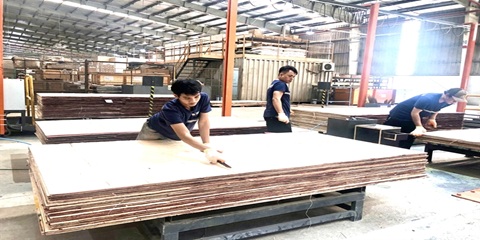
HCM CITY SAYS HOW IT PLANS TO ACHIEVE 10-11% ANNUAL EXPORT GROWTH FOR REST OF DECADE
The southern economic hub aims to strengthen its role as the country’s largest import-export centre while developing into a regional transhipment centre in Southeast Asia, supported by green and digital transformation and a circular economy. HCM City has outlined measures to expand production capacity, cut logistics costs, diversify export markets, and help businesses meet increasingly stringent international standards as it targets average annual export growth of 10-11 per cent through 2030.
VIETNAM ECONOMY INVESTMENT
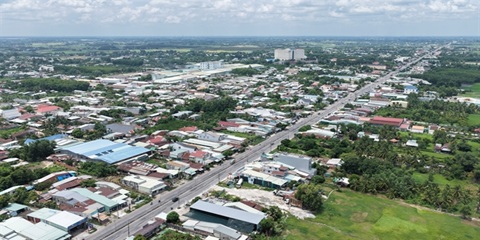
HCM CITY LEADS ECONOMIC RESTRUCTURING IN SOUTHEAST REGION
According to Associate Professor, Dr Vũ Tuấn Hưng, director of the Institute of Social Sciences of the Southern Region, the Southeast is a strategically important socio-economic space in Việt Nam’s development given its advantages in location, industry, trade, services, logistics, science and technology, urbanisation and human resources.
TECHNOLOGY
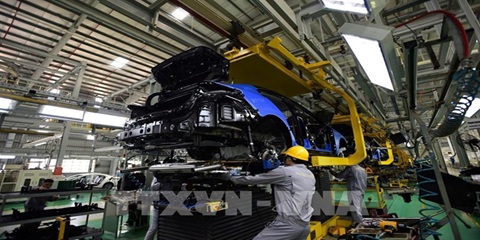
DIGITAL TRANSFORMATION TURNED INTO PRACTICAL TOOLS FOR PEOPLE, BUSINESSES
Việt Nam is moving its digital transformation agenda beyond policy frameworks and individual technology platforms towards practical applications that address everyday needs, as authorities seek measurable outcomes from science, technology and innovation. Under Politburo Resolution No. 57-NQ/TW issued on December 22, 2024, the implementation is increasingly shifting from simply completing assigned tasks towards developing concrete products and services for citizens and businesses.
TECHNOLOGY
APPLYING TECHNOLOGY FOR ECONOMIC TRANSFORMATION
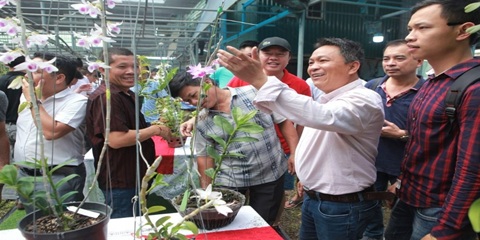
Having completed its new rural development program, Hanoi is shifting its focus toward improving development quality and building smart, sustainable rural areas. The transformation of Dong La orchid-growing village in An Khanh, a western commune of Hanoi, shows how digital technology is becoming a driver of production, market expansion, and higher incomes for local residents.
MEMBER CORNER / PROMOTIONS
VIGLACERA HONORED AS THE "LEADING GREEN INDUSTRIAL REAL ESTATE DEVELOPER 2026"
Organized by the Vietnam Investment Review, this prestigious awards program recognizes industry pioneers advancing eco-industrial parks, clean energy transition, and rigorous ESG standards. Outperforming competitors through a rigorous evaluation, Viglacera Corporation – JSC proudly ranked among the Top 5 highest-positioned enterprises in the Leading Green Industrial Real Estate Developers 2026 category, reinforcing its premier position in Vietnam’s industrial real estate sector.
Events Sponsors






















