Want to be in the loop?
subscribe to
our notification
Business News
MEKONG DELTA NEEDS $4B TO IMPROVE INFRASTRUCTURE TO MITIGATE CLIMATE CHANGE
The Cửu Long (Mekong) Delta needs more than VNĐ94.3 trillion (nearly US$4 billion) to improve its road infrastructure in order to boost its inter-provincial connectivity while mitigating the impacts of climate change.
Of the figure, foreign loans would be more than $2.8 billion and the rest (reciprocal capital) from the State budget.
The region needs to invest in 16 projects to build coastal roads and freshwater reservoirs to improve water storage and mitigate coastal erosion, among other goals.
The proposal was made by the ministries of Transport and Agriculture and Rural Development and 13 localities (including 12 provinces and Cần Thơ City) at the first meeting of the Steering Committee for Sustainable Development Projects in the Mekong Delta to respond to climate change organised in Cần Thơ last weekend.
The projects include one which requires large investment such as the 415-km long coastal road system passing through seven provinces: Tiền Giang, Bến Tre, Trà Vinh, Sóc Trăng, Bạc Liêu, Cà Mau and Kiên Giang with a total investment of up to VNĐ43 trillion.
Other projects will build Măng Thít river embankment (second phase) costing more than VNĐ4.15 trillion in Vĩnh Long; expand the 37-km National Highway 61C for VNĐ3.9 trillion in Hậu Giang; and build roads in the southern part of Tiền (Front) River for VNĐ4.26 trillion in Đồng Tháp.
Another project will build freshwater reservoirs and irrigation infrastructure in the Long Xuyên Quadrangle worth more than VNĐ2.66 trillion in An Giang.
Cần Thơ City authorities want to invest nearly VNĐ9.8 trillion in expanding National Highway 61C (by 10.2 km), building the 22.5-km Ô Môn - Thới Lai - Giồng Riềng connecting road system, and building Ô Môn bridge across the Hậu (Rear) River to connect it with Đồng Tháp Province.
In addition, the Ministry of Transport has proposed upgrading 46km of National Highway 53, 77km of National Highway 62, and 142km of Nam Sông Hậu road, with a total investment of nearly VNĐ7.16 trillion.
The Ministry of Agriculture and Rural Development has proposed developing three projects with a total investment of nearly VNĐ6.62 trillion.
Those include projects to renovate the canal system to transfer water from Hậu River to Cà Mau peninsula; renovate the inter-provincial canal system between Tiền River and Hậu River; and build the Bảo Định - Gò Công - Tân Trụ irrigation system (in Long An Province).
The Ministry of Planning and Investment has proposed the Government allocate 90 per cent of the investment needed to implement those projects. The rest (10 per cent) will be sourced from loans.
The projects are part of a Government master plan for the region (published last June) to respond to global warming by 2050.
The Mekong Delta, which is the country’s largest agricultural production hub, accounts for 12 per cent of the country’s total area and 19 per cent of total population.
Located on trade routes with ASEAN countries and the Greater Mekong sub-region, the region has a dense network of rivers and canals, which has advantages in agricultural development and the food industry.
It has, however, faced a number of challenges due to the impacts of climate change with sea levels rising much faster than expected, affecting livelihoods and lives of people.
Due to the impacts of climate change, the region has suffered from serious ecological imbalance, land subsidence, water level decline, coastal encroachment, natural forest areas, over-exploitation of sediment and increased risk of erosion.
Source: VNS
Related News
MEMBER CORNER / PROMOTIONS
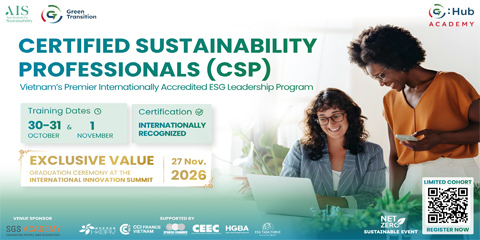
HCMC | CERTIFIED SUSTAINABILITY PROFESSIONAL (CSP) TRAINING | REGISTRATION OPEN
As sustainability becomes deeply embedded in corporate strategy and supply-chain operations across Vietnam, Hong Kong Business Association Vietnam is pleased to endorse the upcoming Certified Sustainability Professional (CSP) training program by the Asia Institute for Sustainability (AIS) - a premier internationally recognized ESG credential in Vietnam.
VIETNAM ECONOMY INVESTMENT
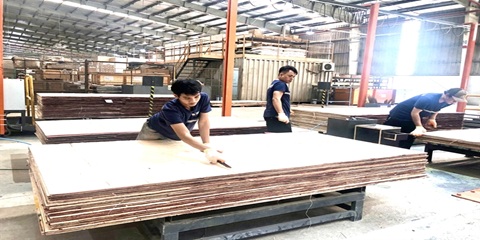
HCM CITY SAYS HOW IT PLANS TO ACHIEVE 10-11% ANNUAL EXPORT GROWTH FOR REST OF DECADE
The southern economic hub aims to strengthen its role as the country’s largest import-export centre while developing into a regional transhipment centre in Southeast Asia, supported by green and digital transformation and a circular economy. HCM City has outlined measures to expand production capacity, cut logistics costs, diversify export markets, and help businesses meet increasingly stringent international standards as it targets average annual export growth of 10-11 per cent through 2030.
VIETNAM ECONOMY INVESTMENT
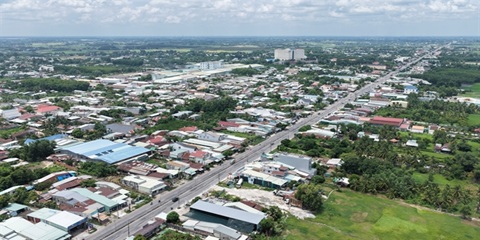
HCM CITY LEADS ECONOMIC RESTRUCTURING IN SOUTHEAST REGION
According to Associate Professor, Dr Vũ Tuấn Hưng, director of the Institute of Social Sciences of the Southern Region, the Southeast is a strategically important socio-economic space in Việt Nam’s development given its advantages in location, industry, trade, services, logistics, science and technology, urbanisation and human resources.
TECHNOLOGY
DIGITAL TRANSFORMATION TURNED INTO PRACTICAL TOOLS FOR PEOPLE, BUSINESSES
Việt Nam is moving its digital transformation agenda beyond policy frameworks and individual technology platforms towards practical applications that address everyday needs, as authorities seek measurable outcomes from science, technology and innovation. Under Politburo Resolution No. 57-NQ/TW issued on December 22, 2024, the implementation is increasingly shifting from simply completing assigned tasks towards developing concrete products and services for citizens and businesses.
TECHNOLOGY
APPLYING TECHNOLOGY FOR ECONOMIC TRANSFORMATION
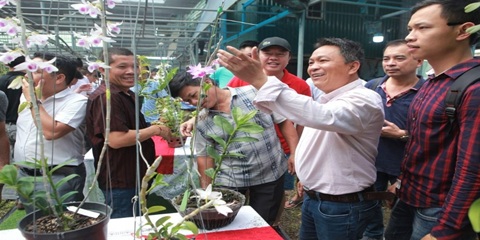
Having completed its new rural development program, Hanoi is shifting its focus toward improving development quality and building smart, sustainable rural areas. The transformation of Dong La orchid-growing village in An Khanh, a western commune of Hanoi, shows how digital technology is becoming a driver of production, market expansion, and higher incomes for local residents.
MEMBER CORNER / PROMOTIONS
VIGLACERA HONORED AS THE "LEADING GREEN INDUSTRIAL REAL ESTATE DEVELOPER 2026"
Organized by the Vietnam Investment Review, this prestigious awards program recognizes industry pioneers advancing eco-industrial parks, clean energy transition, and rigorous ESG standards. Outperforming competitors through a rigorous evaluation, Viglacera Corporation – JSC proudly ranked among the Top 5 highest-positioned enterprises in the Leading Green Industrial Real Estate Developers 2026 category, reinforcing its premier position in Vietnam’s industrial real estate sector.
Events Sponsors






















