Want to be in the loop?
subscribe to
our notification
Business News
MINISTRY ASKS CARRIERS TO DEVELOP FLEET OPERATION PLAN TO MEET SUMMER TRAVEL DEMAND
The Ministry of Transport has asked carriers to develop aircraft fleet operation plans to meet the rising travel demand for the upcoming national holidays and summer peak.
In a document sent to the Civil Aviation Authority of Việt Nam, the ministry said that the restructuring of some airlines’ fleet and flight networks, coupled with the recall of PW1100 engines by Pratt & Whitney for repair, have affected the load on both international and domestic flight routes, causing difficulties to passengers in terms of prices and schedules.
Statistics showed that the aircraft fleet in operation in Việt Nam has been reduced by 25 per cent, from 223 in 2023 to 173 in the first quarter of this year.
The request is raised in the context that the upcoming national holidays of South Vietnam Liberation Day on April 30th and Labour Day on May 1, and summer holidays, will push up air travel demand.
Accordingly, airlines must develop aircraft fleet operation plans to meet the demand as well as raise solutions to reduce flight cancellations or delays and improve service quality.
The ministry asked the Civil Aviation Authority of Việt Nam to enhance supervision over the air transportation services, ticket listings and sales to prevent illegal increases in air tickets. Any violations must be promptly handled.
In addition, flight operation plans and adjustments must be made public so that passengers can be active with their travel plans.
Pratt & Whitney’s recall of its PW1100 engines affects several Airbus A321 NEO operated by Vietnam Airlines and Vietjet, meaning that these planes will be grounded in 2024 and 2025.
According to Vietnam Airlines’ general director Lê Hồng Hà, the shortage of aircrafts caused by engine repair and maintenance poses significant difficulties to airlines in 2024.
The problem is that it takes up to 250-300 days for maintenance of an engine, compared to the previous average maintenance time of 100-120 days due to the disruption in supply chains.
Vietnam Airlines currently operates around 60 A321, 12 of which must be grounded for the engine maintenance.
Other airlines are struggling with restructuring.
Starting from March 18, Pacific Airlines (part of the Vietnam Airlines Group) suspends flight operations to restructure its fleet and flight network in an effort to ensure operational efficiency. After returning the aircrafts to clear debt, the airline will not operate any aircraft but rent from Vietnam Airlines.
Bamboo Airways is also undergoing a major restructuring. It has been shutting down all international flight routes and low-performing domestic routes since the end of last year, including routes from HCM City and Hà Nội to Côn Đảo starting from April.
Bamboo reached an agreement to terminate a lease contract on three Embraer E190 jets, narrow-body aircraft accommodating up to 114 passengers, by the end of March. The aircraft fleet of Bamboo will be reduced from the peak of 30 to only 8 from April 2024.
The Civil Aviation Authority of Việt Nam said that the reduction in the number of aircraft in operation would affect the air transport load this year.
The authority asked air carriers to have plans to make up for the shortage of jets, especially in peak periods such as summer holidays.
Airlines must announce adjustments of flight schedules daily and keep passengers updated.
Source: VNS
Related News

CHARITY / EXHIBITION / OTHER EVENTS
INVESTMENT OPPORTUNITIES IN CA MAU PROVINCE: 96 PROJECTS AND 20 STRATEGIC PROJECTS
We are pleased to share with you information on investment projects currently seeking investors in Ca Mau Province. Should your esteemed company or association be interested, we kindly invite you to review the project information and complete the registration form via the links provided. The Ho Chi Minh City Investment and Trade Promotion Centre (ITPC) will consolidate the expressions of interest and facilitate connections with the leadership of Ca Mau Province at a meeting tentatively scheduled for 13 November 2026 in Ho Chi Minh City.

MEMBER CORNER / PROMOTIONS
BẰNG KIỀU LIVESHOW - A SYMPHONY OF LOVE UNDER THE GOLDEN GLOW
A masterclass in live music that takes the audience on a soulful journey through immortal love songs, guided by the peerless artistry and emotive storytelling of renowned singer Bằng Kiều. The highlight of the night is his seamless musical chemistry with special guest Triệu Hồng Ngọc, promising passionate and deeply resonant duets inside the magnificent Grand Ballroom.
INFRASTRUCTURE / CONSTRUCTION / LOGISTIC / PORT
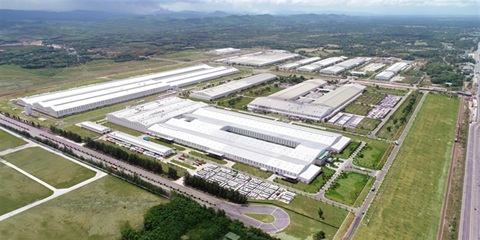
ĐÀ NẴNG GREEN-LIGHTS US$105 MILLION THAI DEVELOPMENT DEAL
The central city has approved an investment proposal by Thailand’s WHA Group to develop infrastructure for the 400ha WHA Đà Nẵng Industrial Park project on two communes of Thăng Bình and Đồng Dương, with an investment of more than VNĐ2.7 trillion (US$105 million). The city said it approved WHA Industrial Development International's status as an investor in the project, which is expected to take place between 2027 and 2034.
VIETNAM ECONOMY INVESTMENT
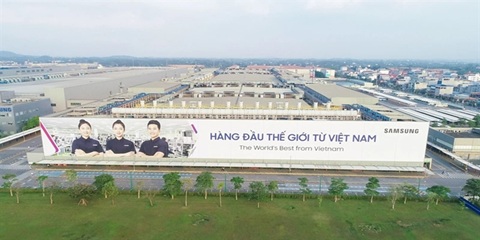
MOBILE PHONE EXPORTS RISE 20% TO $51.8 BILLION IN FIRST NINE MONTHS
Exports of mobile phones and components rose 20 per cent year-on-year to nearly US$51.8 billion in the first nine months of 2026, with China, the US and Republic of Korea accounting for more than half of the total. Shipments to the three markets reached a combined $26.18 billion, or 50.6 per cent of total exports of the product group during the period, according to data from the Vietnam Department of Customs under the Ministry of Finance.
INFRASTRUCTURE / CONSTRUCTION / LOGISTIC / PORT
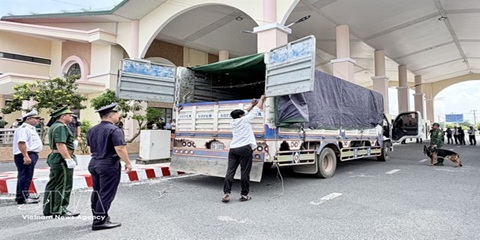
VIỆT NAM-CAMBODIA TRADE GATHERS PACE TOWARDS $20 BILLION TARGET
Trade between Việt Nam and Cambodia continues to grow, remaining a bright spot and a key pillar of bilateral cooperation as the two countries aim to raise two-way trade to US$20 billion in the coming years. After setting a record of more than $11.3 billion last year, bilateral trade reached about $8.7 billion in the first eight months of this year, up 8.3 per cent year on year.
VIETNAM ECONOMY INVESTMENT
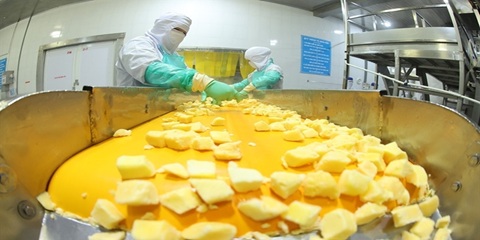
FRUIT AND VEGETABLE EXPORTS POISED TO HIT $10 BILLION IN 2026
Fruit and vegetable exports are on track to reach nearly US$10 billion in 2026, after rising 19.9 per cent year on year to nearly US$7.4 billion in the first nine months, driven by strong seasonal demand and abundant tropical fruit supplies. The Ministry of Agriculture and Environment said the growth reflected stronger international demand for fresh produce and processed agricultural products.
Events Sponsors






















