Want to be in the loop?
subscribe to
our notification
Business News
MINISTRY BACKS DOWN ON VAT
Fierce public objections about its proposal to impose value-added tax (VAT) on the transfer of land-use rights have forced the Ministry of Finance to shelve the move.
In August last year, the ministry drafted a bill to amend and supplement articles of the tax law. Regarding VAT on land-use rights transfer, it proposed to tax it at the standard VAT rate of 10 per cent.
This proposal immediately faced adverse reactions from the real estate sector. According to many experts, the increase of VAT will increase the price of properties and significantly affect the absorption rate of the market by putting a damper on housing demand.
Le Hoang Chau, chairman of HCM City Real Estate Association, told Phap Luat (HCM City Law) newspaper that imposing VAT could cause double taxation, which would push up land prices. Current taxes and fees applied to the transfer of land-use rights already include taxes on transfer of these rights, registration fees and personal income tax on sellers.
“The real-estate market ultilises thousands of products from more than 90 sectors, such as the manufacturing, construction and service sectors. Therefore, the imposition of VAT will lead to higher prices of raw materials and labour, lifting the price of houses,” Chau added.
Sharing the same idea, economist Ngo Tri Long said the newly-proposed VAT would put a massive burden on home buyers and the whole real estate market.
Nguyen Duy Minh, director of the L&L Group, agreed, saying that applying VAT would put real-estate businesses in difficulties, forcing them to increase house prices.
Therefore, he said the abolishment of the VAT would help stabilise the real-estate market. Stable tax policies help prevent houses price from fluctuating, encouraging people to invest more,” Minh said.
Economist Nguyen Tri Hieu said that applying VAT on the transfer of land-use rights would result in market fluctuations, indirectly affecting other sectors.
“Houses price increases would make people tighten spending. Real-estate companies would find it difficult to sell houses, would lose profits and the State would lose tax,” Hieu said.
Source: VIR
Related News
VIETNAM ECONOMY INVESTMENT
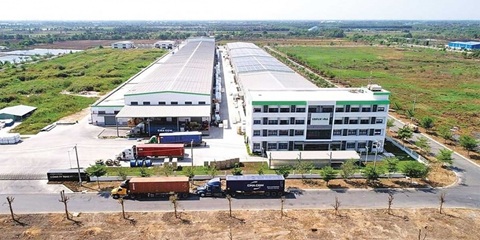
FOREIGN INVESTORS SEEKING A SYNCHRONISED MANUFACTURING ECOSYSTEM
Instead of focusing only on land costs and incentives as usual, foreign investors are seeking a synchronised manufacturing ecosystem, from stable power supply and logistics to shared infrastructure and the convenience of completing residence procedures for experts to serve their long-term investment in the country.
INFRASTRUCTURE / CONSTRUCTION / LOGISTIC / PORT
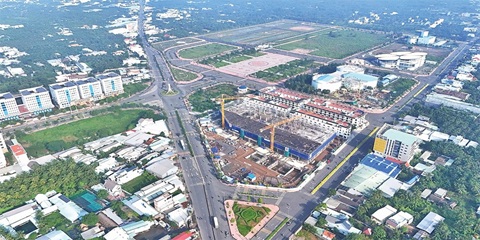
DONG THAP PROVINCE STEPS UP INDUSTRIAL EXPANSION AND INFRASTRUCTURE CONNECTIVITY
Accelerating public investment, strengthening inter-regional connectivity, and expanding industrial land are helping Dong Thap efficiently bolster competitiveness and drive economic growth. Following the 2025 merger of the former Dong Thap and Tien Giang provinces, the expanded Dong Thap province in the Mekong Delta faces mounting pressure to accelerate infrastructure development and strengthen connectivity among local economic zones, urban areas, industrial parks (IPs), and production centres.
PROPERTY / INDUSTRIAL ZONE
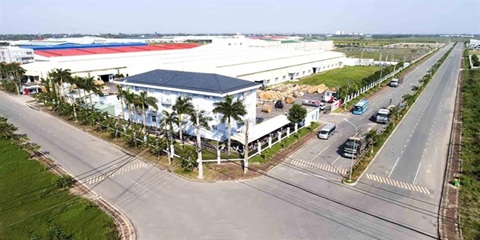
HCM CITY ATTRACTS US$5.7 BILLION INTO EXPORT PROCESSING AND INDUSTRIAL ZONES
HCM City attracted US$5.7 billion in domestic and foreign investment into its export processing and industrial zones during the first nine months of 2026. The figure exceeded the city's full-year target by 31 per cent, highlighting strong momentum in high-quality industrial investment under Resolution No.10-NQ/TW. Total investment reached 131 per cent of the 2026 target of $4.25 billion and represented a 29 per cent increase compared with the same period in 2025, according to the city's Export Processing and Industrial Zones Authority (HEPZA).

BANKING / FINANCE / INSURANCE / TAX
REMITTANCES TO HCM CITY RISE NEARLY 40% IN Q3
Remittances to HCM City reached more than US$2.83 billion in the third quarter of this year, up 39.5 per cent from the previous quarter and 3.6 per cent year-on-year. This was the first quarter showing positive annual growth this year, helping narrow the decline in remittance inflows over the first nine months. According to the State Bank of Vietnam (SBV)’s Regional Branch 2, remittances transferred to HCM City through credit institutions and economic organisations totalled $2.835 billion in Q3, an increase of more than $802 million from the previous quarter.

VIETNAM ECONOMY INVESTMENT
LOCALITIES REPORT BREAKTHROUGH RESULTS IN FDI IN FIRST NINE MONTHS
In Ho Chi Minh City, total registered capital reached $17.2 billion in the first nine months, up 4.2 times from the same period last year. The figure included more than $9.35 billion in newly registered capital and over $4.9 billion in additional capital for existing projects. Foreign investors also registered more than $2.9 billion through capital contributions and share purchases.

TECHNOLOGY
TECH SECTOR GROWTH OPENS UP OPPORTUNITIES FOR VIỆT NAM TO GO GLOBAL
The growth of the electronics, semiconductor and high-tech sectors worldwide is opening up a variety of opportunities for Vietnamese enterprises to integrate more deeply into the global supply chain. However, to become suppliers for these corporations, domestic enterprises must meet rigorous standards regarding quality, technology, productivity and order fulfilment capabilities.
Events Sponsors






















